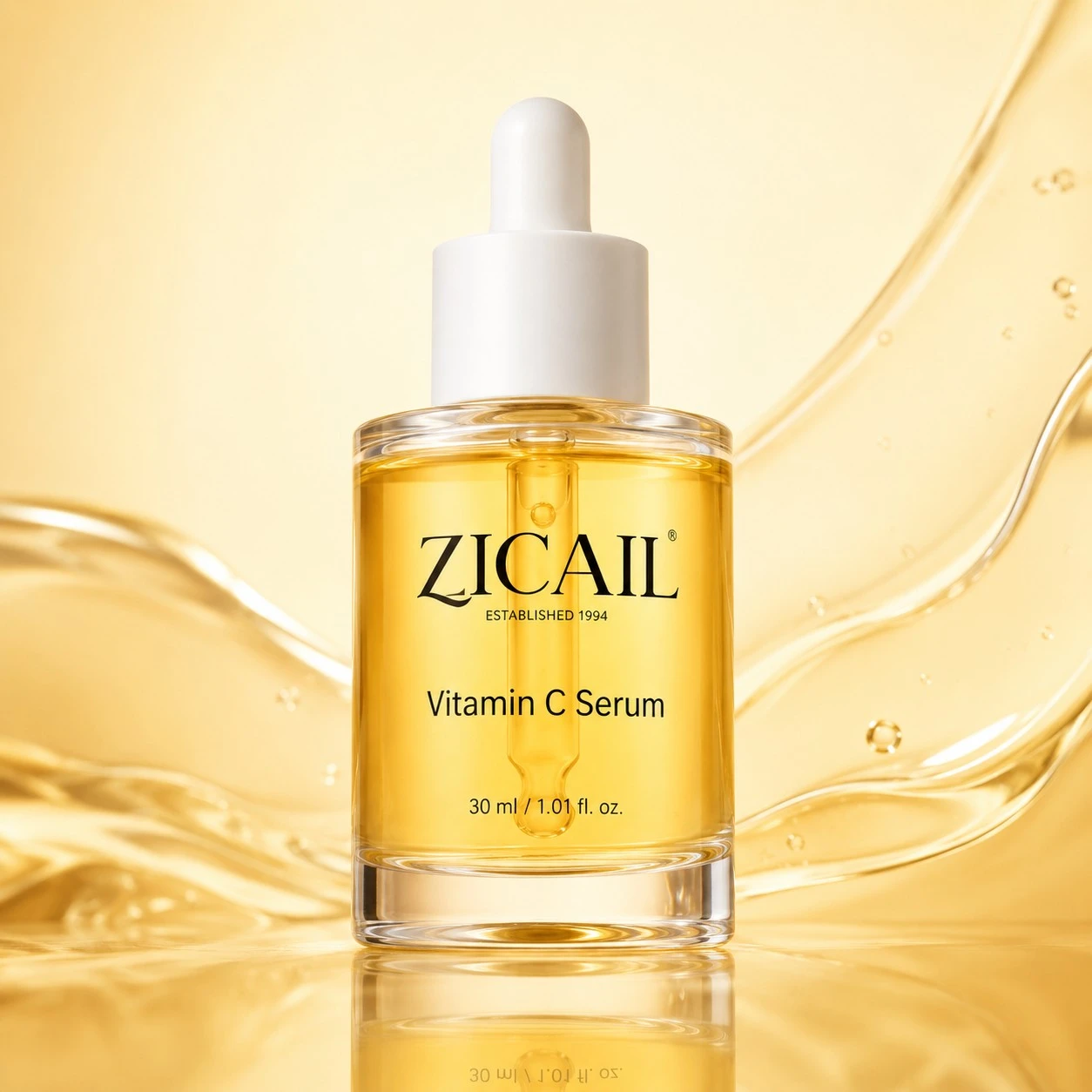
30 mL
Frosted Glass Dropper
A frosted round glass bottle with an ivory dropper. Compare pickup, drop release and residual serum with the selected formula.

Private Label · OEM / ODM · Custom Formulation
Develop a niacinamide serum around your brand’s concentration target, texture, packaging and intended claims. ZICAIL supports formula sampling, packaging development and finished-product manufacturing for private label and OEM / ODM projects.
Bring your target market and benchmark. Compare complete formulas for application, dry-down and layering, then approve the working sample, pack and evaluation plan before production.
For skincare brands, distributors and private label buyers.
Final minimum depends on the formula, packaging and customization.
After the brief is agreed; custom development and revisions may take longer.
After carton specifications and artwork approval.
After production approval and required components are ready; shipping is additional.
These are project planning references. Testing, validation and sample revisions are scheduled separately from initial sample preparation.
Product and Packaging Concepts
Compare four bottle directions, a two-size range and a retail carton presentation. Approve the formula and working pack together.
30 mL
A frosted round glass bottle with an ivory dropper. Compare pickup, drop release and residual serum with the selected formula.

30 mL
A clear glass pump bottle with a separate protective cap. Confirm priming, dose control and the return action using the actual serum.
30 mL
An ivory airless format with a sage green pump and cap. Evaluate delivery and evacuation with the proposed texture and contact materials.
30 mL
An amber glass presentation with an ivory dropper. Choose it for the project brief and packaging evaluation; color alone does not establish shelf life.
30 mL + 60 mL
A coordinated pair of frosted glass dropper bottles. Approve each size separately for fill, pipette length, dispensing, artwork and carton fit.
30 mL
The P01 bottle with an ivory and dark green retail carton. Confirm the dieline, insert and shipping protection through physical samples.
These are packaging concepts, rather than six separately validated formulas. Concentration, supporting ingredients, final materials and decoration are confirmed during development. The two-size concept shows 30 mL and 60 mL bottles.
Choose Your Development Route
Choose a scope that fits the formula, packaging and market-preparation work your project needs.
Start from an available formula direction. Evaluate the sample, choose the pack and confirm artwork, claims and manufacturing specifications.
Explore Private Label
Develop or manufacture around your brief, reference or agreed specifications. Confirm technical inputs, formula ownership and responsibilities before work starts.
Explore OEM / ODM
Develop the niacinamide level and complete formula around defined ingredient, texture and market requirements. Refine sample versions against the agreed targets.
Explore Custom FormulationBuild a Useful Development Brief
Set the decisions that change sampling, packaging and the evaluation plan before comparing quotations.
Define the intended routine, target users, price point and cosmetic positioning, such as oiliness, visible pores or uneven-looking tone.
Discuss the intended niacinamide percentage and selected raw-material specification. Evaluate the complete formula rather than choosing on percentage alone.
Consider Zinc PCA, panthenol, hyaluronic acid or other ingredients against the brief. Confirm compatibility and preservation through development.
Set targets for spread, tack, dry-down, rubbing foam and layering. Agree fragrance preferences and ingredient exclusions.
Choose a dropper, conventional pump or airless pack. Define each capacity and evaluate its dispensing, residual product and closure.
Confirm destination, label language, directions, claim wording and project documentation before artwork approval.
Ingredient Specification and Concentration
Connect the selected raw material, intended concentration and sample experience. A higher headline percentage is not an acceptance criterion on its own.
| Decision | What to Review | Approval Basis |
|---|---|---|
| Ingredient Identity | Niacinamide INCI, supplier grade, purity, handling guidance and relevant impurity limits, including residual nicotinic acid where applicable. | Match the selected supplier specification and lot documents; do not treat nicotinic acid as an interchangeable ingredient. |
| Concentration | Target niacinamide content, raw-material strength and the basis of any percentage claim. | Confirm the formula calculation and any agreed analytical verification; do not assume that 10% is the default. |
| Supporting System | Selected humectants, Zinc PCA, panthenol, rheology ingredients, fragrance choices and preservation. | Review the whole formula for compatibility, appearance and application rather than approving an ingredient list alone. |
| pH and Processing | Formula-specific pH range, addition order, dissolution, temperature and mixing conditions. | Use the selected suppliers’ guidance and development results. A single universal pH or process is not a specification. |
| Use Experience | Defined dose, dry-down, tack, visible residue, rubbing foam and representative layering combinations. | Approve the sample with the actual applicator and record the conditions used for comparison. |
Confirm the target content and evaluation scope before putting a percentage on the label. Appearance and pH alone do not verify niacinamide concentration.
Raw Materials and Production Water
Review the niacinamide grade and other inputs that determine reproducibility, alongside the water used in the serum.
Skin Feel, Dry-Down and Layering
Compare samples at a defined dose and application method, then review their dry-down and behavior with representative routine products.
Sensory assessment helps refine a sample; it does not establish oil-control, pore-appearance or skin-tone results.
Stability and Finished-Product Validation
Agree the storage plan, test methods and acceptance criteria for the selected niacinamide formula and its intended packaging.
Bottle and Dispensing Compatibility
Evaluate the actual serum with the intended bottle, applicator and contact materials before approving the packaging.
An airless format does not by itself establish zero oxygen exposure or zero contamination.
Claims and Evidence
Set precise claim wording and the intended market before selecting endpoints. Ingredient support is background evidence, rather than automatic proof for the finished serum.
Separate a proposed oil-control claim from a visible-pore claim. Agree the relevant instrumental, imaging or other suitable assessment for each endpoint.
Define the appearance concern, observation period and evaluation method. Keep tone-uniformity or brightening wording within the finished-product evidence.
Plan relevant evaluation for barrier or sensitive-skin positioning and define sensory claims such as lightweight or non-sticky. Avoid blanket suitability promises.
Keep cosmetic appearance claims distinct from acne-treatment or other medicinal claims. Confirm permissible wording and evidence for the target market before label approval.
Sample Approval and Commercial Specification
Lock the details that purchasing, production and quality teams will use, rather than approving a photograph alone.
Bulk Preparation and Filling
Use the approved formula and manufacturing instructions to connect material preparation, bulk handling and small-bottle filling.
Approved Reference and Batch Consistency
Review the production sample against the retained reference using agreed methods and comparable conditions.
A visual comparison or pH reading alone does not prove equal niacinamide content or equivalent cosmetic performance.
Finished Product Inspection and Batch Review
Define the checks and documents needed for the batch decision. A closed finished bottle is one part of the review.
Retail Packing and Delivery Preparation
Coordinate the retail pack and shipping configuration around the selected bottle and closure.
Certificates and Project Documents
Request current factory documents and confirm which formulation, evaluation and batch information is included in your project.
Agree the ingredient declaration, selected niacinamide-grade documents, relevant supplier information and finished-formula specifications.
Confirm which stability, microbiological, packaging, analytical and batch documents are included, with responsibilities and costs defined.
Coordinate directions, label language and importer information for the destination market. Identify additional regulatory work before launch.
Review current validity, scope and relevance before relying on a document. FDA facility registration does not constitute FDA approval of a facility or product.
After-Delivery Support and Repeat Orders
Maintain approved formula, packaging and artwork versions as the starting point for feedback, replenishment and proposed changes.
Provide lot identification, images, storage information and issue details so the relevant records and retained samples can be reviewed.
Confirm the reference formula, niacinamide target, current packaging, artwork, quantity and timing before the next production approval.
Review proposed ingredient, supplier, applicator, decoration or market changes before substitution. Confirm whether samples, testing or document updates are needed.
Niacinamide Serum FAQ
Clarify concentration, supporting ingredients, use experience, packaging and evidence before approving the project.
No. Set the concentration around the intended positioning, complete formula, skin-feel target and finished-product evaluation. A higher percentage alone does not establish better performance or suitability. Confirm the actual niacinamide content and the evidence for any percentage claim.
No. Confirm Niacinamide as the intended INCI and review the selected supplier grade, purity and relevant impurity specification, including residual nicotinic acid where applicable. The raw-material specification and the finished-serum evaluation serve different purposes.
These can be considered as supporting ingredients during development. Confirm the exact ingredient forms, addition levels, compatibility, preservation and texture through samples. A proposed combination is not an approved formula until its agreed evaluations are complete.
These can be sample-development targets. Compare a defined dose, application method, dry-down time and representative moisturizer or sunscreen combinations. Review the complete formula and packaging together; compatibility with every other skincare product cannot be assumed.
Set a formula-specific pH range using the selected ingredient grades, supporting ingredients, preservation strategy and stability results. Record the measurement method and temperature. A pH reading does not establish niacinamide content or prove finished-product tolerance.
Test the actual serum in the intended pack. Compare pickup or priming, dose consistency, return action, remaining product, leakage and contact-material compatibility. An airless format does not by itself establish zero oxygen exposure or zero contamination.
Agree the precise wording, target market and relevant finished-product evaluation before making the claim. Oiliness, visible pore appearance and skin-tone uniformity need appropriate endpoints. Ingredient supplier data does not automatically establish results for the finished serum.
The project MOQ reference is 1,000–5,000 pcs, depending on packaging and customization. Initial formula samples typically take 5–7 days after the brief is agreed; physical carton samples take 7–10 days after specifications and artwork approval. Bulk production is typically 25–30 days after production approval and component readiness. Revisions, validation and shipping are scheduled separately.
Start Your Project
Send your target market, positioning, desired niacinamide concentration, benchmark, texture, packaging and fill size, first-order quantity and launch timeline. Include ingredient exclusions and claims you want the evaluation plan to address.
Related Products
Compare related product directions for a coordinated skincare range.

WhatsApp us
Tell us your product idea, target market, and packaging needs. Our team will help you choose a practical development path.