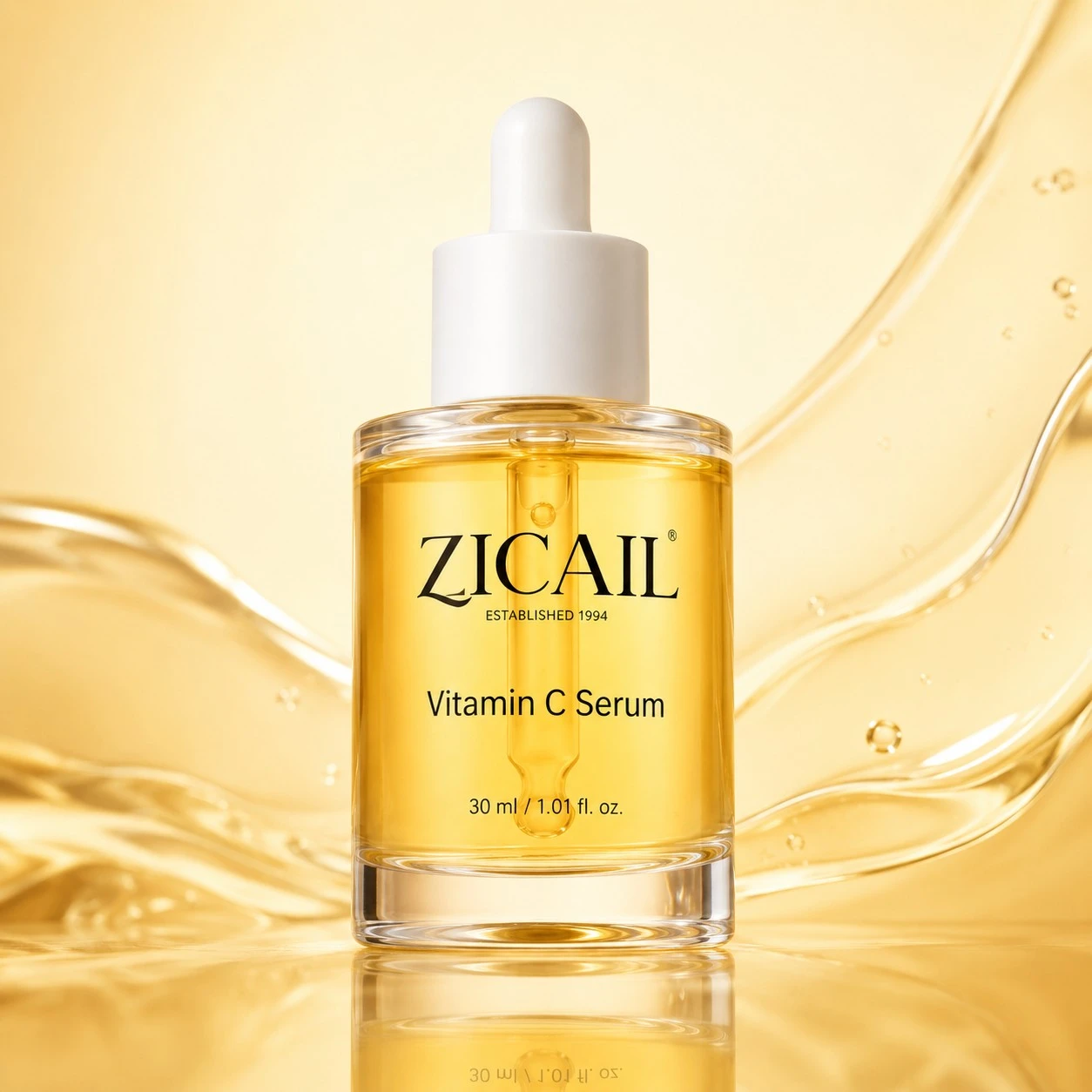
Private Label · OEM / ODM · Custom Formulation

Private Label Vitamin C Serum Manufacturer

Develop a vitamin C serum around the ingredient form, texture and packaging your brand needs. ZICAIL supports formula sampling, packaging selection and finished-product manufacturing for private label and OEM / ODM projects.

Worker monitoring vitamin C serum filling into open amber bottles on a production line

Start with your target market, benchmark and proposed claims. Connect the vitamin C system with the complete formula, its working pack and an agreed evaluation plan before approving production.

For skincare brands, distributors and private label buyers.

1,000–5,000 pcs Project MOQ

Final minimum depends on the formula, packaging and customization.

5–7 days Initial Formula Samples

After the brief is agreed; custom development and revisions may take longer.

7–10 days Physical Carton Samples

After carton specifications and artwork approval.

25–30 days Bulk Production

After production approval and required components are ready; shipping is additional.

Product and Packaging Concepts

Explore Vitamin C Serum Packaging Directions

Compare the intended dispensing experience, material and retail presentation before choosing your working pack.

These are packaging concepts, not six confirmed formulas. Final fill size, component availability, protective performance and minimums require project confirmation.

Choose Your Development Route

Three Ways to Develop Your Vitamin C Serum

Match the scope of development to your launch brief and the work still needed.

Private label vitamin C serum bottle with a trial sample and blank retail carton

Private Label

Start with an available formula direction and confirm the sample, packaging, artwork and project requirements.

Explore Private Label
Vitamin C serum OEM and ODM packaging samples with bottles labels and carton blanks

OEM / ODM

Develop the selected product and pack around your brief, benchmark, specifications and agreed manufacturing scope.

Explore OEM / ODM
Custom vitamin C serum formulation trials with paired beakers and sample bottles

Custom Formulation

Build and refine a formula around the selected vitamin C ingredient, texture, market and evaluation priorities.

Explore Custom Formulation

Your Product Development Brief

Define Six Connected Customization Decisions

A useful brief connects ingredient identity, sensory targets and the finished package.

Vitamin C System

Select the exact ingredient form, supplier grade and intended use level.

Texture and Finish

Define watery, gel-like or emulsion directions and the desired after-feel.

Supporting Ingredients

Review humectants, antioxidants and other ingredients within the complete system.

Appearance and Scent

Agree the initial color, clarity, odor and fragrance requirements.

Bottle and Dispensing

Coordinate fill volume, dropper, pump or tube with the actual formula.

Artwork and Market

Confirm decoration, carton, directions and destination-market documentation.

Ingredient Form Comes First

Choose the Vitamin C System before the Percentage

The INCI name, supplied ingredient strength and complete formula matter when comparing a vitamin C brief.

Ingredient direction and development decisions
DirectionIngredient IdentityWhat to Confirm
L-Ascorbic AcidAscorbic AcidDefine the vehicle, aqueous pH where relevant, processing and protection strategy; evaluate the finished formula and pack.
Water-Soluble DerivativesExamples include Sodium Ascorbyl Phosphate and Ascorbyl GlucosideUse the selected grade’s solubility, processing and pH guidance; do not apply one derivative’s limits to every ingredient.
Oil-Soluble DerivativesAn oil-soluble vitamin C ingredient selected for the briefDevelop an appropriate oil-phase or emulsion vehicle, then assess appearance, sensory performance and packaging.

Different forms are not interchangeable at the same percentage. Distinguish the supplied ingredient addition from its active content, and confirm how any concentration claim will be supported.

Raw Materials and Production Water

Trace the Selected Ingredients into Each Batch

Connect supplier specifications, incoming lots and the production-water requirements of the actual formula.

Researcher reviewing raw material and water sample records for vitamin C serum
  • Ingredient Identity Confirm the exact vitamin C INCI, supplier grade, certificate of analysis, storage conditions and relevant handling guidance.
  • Receiving and Traceability Link incoming checks and material lots to the formula version. Review substitutions before changing suppliers, carriers or grades.
  • Water and Supporting Materials For water-containing formulas, define appropriate production-water and microbiological controls alongside the other incoming specifications.

Formula and Sensory Development

Build the Texture around the Selected Vitamin C System

Compare the complete formula against a benchmark for application, finish and intended use.

Researcher assessing vitamin C serum spread and skin feel on the back of a hand
  • Integration and Flow Review dissolution or dispersion, appearance and flow under the conditions suitable for the actual ingredient and vehicle.
  • Spread and After-Feel Compare slip, tack, residue and dry-down using a consistent application amount and review sequence.
  • Supporting Ingredients Evaluate proposed combinations within the finished system. Adding familiar antioxidants or humectants does not by itself establish formula stability or efficacy.

Stability and Active-Retention Planning

Separate Appearance Checks from Vitamin C Content

Agree what to measure, in which pack and at which review points before making a shelf-life or retention claim.

Researcher comparing stored vitamin C serum samples with a reference in the laboratory
  • Stored-Sample Changes Compare the reference and stored samples for the agreed appearance, odor, uniformity, flow and relevant aqueous pH criteria.
  • Active Content Color and pH checks do not quantify retained vitamin C. Where a retention claim is required, agree a suitable analytical method, acceptance limits, sampling points and testing responsibility.
  • Finished-System Evaluation Plan stability and package evaluation together. Include microbiological quality and preservation assessment appropriate to the formula, use pattern and market.

A visually clear or pale sample is not proof of active content or shelf life. Confirm the required work, scope and costs for the project.

Packaging and Dispensing Compatibility

Evaluate the Formula with Its Actual Working Pack

Choose the container by its interaction with the selected formula and the way the product will be used.

Researcher checking vitamin C serum dispensing from an amber bottle dropper into a beaker
  • Bottle and Contact Materials Review the glass or plastic body, contact components and relevant closure materials with the actual formula.
  • Dropper, Pump or Tube Assess pickup, delivery, residue, closure fit and leakage. A dropper demonstration alone does not prove a calibrated dose.
  • Protection and Repeated Use Consider light exposure, headspace, opening cycles and material performance. Amber color or an airless format alone does not establish adequate protection.

Claims and Evidence

Plan Claim Support before Finalizing the Label

Define the proposed wording and the evidence needed for your destination market.

Ingredient and Percentage Wording

Confirm the named form and the basis of the declared percentage, including the supplied grade’s active content.

Finished-Product Claims

Agree suitable support for proposed brightening, hydration, antioxidant or other cosmetic positioning; supplier ingredient information alone may not substantiate the finished product.

Directions and Market Review

Review intended use, user group, label language and supporting documentation with the responsible market specialists.

From Brief to Production Approval

Approve One Connected Formula and Packaging Specification

Keep sample versions, commercial decisions and the launch schedule aligned.

  1. 01Agree the Brief Confirm market, benchmark, vitamin C form, desired texture, packaging, quantity and proposed claims.
  2. 02Review Formula Samples Initial formula samples typically take 5–7 days after the brief is agreed; custom development and revisions may take longer.
  3. 03Confirm the Working Pack Review the selected formula with the actual bottle, dispensing components and fill volume.
  4. 04Approve Physical Carton Samples Physical carton production samples typically take 7–10 days after specifications and artwork approval.
  5. 05Approve the Commercial Specification Confirm the sample version, ingredient and component specifications, artwork, evaluation arrangements, acceptance criteria and quotation scope.
  6. 06Authorize Production Schedule manufacture after the required approvals and components are ready. Reference bulk production timing is 25–30 days; shipping is additional.

Formula development, validation, revisions, component supply and customer approvals can extend the total launch schedule. Request a project-specific minimum within the reference 1,000–5,000 pcs range.

Bulk Preparation and Closed Transfer

Carry the Approved Formula into Batch Manufacturing

Define the processing and transfer requirements for the selected formula before scaling the batch.

Operator monitoring bulk vitamin C serum preparation and closed material transfer
  • Controlled Batch Instructions Use the approved formula version and agreed addition sequence, mixing, temperature and relevant pH checkpoints for the actual ingredient system.
  • Transfer and Holding Review material-contact equipment, exposure and holding conditions. Use the planned transfer arrangement and record the relevant manufacturing checks.
  • Filling and Closure Confirm the filling setup for the selected container, then fit and check its closure. Maintain lot identity through filling, labeling and packing.

Approved Reference and Batch Comparison

Compare the Batch with the Approved Reference

Use agreed sample versions and acceptance criteria to review the characteristics that matter to your product.

Researcher comparing vitamin C serum batch and reference samples with a pH electrode
  • Appearance and Physical Parameters Compare the relevant color, clarity or uniformity, odor, flow and aqueous pH against the approved reference.
  • Use and Dispensing Review the agreed sensory and delivery characteristics with representative samples and the approved pack.
  • Analytical Requirements Include active-content or other analytical checks only within the agreed specification and test plan. A pH electrode does not measure vitamin C concentration.

Finished Inspection and Batch Release

Review Finished Packs and the Required Batch Records

Connect finished-product checks, manufacturing records and the agreed release decision.

Quality reviewer checking vitamin C serum inspection records beside finished bottles
  • Product and Pack Checks Review the specified content checks, appearance, closure, label, batch identification and retail-pack condition.
  • Record Review Check the applicable manufacturing, inspection and test documentation against the approved specification and recorded deviations.
  • Release Responsibility Confirm the required results, authorizations and shipment conditions. Keep batch identification available for later traceability.

Retail Packing and Delivery Preparation

Coordinate the Bottle, Carton and Shipping Protection

Set the packing specification around the actual container and delivery route.

Packing worker placing a vitamin C serum bottle into a matching retail carton
  • Retail Pack Fit Confirm the carton and any insert fit the selected bottle and closure without unnecessary movement or pressure on the dispensing components.
  • Case Packing and Identification Agree units per case, protection, case markings and lot identification before shipment preparation.
  • Dispatch and Handover Coordinate the delivery destination, transport arrangements and required handover documents within the quotation scope.

Factory Documents and Project Support

Confirm the Documents Relevant to Your Market

Review current factory documents alongside the product-specific information your project needs.

Formula and Ingredient Information

Agree the ingredient declaration, selected vitamin C grade information and relevant formula specifications.

Evaluation and Batch Documents

Define which stability, microbiological, packaging, analytical and batch documents are included in the project.

Artwork and Market Preparation

Coordinate directions, label language and importer information. Confirm responsibilities and costs before launch.

Request current documents and confirm validity, scope and relevance. FDA facility registration does not constitute FDA approval of a facility or product.

Delivery Support and Repeat Orders

Keep Formula, Packaging and Batch Versions Traceable

Use the approved specification as the starting point for feedback, reorders and proposed changes.

Feedback and Investigation

Share the lot identification, images, storage information and the specific issue so the relevant records and retained samples can be reviewed.

Repeat-Order Planning

Confirm the formula reference, current components, artwork, order quantity and timing before the next production approval.

Change Control

Review ingredient, supplier, closure, decoration or market changes before substitution. Confirm any evaluation or document updates needed.

Vitamin C Serum Project FAQ

Questions to Resolve before Sampling

Clarify the ingredient, pack and project requirements before authorizing development.

Which vitamin C form should I choose for a private label serum?

Start with the exact ingredient identity, desired texture, benchmark, packaging and market. L-ascorbic acid and vitamin C derivatives have different formulation requirements; select the complete system before finalizing a percentage claim.

Can I request a specific vitamin C percentage?

Yes, include it in the brief together with the exact ingredient form. Confirm whether the percentage refers to the supplied ingredient or its active content, and agree the supporting formulation and analytical work.

Does every vitamin C serum need the same pH?

No. The appropriate pH conditions depend on the selected ingredient and complete formula. A conventional aqueous pH measurement may not be meaningful for an anhydrous oil-based product; define an appropriate test method for that system.

Is amber glass or an airless bottle always sufficient protection?

No. Evaluate the selected formula with its actual contact materials, closure, dispensing method and storage or use conditions. Bottle color and packaging format alone do not establish shelf life or active retention.

Can color or pH confirm the remaining vitamin C content?

No. Appearance and relevant pH checks are useful physical checks, but they do not quantify retained vitamin C. Agree a suitable analytical method, sampling points and acceptance limits if active-retention evidence is required.

What are the MOQ and sampling times?

The reference MOQ is 1,000–5,000 pcs, depending on formula, packaging and customization. Initial formula samples typically take 5–7 days after the brief is agreed; custom development and revisions may take longer. Physical carton samples typically take 7–10 days after specifications and artwork approval.

When does the bulk production lead time start?

The reference bulk production lead time is 25–30 days after production approval and required components are ready. Development, validation, revisions and customer approvals can extend the overall schedule; shipping time is additional.

What should I send for a vitamin C serum quotation?

Send your target market, sales channel, reference product, vitamin C ingredient direction, desired texture, proposed claims, fill size, packaging, quantity per SKU and launch target. Include any required testing or documentation so the quotation scope is clear.

Start Your Vitamin C Serum Project

Share Your Market, Formula Direction and Packaging Brief

Send your benchmark, ingredient form, texture, quantity and launch plan so the development scope can be discussed.

Include the proposed claims and any analytical or market-document requirements. We can then align the sampling priorities, packaging choices and project quotation.

Open Original Image
zicai customer support team - <trp-post-container data-trp-post-id='3701'>Tinted vs Untinted Sunscreen: Which Should You Use?</trp-post-container>
zicai factory quality control and productoin team photo - <trp-post-container data-trp-post-id='3701'>Tinted vs Untinted Sunscreen: Which Should You Use?</trp-post-container>

Start Your Skincare Project

Tell us your product idea, target market, and packaging needs. Our team will help you choose a practical development path.

zicai customer support team - <trp-post-container data-trp-post-id='3701'>Tinted vs Untinted Sunscreen: Which Should You Use?</trp-post-container>