P01
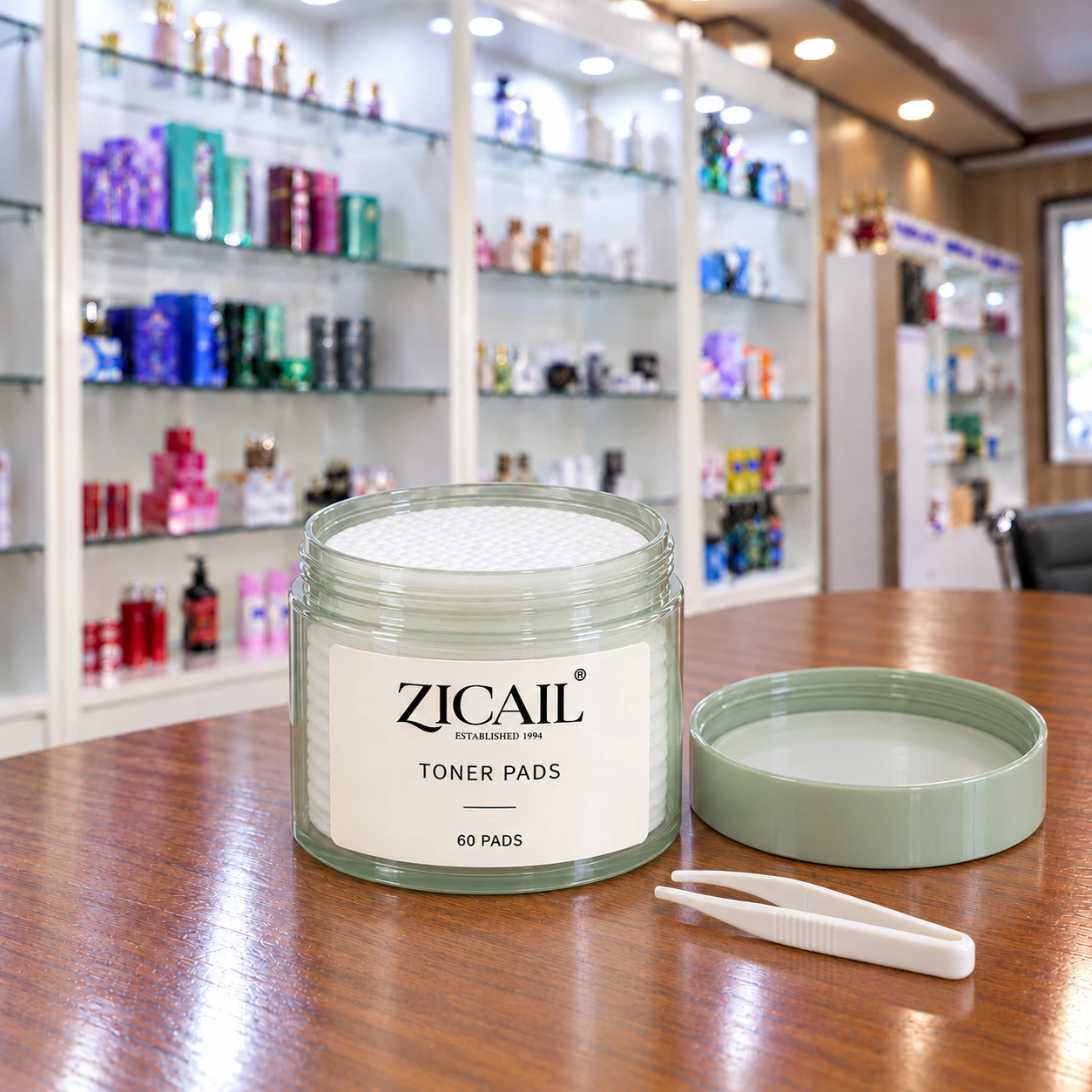
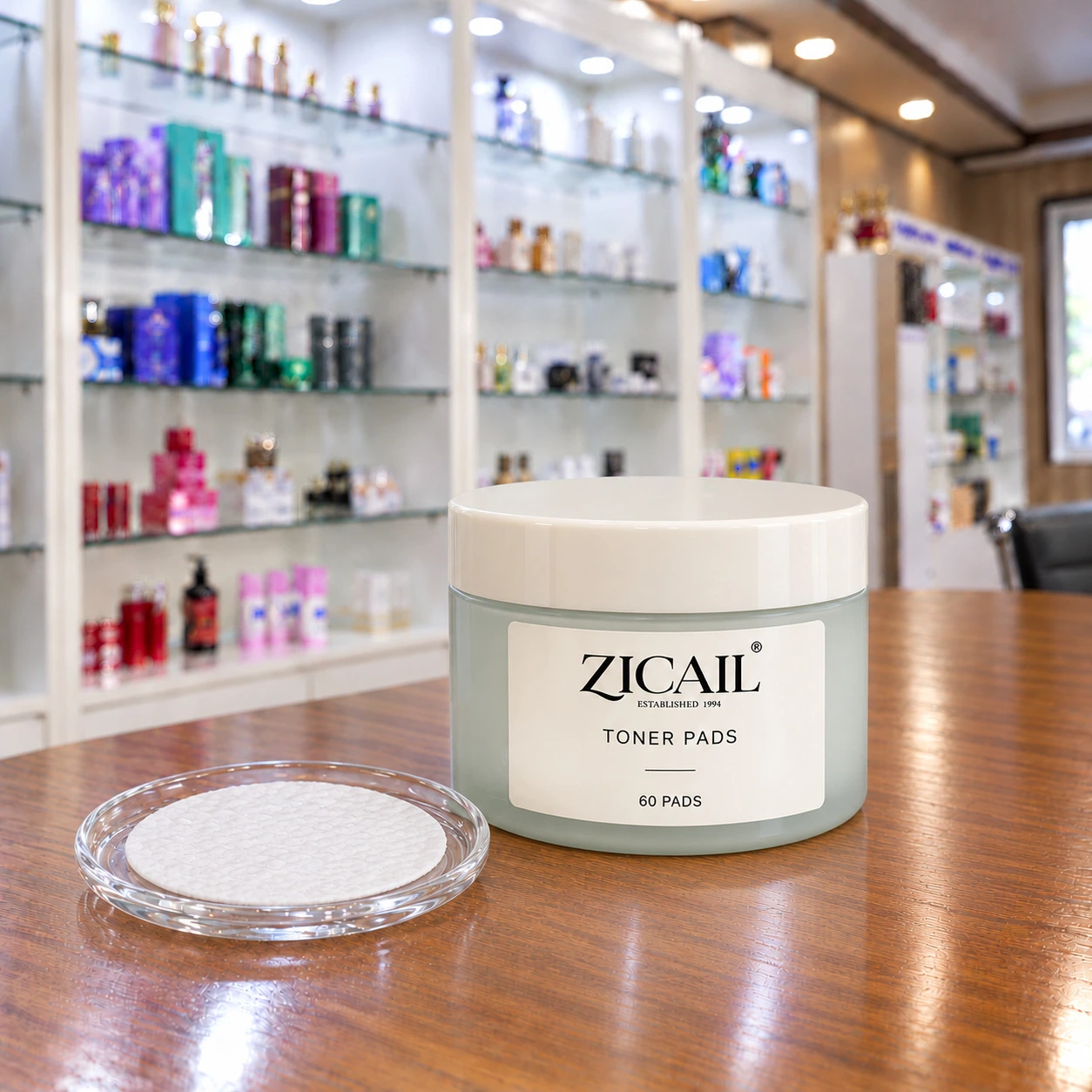
Clear Jar with Visible Pads
A transparent round jar with a sage green lid. Compare pad visibility, stack fit and access through the jar opening.


Private Label · OEM / ODM · Custom Formulation
Develop toner pads around your essence, pad material and intended use. ZICAIL brings formulation, packaging evaluation and manufacturing planning together so your team can approve the complete product before production.

Start with a product direction or share your benchmark. Define the pad size, count, wetness and pack experience, then build a sample and evaluation plan around your target market.
Eight Packaging Concepts
Compare pack presentation and access to the pads. The images show packaging directions; the formula, count, essence load, component availability and compatibility are confirmed during development.
P01
A transparent round jar with a sage green lid. Compare pad visibility, stack fit and access through the jar opening.

P02
A sage green jar with an ivory lid and separate tweezers. Review pad pickup, lid fit and storage of the accessory.
P03
A frosted round jar with an ivory screw lid. Confirm material, decoration and closure compatibility with the loaded pads.
P04
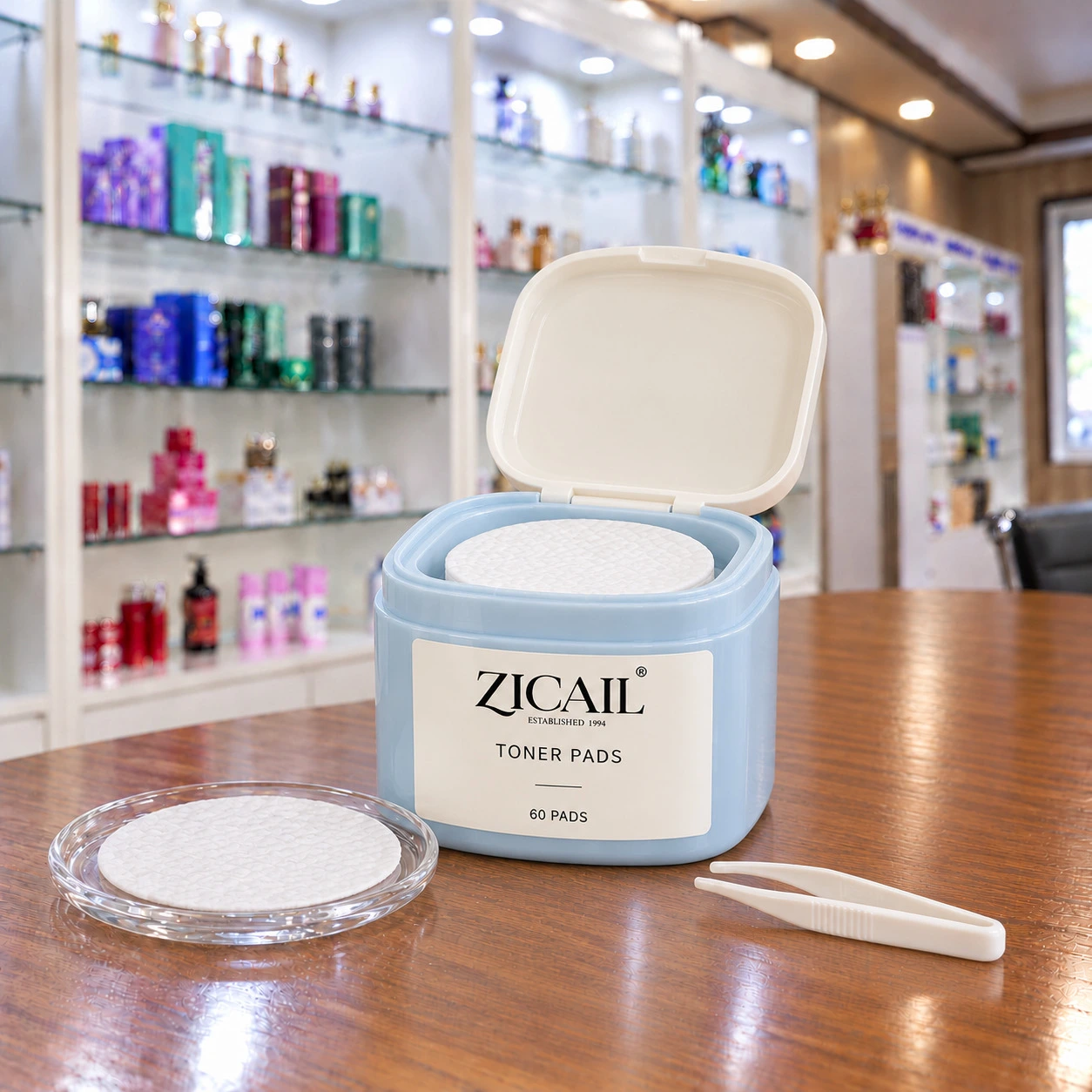
A pale blue square jar with an ivory flip lid. Evaluate opening access, hinge function and protection during repeated use.

P05
A pale lavender jar with an ivory lid and inner cover. Assess the complete closure arrangement and ease of removing a pad.

P06
An amber round jar with a black screw lid. Confirm the required barrier properties and seal with the selected essence.

P07
A full-size jar paired with a compact travel pouch. Define a separate count, essence load, seal and specification for each format.
P08
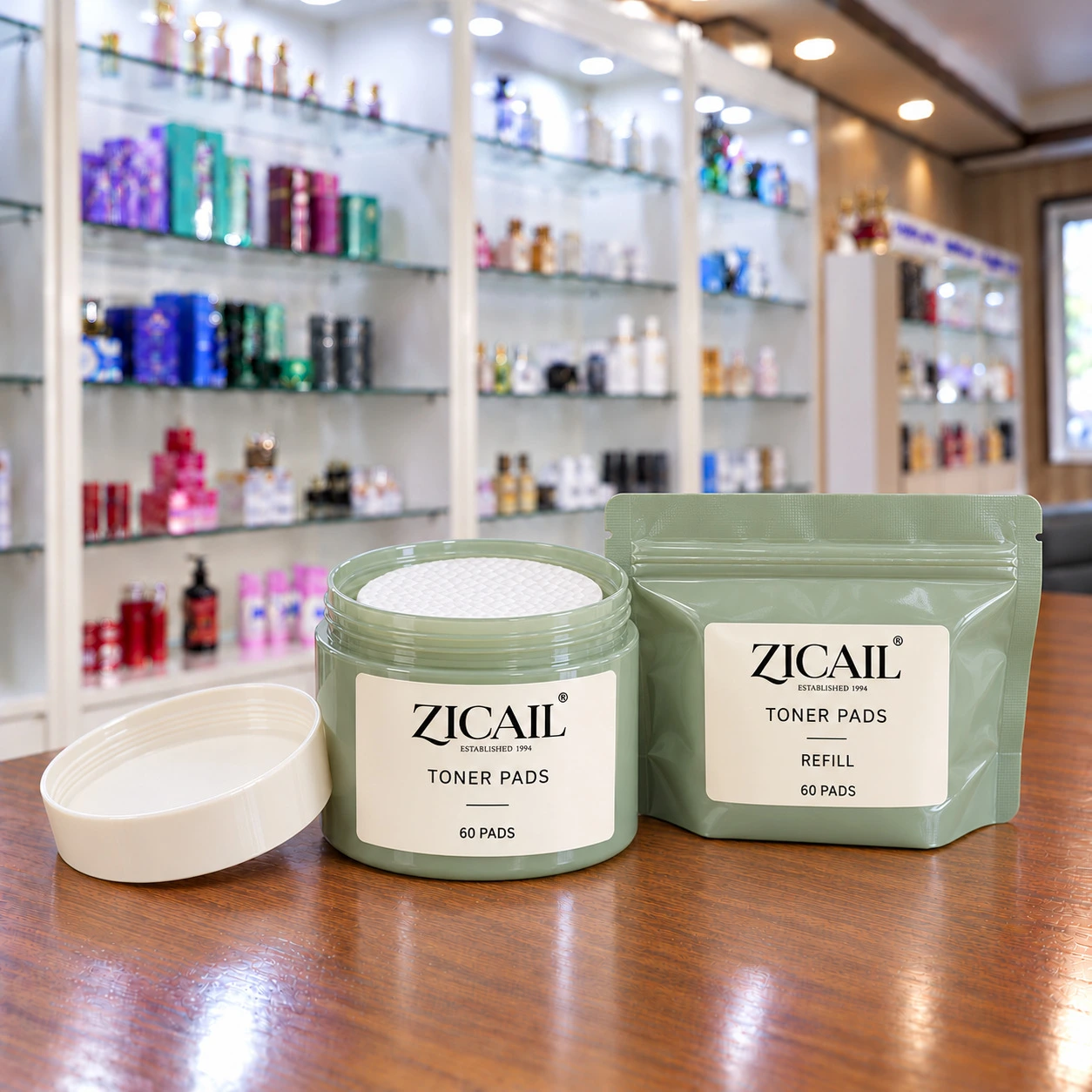
A jar and a wide-opening pad refill pouch concept. Review resealing, transfer instructions and the proposed refill routine before selection.
Counts shown in concept artwork are illustrative. Each retail size, travel pack or refill format needs an agreed specification and may have its own component minimum.
Three Ways to Work Together
Select the route that fits your specification, development needs and launch plan. Every route still requires approval of the finished pad system.
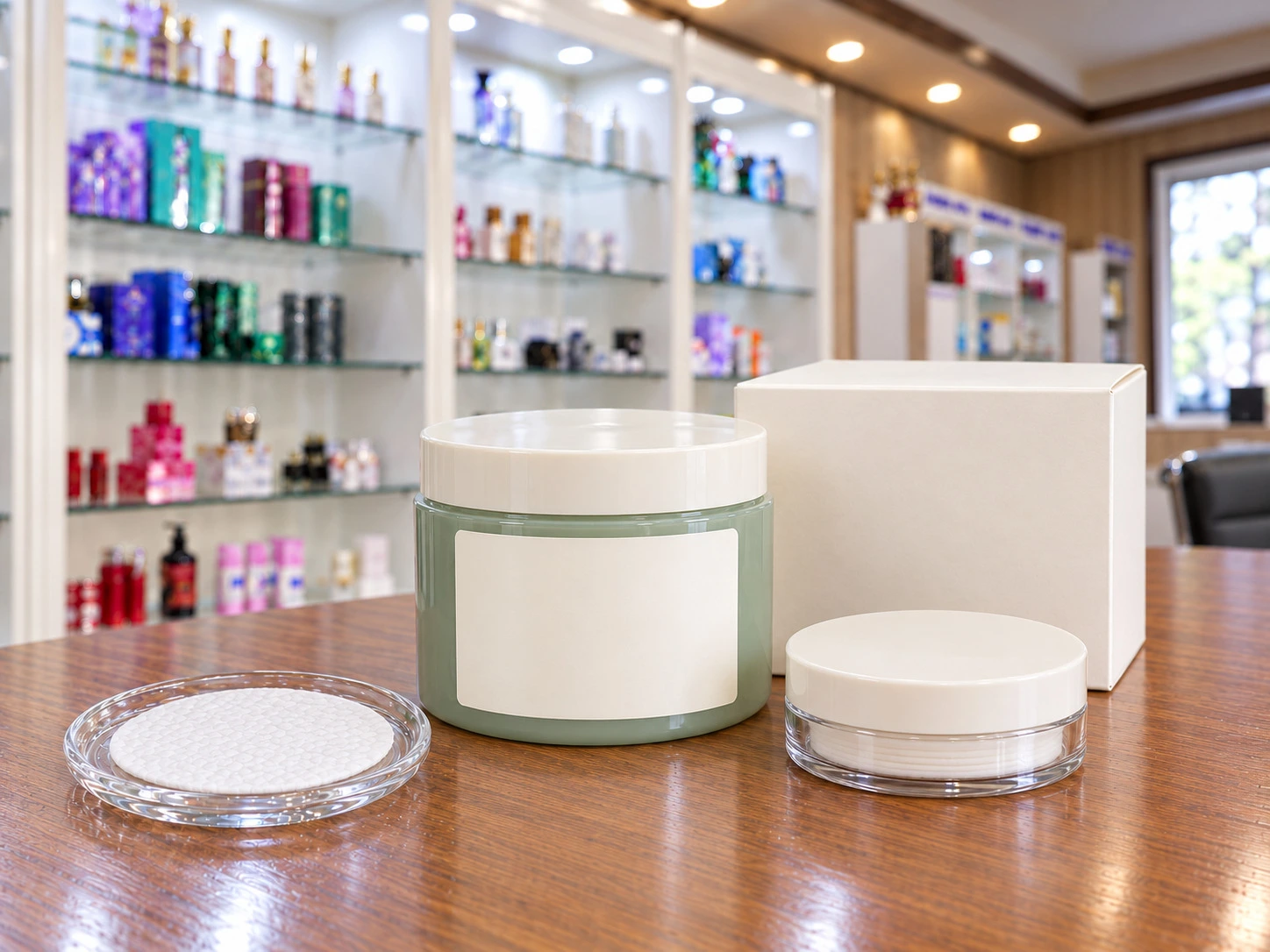
Discuss available starting directions and standard components. Confirm the selected essence, pad and pack combination before your branding and production specification are approved.
Explore Private Label
Bring a defined specification or develop the product with our team. Coordinate pad sourcing, jar or pouch components, decoration and assembly requirements.
Explore OEM / ODM
Develop the essence around your target feel and ingredient brief, then assess it with the intended pad and packaging. Agree revisions, validation and formula rights in the project terms.
Explore Custom FormulationRaw Materials and Production Water
Review ingredient identity, supplier information and production water controls before the essence moves into development or manufacturing.

Link received materials to their supplier, lot and specification. Define the relevant identity, appearance and document checks, with additional testing where the material requires it.
Include the water used in the formula in the quality plan. Review the applicable chemical and microbiological checks, sampling points and records for the production system.
Keep pad substrate, jars, lids, seals and pouches traceable alongside the essence ingredients. Record the approved versions so a component change can be assessed.
Pad Selection and Incoming Inspection
Compare dry material samples before assessing loaded pads. Nominal diameter alone does not describe how a pad will feel, hold together or fit a finished stack.

Agree the pad shape, dimensions, thickness and texture. Check the relationship between pad diameter, the jar opening and usable internal space.
Compare softness, visible fibers, lint and wet integrity using agreed methods. Assess whether the pad can be lifted and used without unwanted tearing or distortion.
Retain a clearly identified substrate reference and specification. Confirm the supplier and material version before approving subsequent pad deliveries.
Essence Development and Pad Performance
Compare the essence and the selected substrate together. Absorption, release and surface texture all influence the way a toner pad spreads product on skin.

Define the ingredient brief, appearance, fragrance preference and target finish. For an exfoliating direction, review the acid system, finished pH, intended use and evaluation plan together.
Compare pickup, wiping resistance, release during use and the finish after application under consistent conditions. Include the intended use method in sample feedback.
Use sample comparisons to guide development. Plan suitable finished-product evidence for hydration, sensitive-skin or other proposed claims rather than treating a skin-feel demonstration as proof.
Essence Loading and Stack Uniformity
Set the pad count and essence quantity together. Compare the top, middle and bottom of the pack after the agreed equilibration period and during the planned storage evaluation.

Define the pad count, essence addition target and tolerances. Confirm the measurement method and distinguish the essence quantity from the total weight of pads and packaging.
Sample defined stack positions and compare wetness, handling and product release. Where quantitative uptake or retained-liquid checks are needed, agree the method and sampling plan.
Review excess liquid, dry areas and changes after storage or handling. Adjust the essence, substrate, loading or pack geometry when the combination does not meet the agreed target.
Packaging, Sealing and Repeated Use
Evaluate the jar or pouch as part of the finished product. A secure initial seal and convenient pad access serve different purposes and need separate review.

Check the lid or closure fit, contact materials and the selected sealing arrangement. If a foil seal is specified, evaluate the seal with the actual container and loaded product.
Assess lid operation, removal of one pad, accessory placement and resealing. Review wetness loss and relevant pack changes under the intended opening routine.
Give travel packs and pad refill pouches their own count, loading and protection criteria. For refills, define handling instructions and evaluate the proposed transfer and reuse process.
Read our packaging compatibility guide for the wider evaluation approach.
Finished-System Stability and Microbiological Assessment
Build the assessment plan around the assembled product and intended market. Testing the essence alone does not establish the performance of a filled pad pack.

Agree storage conditions, observation points and acceptance criteria. Follow the appearance, odor, pad integrity, wetness distribution, relevant formula attributes and package condition.
Define finished-product microbiological checks and an appropriate preservation efficacy assessment for the selected system. Confirm methods, laboratory responsibilities and the treatment of pad and packaging effects.
Include relevant repeated-use and transport considerations. Set shelf-life and after-opening statements from the applicable evidence and review, rather than from a concept image or one short storage comparison.
Bulk Essence Preparation, Loading and Sealing
Prepare the essence to the approved formula and coordinate its transfer with pad loading and pack closure. Confirm the actual equipment and process sequence for the selected format.

Identify the batch, material lots, processing sequence and applicable in-process checks. Coordinate suitable holding and transfer arrangements for the approved essence.
For the illustrated jar route, pads are placed in open jars before a measured essence addition. Control pad count, loading and the agreed wetting period; confirm the loading equipment during process planning.
Apply the specified seal and closure after the relevant process checks. Keep coding, decoration and retail packing in their defined stages, with traceability through the completed batch.
Approved Sample and Batch Consistency
Use the approved pad, essence and packaging versions as the reference for batch comparison. A matching pH or similar-looking jar covers only part of the specification.

Check the agreed substrate, count, dimensions and essence addition. Compare defined stack positions where wetness distribution forms part of the acceptance plan.
Assess the specified appearance, odor, pad integrity, glide and release using the agreed methods. Include relevant formula measurements and pack function checks.
Link the results to the formula, pad and component lots and production records. Investigate deviations and record the disposition before the batch moves to release.
Finished Product Inspection and Batch Release
Bring the inspection and test results together before release. The release decision follows the agreed specification and documented review of the batch.

Verify pad count and essence quantity using the defined methods and sampling plan. Check closure or seal condition, container integrity and relevant leakage or access tests.
Confirm the SKU, label and carton versions, batch code and required markings. Check that accessories and pack contents match the approved configuration.
Review applicable production, inspection and microbiological results and any deviations. Confirm the agreed release documents and shipping authorization requirements.
Explore our production and quality control approach.
Retail Packing and Shipping Preparation
Match each approved retail pack to its carton and transport protection. Coordinate quantities, batch identification and handover documents before shipment.

Check the fit of the closed jar or pouch, the accessory arrangement and carton closure. Confirm that packing does not damage seals, hinges, labels or decoration.
Agree shipping carton quantities, internal protection and relevant handling or transport checks. Travel pouches and refill packs may need different protection from rigid jars.
Confirm finished quantities, shipping marks, batch references and packing documents. Agree the destination and delivery terms; transit time is separate from production time.
Factory Documents and Market Support
Review current factory documents and the product-specific work required for your destination market. Agree responsibilities, scope and costs during project planning.
Agree the formula ingredient information, pad material specification and relevant packaging documents needed by your responsible parties for market review.
Identify the finished-system stability, microbiological, packaging, safety and claim-support work appropriate to the selected pad pack and intended use.
Coordinate ingredient declarations, pad count or other required contents information, directions, warnings and product-life statements for the destination market.
Request current documents and confirm their scope and validity. FDA facility registration does not constitute FDA approval of a facility or product. Factory documents do not replace finished-product assessment.
Explore the Toner Range
Explore liquid toner directions alongside your pad project, with formulation and packaging choices suited to each format.