


An enzyme mask, an exfoliating acid toner and a salicylic acid cleanser can serve different purposes. This comparison helps you separate surface smoothing from pore-focused care and assess whether a product fits your skin and routine.
What Is the Difference Between Enzyme and Acid Exfoliation?
An enzyme exfoliator uses protein-breaking enzymes to help loosen surface cell buildup. Examples include papain from papaya and bromelain from pineapple.[3]
An acid exfoliator uses nonenzymatic acids to promote skin-cell shedding. These include alpha hydroxy acids, or AHAs, such as glycolic and lactic acid.[4] Salicylic acid is commonly called a BHA in skincare.[5]
Both belong to chemical exfoliation because their action is different from physically rubbing cells away with a scrub. A powder or mask may also include abrasive particles, so product texture alone does not tell you which method it uses. The broader distinction between chemical and physical exfoliation helps identify these mixed formats.
| Comparison point | Enzyme exfoliator | Acid exfoliator |
|---|---|---|
| Ingredient clues | Papain, bromelain or another identified exfoliating enzyme.[3] | Glycolic or lactic acid for AHAs; salicylic acid for BHA products.[4][5] |
| Product formats | Rinse-off masks, powders and other enzyme-containing formulas | Rinse-off cleansers or peels, and leave-on liquids, pads or serums |
| Main distinction | Usually evaluated for surface smoothing | AHA products target surface exfoliation; salicylic acid also helps unclog pores.[1][4] |
| What determines performance | Active enzyme retained in the finished formula, plus how it is used.[3] | Acid type, concentration, pH and the other ingredients.[4] |
| What the name cannot promise | A gentle, allergy-free product | A stronger or more effective product for every concern |
This comparison covers at-home skincare. A professional peel is not interchangeable with a routine exfoliating toner simply because both contain an acid.
Which Option Fits Your Main Skin Concern?
Dullness or uneven surface texture: either category can fit this goal. Direct clinical comparisons remain limited, so enzymes cannot be declared universally better than acids.[3] Choose one product intended for surface smoothing and a format you can use correctly. Neither an ingredient name nor a “glow” claim tells you how a particular formula will perform on your face.
Blackheads or whiteheads: favor a suitable salicylic acid product over an enzyme-only exfoliator. Salicylic acid has a clearer role in clearing clogged pores; an enzyme mask is not an equivalent acne treatment.[1] For ingredient-specific use and precautions, see salicylic acid for skin. Persistent or painful acne deserves a treatment plan, not progressively stronger exfoliation.
Dry, reactive or currently irritated skin: decide first whether you need an exfoliator at all. Burning, itching and scaling can accompany reduced product tolerance. A gentle cleanser and a tolerated moisturizer may be more useful than another resurfacing step.[2] If irritation began after frequent exfoliation, the guide to over-exfoliated skin addresses the recovery question separately. Aggressive exfoliation can also worsen dark marks, particularly in darker skin tones or skin that develops pigmentation after inflammation.[6]
Why Is an Enzyme Exfoliator Not Automatically Gentler?
“Fruit-derived” describes an ingredient’s origin, not its safety on your face. Papain damaged barrier-related proteins in cultured human skin cells and caused skin sensitization in mice. These experiments do not measure reaction rates from finished cosmetic products in people.[7]
For AHAs, concentration, pH and surrounding ingredients affect exfoliation; the acid name or percentage alone cannot rank two formulas for gentleness.[4] A mild acid formula may suit you better than an enzyme mask containing ingredients you react to.
Enzyme activity depends on pH, temperature and formulation. A papain listing does not prove retained activity, and a fruit extract or ferment name alone proves even less.[3] Follow storage and contact-time directions rather than adding heat or leaving a mask on longer.
Finally, check for overlapping exfoliation. Some products combine enzymes with acids: a published ingredient list for an exfoliating powder includes both papain and salicylic acid.[8] If you are trying to avoid a particular acid, inspect the current package instead of relying on the product’s headline. Look for scrub particles and massage instructions too, because rubbing adds another variable.
Citric acid does not automatically make a product an AHA peel: acids can also adjust pH.[4] Read the product’s stated purpose and directions alongside its ingredient list.
How to Introduce One Exfoliator Into Your Routine
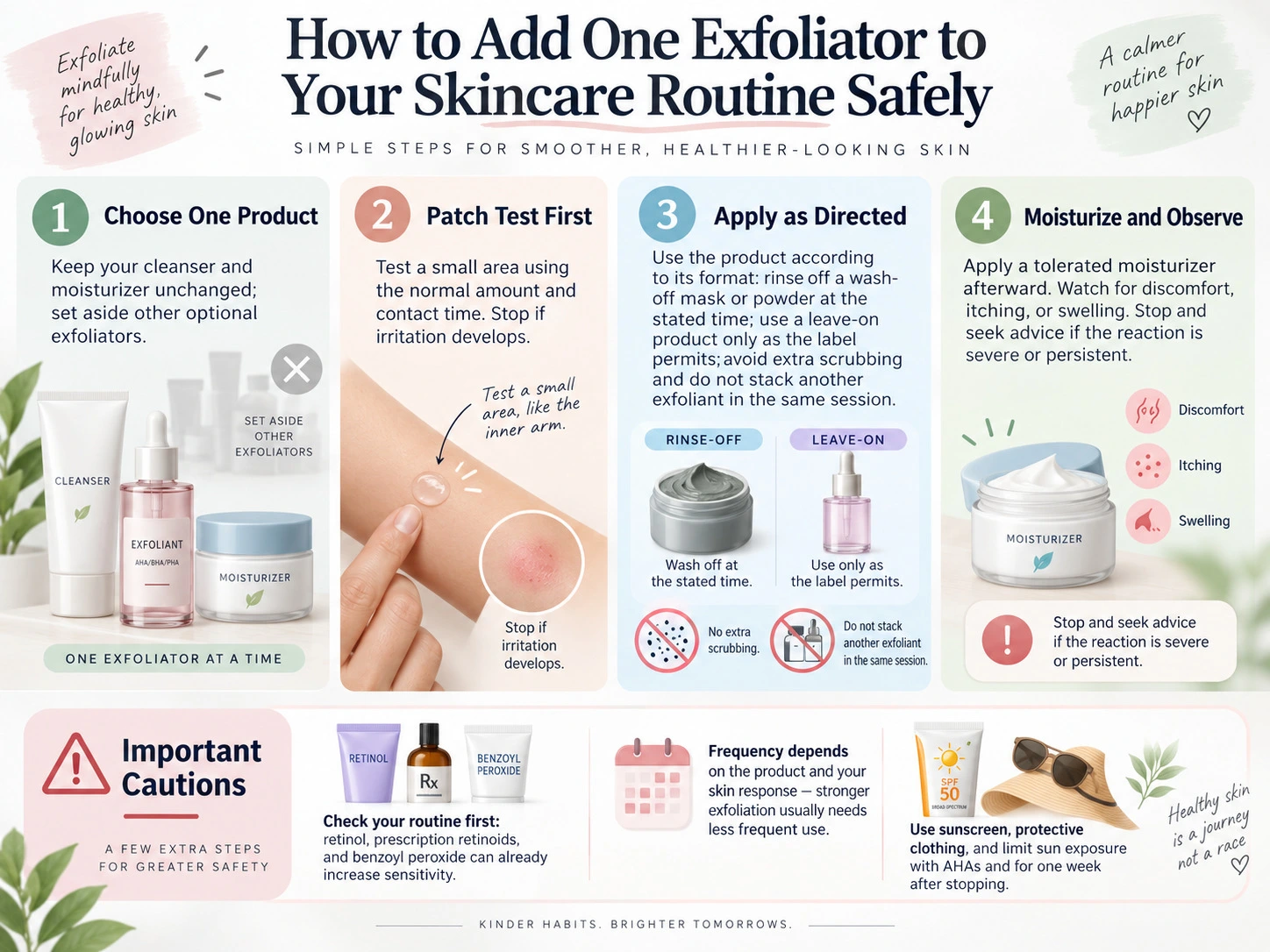
Check your existing routine before adding either category. Retinol, prescription retinoids and benzoyl peroxide can already cause sensitivity or peeling; extra exfoliation can worsen dryness or breakouts.[6] Follow medication and product restrictions, and ask your prescriber before adding an exfoliator to a prescription routine.
- Choose one product to introduce: keep your tolerated cleanser and moisturizer unchanged. Set aside other optional exfoliators so you can assess the new product without several simultaneous changes.
- Test a small area first: use the intended amount and contact time on a limited area before full-face use. Do not exceed the exfoliator’s directions to fit a generic testing schedule. Stop if a reaction develops; home testing cannot rule out every allergy.[9]
- Apply according to its format: prepare and apply the product as directed. Rinse off a wash-off mask or powder at the stated time; use a leave-on product only as its label permits. Avoid extra scrubbing or stacking another exfoliant in that session.
- Moisturize and observe: apply a tolerated moisturizer afterward.[6] Check for discomfort, itching or swelling before another use. If a reaction occurs, stop the product; seek medical advice for a severe or persistent reaction.[9]
Frequency should reflect the product and your skin’s response, not the assumption that enzymes are suitable every day. Stronger exfoliation generally needs less frequent use.[6] The guide to how often to exfoliate your face covers adjusting a schedule without chasing more peeling.
Use sunscreen, protective clothing and limited sun exposure with AHAs and for one week after stopping because they may increase sun sensitivity.[4] Nighttime use does not remove this precaution.
FAQs About Enzyme and Acid Exfoliators
Is an enzyme exfoliator a chemical exfoliant?
Yes. Enzymes exfoliate through protein-breaking reactions. An enzyme product with scrub particles also uses physical exfoliation.[3]
Can you use an enzyme exfoliator and an acid together?
A finished product can contain both. That does not establish that two separate products are suitable to layer. Start with one exfoliator and follow any restrictions on both labels; there is no need to combine them for the same surface-smoothing goal.
Can you exfoliate every day?
Some products allow daily use, but that is not a rule for either category. Frequency depends on the method and your skin’s tolerance. Reduce use or stop if irritation develops.[6]
Does tingling mean an exfoliator is working?
No. Skin can sting or burn without a visible rash, so sensation is not a useful measure of exfoliation. Do not extend contact time to intensify tingling or continue through burning.[2]
Sources
[1] American Academy of Dermatology. Adult acne treatment dermatologists recommend
[2] DermNet. Sensitive skin
[3] Bouziani A, Özel R, Güngör Ö. Cosmetic Enzymes as Formulation-Integrated Actives: Mechanisms, Delivery, and Functional Evidence
[4] U.S. Food and Drug Administration. Alpha Hydroxy Acids
[5] U.S. Food and Drug Administration. Beta Hydroxy Acids
[6] American Academy of Dermatology. How to safely exfoliate at home
[7] Stremnitzer C et al. Papain Degrades Tight Junction Proteins of Human Keratinocytes In Vitro and Sensitizes C57BL/6 Mice via the Skin Independent of its Enzymatic Activity or TLR4 Activation
[8] Dermalogica. Daily Microfoliant
[9] American Academy of Dermatology. How to test skin care products


