



If your face feels tight after cleansing, skin flooding can sound like a reason to buy several new serums. A more useful question is whether your current routine supplies moisture and keeps it from escaping. The trend’s name does not determine how many bottles your skin needs.
What Does Skin Flooding Do for Your Skin?
The routine combines two moisturizing functions. Humectants attract and retain water in the outer skin layer. Occlusive ingredients create a surface layer that reduces evaporation; moisturizers often combine these functions with ingredients that soften skin.[2]
Applying moisturizer while skin is still damp is an established approach to caring for dryness.[3] Skin flooding builds a layered routine around that principle. The realistic goal is better comfort and a smoother, more hydrated appearance—not permanent wrinkle removal or treatment of a skin disease.
Judge the result by how your skin feels after the products settle and later in the day. A shiny finish alone does not prove that you needed more layers or that your skin barrier has recovered. If a simple moisturizer already keeps your skin comfortable, additional hydrating steps are optional.
Which Products Do You Need?
For the layered version, choose one plain hydrating serum and a moisturizer. A serum containing hyaluronic acid is a common option; glycerin is another humectant used in hydrating formulas.[1] Neither ingredient requires you to buy several similar serums.
Look beyond a front-label ingredient name. A product containing glycerin can still be an exfoliating treatment or medicated formula. Select for the product’s full purpose and directions, not simply because one ingredient sounds hydrating.
For the finish, choose a cream or lotion that suits your skin. One moisturizer can already contain humectants, emollients and occlusive ingredients; you do not need a separate bottle for each function.[2] For dry skin, consider a fragrance-free cream or ointment.[3] If you are acne-prone, look for “non-comedogenic,” “oil-free” or “won’t clog pores” labeling.[4]
A hydrating toner or mist is optional. Plain water left after cleansing can provide the damp starting surface, so a mist is not an entry requirement. An exfoliating toner is not interchangeable with a gentle hydrating toner just because both are liquids.
How to Do Skin Flooding
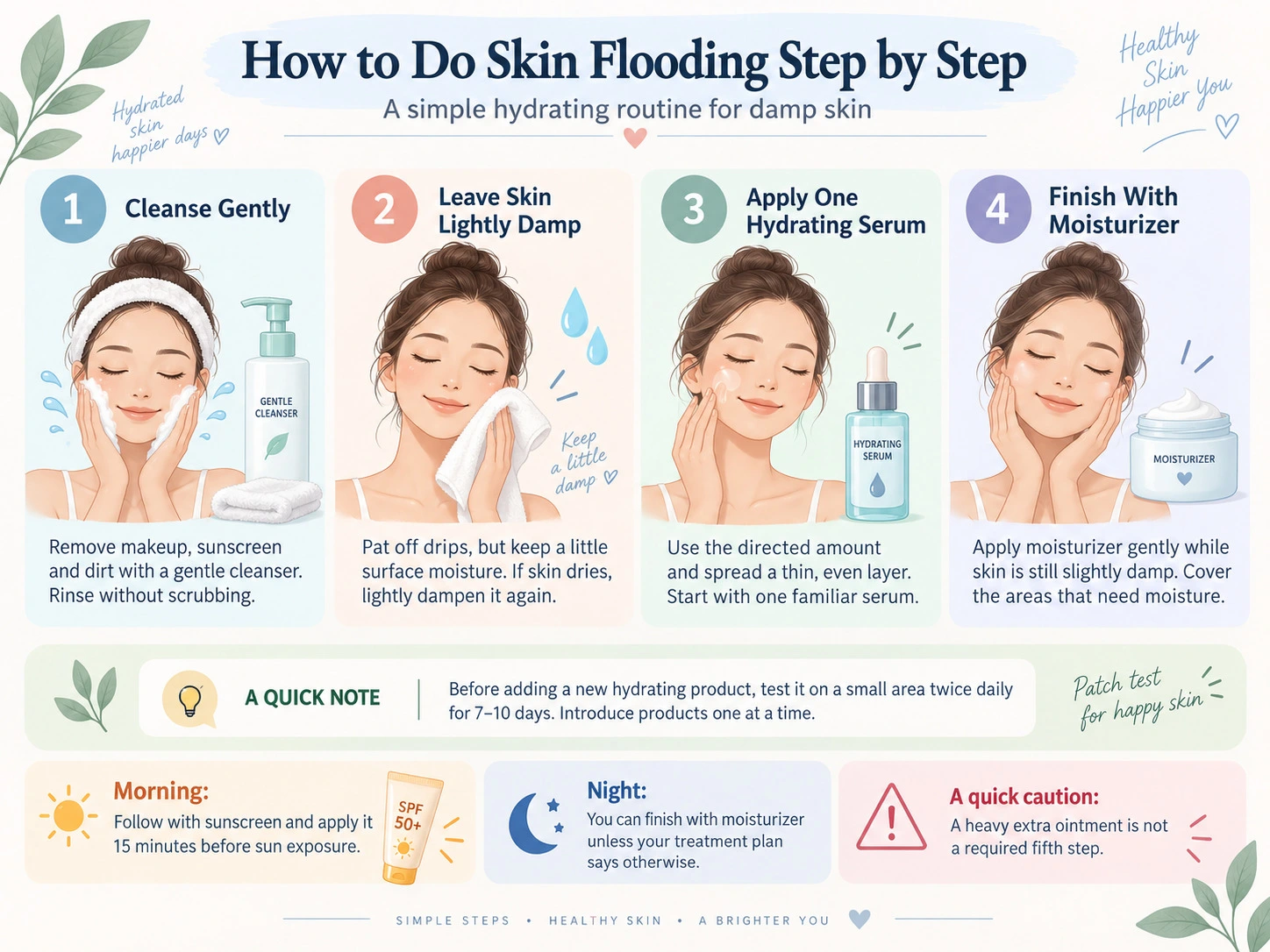
Use this simple routine when your products permit application to damp skin. Before adding a new hydrating cosmetic, test it on a small area twice daily for seven to 10 days, using its normal amount and contact time.[5] Introduce products individually so you can identify a reaction.
- Cleanse gently: Remove makeup, sunscreen and dirt with a gentle cleanser. Rinse without scrubbing.[1]
- Leave skin lightly damp: Gently pat off drips, leaving skin slightly damp. If it dries, lightly dampen it again.[3]
- Apply one hydrating serum: Use the amount directed on the label and spread a thin, even layer. Start with one familiar serum.[1]
- Finish with moisturizer: Apply your moisturizer gently while skin remains slightly damp. Cover the areas that need moisturizing.[3]
A heavy extra ointment is not a required fifth step.
For a morning routine, follow with sunscreen as directed. Use enough for even coverage and apply it 15 minutes before sun exposure.[6] At night, you can finish with moisturizer unless your treatment plan calls for a different sequence.
How Often Should You Do It, and Should You Wait Between Layers?
There is no fixed skin-flooding schedule. Start by testing the added serum in one of your usual routines, then assess comfort and tolerance before using it more often. Moisturizing dry skin regularly remains useful, whether or not you add a serum.[3]
Keep amounts within each product’s directions. A heavier coat is not a shortcut to a more useful routine.
Use application cues rather than a universal timer: let each layer spread and settle enough that the next does not push it around. Follow specific directions for waiting between skincare steps, especially when medication or sunscreen is involved.
If products become sticky, heavy or roll into residue, reduce optional layers and check the combination for pilling. Keep the routine that feels comfortable, rather than extending the wait indefinitely.
Who Should Adjust or Skip the Routine?
People with dry or tight-feeling skin may find a gentle moisturizing routine useful. Oily or acne-prone skin can still need moisturizer, especially when acne treatment causes dryness; choose an acne-friendly formula and keep extra layers modest.[4] You do not need to follow the richest version of the trend.
For sensitive skin, use familiar, fragrance-free products and introduce one new item at a time. If a new product causes a reaction, gently wash it off and stop using it. Seek care for a severe reaction or symptoms that do not settle.[5]
Keep exfoliating acids and retinoids out of the experimental hydrating stack. Continue prescribed treatment according to its own instructions rather than changing it to fit the trend. For example, RETIN-A cream and gel directions require completely dry skin and a 20–30-minute interval after washing before medication.[7] That preparation takes priority over damp-skin layering; ask your prescriber how moisturizer should fit around treatment.
Avoid adding a heavy overnight petroleum-jelly seal over acids or retinoids. That extra occlusive layer can increase irritation, and slugging is also unsuitable for many oily or acne-prone faces.[8] If your skin is already sore, persistently itchy or inflamed, seek advice instead of trying to overwhelm the problem with more products.
FAQs About Skin Flooding
Is skin flooding the same as slugging?
No. Skin flooding emphasizes hydrating layers followed by moisturizer. Slugging usually means applying petroleum jelly as an overnight seal. You can skin flood without adding that heavy occlusive layer.[8]
Do you need hyaluronic acid to do skin flooding?
No. A glycerin-containing hydrating formula is another option. Choose a product you tolerate rather than treating hyaluronic acid as mandatory.[2]
Can skin flooding replace moisturizer?
Do not assume several watery serums replace a moisturizer. Choose a finish that combines hydration with ingredients that reduce water loss.[2]
Can skin flooding repair a damaged skin barrier overnight?
Improved comfort after moisturizing does not prove overnight barrier repair. Persistent dryness, burning or irritation needs assessment.[3]
Sources
[1] Alexis Granite. What is Skin Flooding?
[2] DermNet. Emollients and moisturisers
[3] American Academy of Dermatology Association. Dermatologists’ top tips for relieving dry skin
[4] American Academy of Dermatology Association. Moisturizer: Why you may need it if you have acne
[5] American Academy of Dermatology Association. How to test skin care products
[6] U.S. Food and Drug Administration. Sunscreen: How to Help Protect Your Skin from the Sun
[7] DailyMed, RETIN-A patient directions. RETIN-A—tretinoin cream; RETIN-A—tretinoin gel
[8] Cleveland Clinic. Slugging: Does This Skin Care Trend Work?


