


What Should a Good Facial Cleanser Do?
A cleanser uses surfactants to lift oil, sunscreen, makeup, pollutants, and other debris so they can be rinsed away. The goal is effective removal without unnecessarily disrupting the outer skin barrier.[1][4]
A good cleanser should:
- Remove the level of oil, sunscreen, makeup, and buildup you normally wear.
- Rinse away without leaving a heavy film or obvious residue.
- Leave the skin comfortable rather than tight, itchy, burning, or raw.
- Fit the rest of your routine, especially if you already use retinol, acids, benzoyl peroxide, or prescription treatment.
- Be simple enough to use consistently once or twice daily when needed.
More foam does not mean better cleansing, and a “squeaky-clean” finish is not a quality target. Stronger surfactant systems can remove skin lipids and natural moisturizing components along with unwanted oil, increasing dryness and irritation.[4]
Best Cleanser for Each Skin Type

Skin type helps determine the cleanser texture and cleansing strength that are most likely to feel comfortable. Your main skin concern determines whether you need a plain cleanser or one containing an active ingredient.
| Skin Type or Condition | Best Starting Cleanser | What to Look For | What to Avoid or Limit |
|---|---|---|---|
| Dry skin | Cream, milk, lotion, or low-foaming cleanser | Fragrance-free formula, glycerin, ceramides, and gentle surfactants | Avoid harsh soap, strong foam, alcohol, fragrance, scrubs, and frequent acid cleansers.[8] |
| Dehydrated skin | Gentle gel, lotion, or cream cleanser | A comfortable rinse-off feel without post-wash tightness | Avoid choosing an aggressive cleanser only because the skin also looks oily |
| Oily skin | Gel or light foaming cleanser | A clean rinse, non-comedogenic positioning, and optional salicylic acid when appropriate | Avoid alcohol-heavy formulas and washing until the skin feels squeaky or stripped |
| Acne-prone skin | Mild gel or foaming cleanser; medicated wash when needed | Oil-free or non-comedogenic formula; salicylic acid or benzoyl peroxide if tolerated | Avoid scrubs, frequent washing, and several drying acne cleansers or treatments at once |
| Combination skin | Balanced gel, lotion, or low-foaming cleanser | Enough cleansing for the T-zone without drying the cheeks | Avoid using an overly strong cleanser to control only the oily areas |
| Sensitive or reactive skin | Mild cream, lotion, or low-foaming cleanser | Fragrance-free, non-soap formula with a short ingredient list | Avoid fragrance, essential oils, scrubs, strong acids, menthol, and harsh surfactants.[8] |
| Rosacea-prone skin | Mild non-soap cleanser | Fragrance-free, non-comedogenic formula that rinses away easily | Avoid alcohol, fragrance, glycolic acid, lactic acid, menthol, and sodium lauryl sulfate. Cleanse with fingertips and rinse completely.[7] |
| Barrier-stressed skin | Simple cream, lotion, or low-foaming cleanser | Fragrance-free formula with minimal active ingredients | Avoid exfoliating acids, scrubs, cleansing brushes, strong foam, and frequent washing until the skin feels comfortable again |
| Normal skin | Gentle gel, lotion, cream, or low-foaming cleanser | A texture you enjoy that removes daily buildup without tightness | Avoid adding strong active ingredients when your skin does not need them |
Use our skin type guide if you are unsure whether your skin is dry, oily, combination, or sensitive. Tightness can also reflect dehydration rather than naturally dry skin; see dehydrated vs dry skin for the difference.
If cleansing causes burning, peeling, persistent redness, or stinging from products that were previously comfortable, simplify the routine and review the signs of a damaged skin barrier.
Facial Cleanser Types Explained
The product format affects texture and user experience, but it does not guarantee how mild or effective the cleanser will be.
| Cleanser Type | Best Fit | Main Advantage | Watch Out For |
|---|---|---|---|
| Gel cleanser | Normal, combination, oily, or acne-prone skin | Light texture and clean rinse | Some formulas foam heavily or contain drying actives |
| Foaming cleanser | Oily skin, heavy sweat, or users who prefer more lather | Efficient oil and debris removal | High foam does not guarantee mildness; stop if skin feels tight |
| Cream or milk cleanser | Dry, sensitive, mature, or treatment-stressed skin | Lower-foam, softer after-feel | May feel too rich or leave residue for some oily skin |
| Oil cleanser or cleansing balm | Makeup, water-resistant sunscreen, or first step of double cleansing | Dissolves oil-based residue with less rubbing | Must emulsify and rinse well; some formulas may feel heavy |
| Micellar water | Light makeup removal, travel, or first cleanse | Convenient and low-rinse option | May not remove heavy sunscreen or makeup on its own |
| Active cleanser | Acne, clogged pores, or selected texture concerns | Combines cleansing with salicylic acid, benzoyl peroxide, or an AHA | Can duplicate leave-on treatments and increase irritation |
| Syndet bar | Users who prefer a solid format | Can be milder and less drying than traditional alkaline soap | Do not assume every facial bar is a mild syndet |
Traditional soap is alkaline and can be irritating or drying, while synthetic detergent bars, known as syndets, can be formulated closer to the skin’s natural pH and may be better tolerated.[5] Read the label rather than judging a product only by whether it comes in a bottle or bar.
Should You Choose a Cleanser With Active Ingredients?
An active cleanser can be useful when it addresses a defined concern and does not duplicate the rest of your routine.
- Salicylic acid: useful for oily skin, blackheads, whiteheads, and clogged pores.
- Benzoyl peroxide: useful for inflammatory acne when the strength and frequency fit your treatment plan.
- Glycolic or lactic acid: may support surface exfoliation and brightness but can irritate dry or sensitive skin.
- Hydrating ingredients: glycerin, ceramides, or hyaluronic acid may improve the after-feel, but the cleanser is still rinsed off.
Acne-prone skin does not need to feel dry to be clean. Frequent washing and deliberately stripping the skin can increase irritation and make breakouts harder to manage.[6] Keep one main acne treatment at the center of your acne-prone skincare routine.
Follow the cleanser’s directions. Some medicated washes need brief contact time before rinsing, while others are designed for immediate wash-off.[1] Reduce frequency or switch to a plain cleanser if the active wash causes persistent tightness, burning, redness, or peeling.
Signs Your Cleanser Is Too Harsh—or Not Effective Enough

Your cleanser may be too harsh if:
- Your skin feels tight, squeaky, itchy, or hot immediately after rinsing.
- You develop new flaking, redness, burning, or sensitivity.
- Your usual moisturizer suddenly stings.
- Acne treatment becomes harder to tolerate after cleansing.
Your cleanser may not be removing enough if:
- Visible makeup or tinted sunscreen remains after rinsing.
- Your skin has a persistent greasy or waxy film.
- Product residue collects around the hairline, nose, or jaw.
- You need repeated scrubbing to remove the day’s products.
Do not judge effectiveness by foam alone. Adjust the formula, amount, massage time, or makeup-removal step before moving to a much harsher cleanser.
How to Wash Your Face Correctly
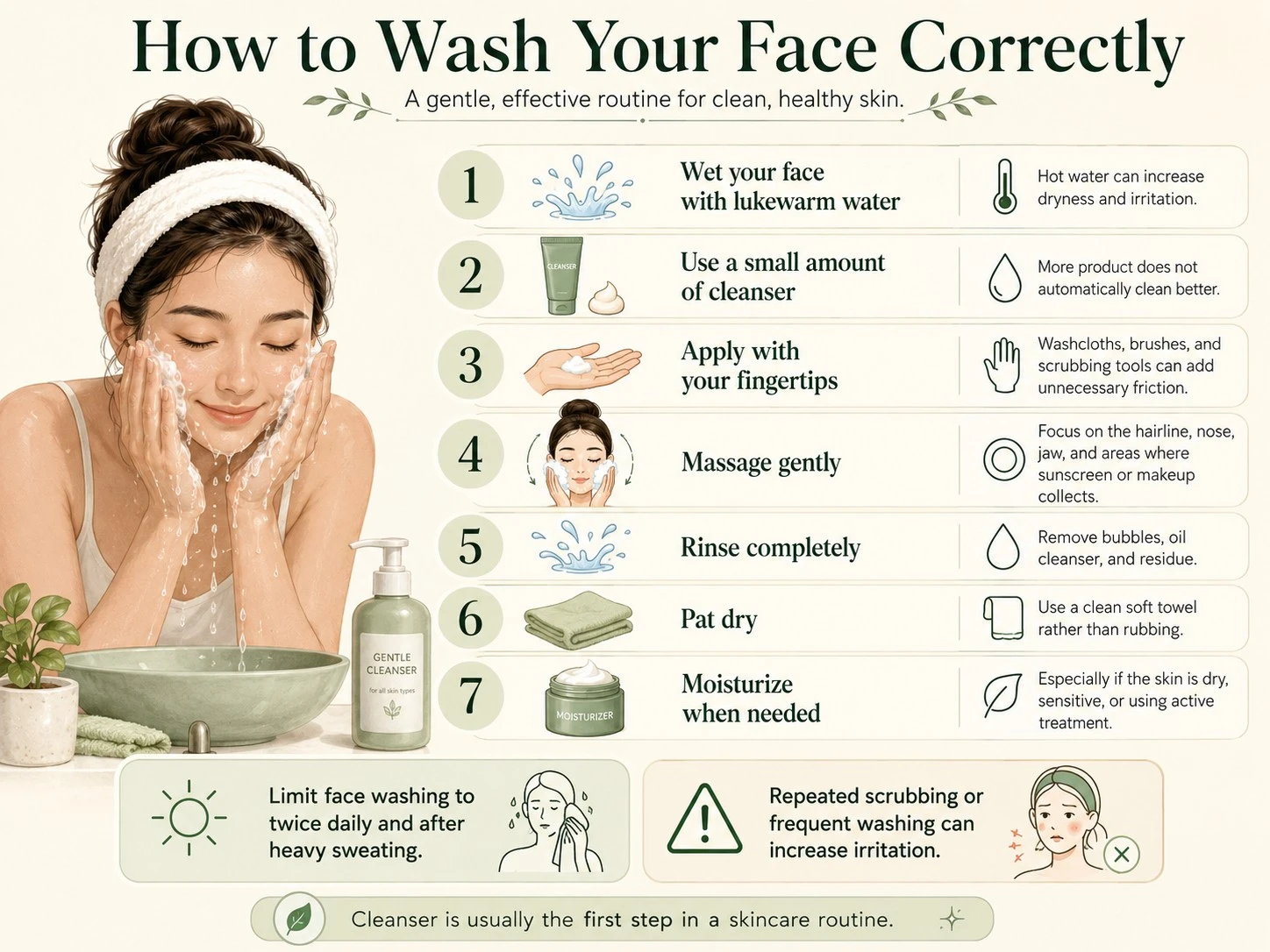
- Wet your face with lukewarm water: hot water can increase dryness and irritation.
- Use a small amount of cleanser: more product does not automatically clean better.
- Apply with your fingertips: washcloths, brushes, and scrubbing tools can add unnecessary friction.
- Massage gently: focus on the hairline, nose, jaw, and areas where sunscreen or makeup collects.
- Rinse completely: remove bubbles, oil cleanser, and residue.
- Pat dry: use a clean soft towel rather than rubbing.
- Moisturize when needed: especially if the skin is dry, sensitive, or using active treatment.
Dermatologists generally recommend limiting face washing to twice daily and after heavy sweating. Scrubbing or washing repeatedly throughout the day can increase irritation.[2]
Cleanser is normally the first step in a routine. See our skincare routine order guide for the placement of treatment, moisturizer, sunscreen, and makeup.
Common Cleanser Mistakes
- Choosing the strongest foam because it feels cleaner.
- Using a facial scrub, cleansing brush, and active cleanser together.
- Washing repeatedly to control oil or acne.
- Using a medicated cleanser when a leave-on treatment already contains the same active.
- Assuming every cream cleanser is gentle or every foaming cleanser is harsh.
- Using traditional body soap on dry or sensitive facial skin.
- Double cleansing when one wash already removes everything.
- Ignoring persistent tightness, burning, redness, or peeling.
- Changing cleanser and several other products at the same time.
Introduce a new cleanser separately so you can judge how it affects your skin. Reactive skin can use our patch testing guide before trying a medicated or fragranced formula.
When to See a Dermatologist
See a dermatologist if gentle cleansing does not improve persistent burning, redness, itching, scaling, painful acne, repeated rashes, or sensitivity to multiple fragrance-free products.
Professional guidance is also useful when you suspect rosacea, eczema, contact dermatitis, or another condition that a cleanser alone cannot solve. A dermatologist can help separate skin type from an underlying disorder and build a treatment routine that does not keep irritating the skin.
Final Thoughts
The best cleanser is not the one that produces the most foam or contains the most active ingredients. It is the formula that removes your normal daily buildup and leaves your skin comfortable enough to tolerate the rest of your routine.
Start gentle, match the texture to your skin type, and add an active cleanser only for a clear reason. If your face feels tight, burns, or peels after washing, the cleanser is working against your routine rather than supporting it.
FAQs About Choosing a Facial Cleanser
Should dry skin use a cream or foaming cleanser?
Dry skin usually tolerates a cream, milk, lotion, or low-foaming cleanser better. A foaming cleanser can still work if it is mild and leaves no tightness, but heavy foam and strong degreasing are often unnecessary.
Is a gel cleanser good for oily skin?
Yes. Gel cleansers often provide a light texture and clean rinse that suits oily skin. Choose one that removes excess oil without leaving the face squeaky, tight, or irritated.
What cleanser is best for acne-prone skin?
Start with a mild non-comedogenic cleanser. Salicylic acid or benzoyl peroxide washes can help when they fit your acne plan, but using several drying acne products together can increase irritation.
Is micellar water enough to cleanse the face?
Micellar water may be enough for light makeup or a quick cleanse, but heavier sunscreen, oil, or makeup may need a rinse-off cleanser afterward. Sensitive skin may also prefer rinsing away any remaining surfactant residue.
How often should I wash my face?
Most people can wash once or twice daily and after heavy sweating. Washing more often is not automatically better and can increase dryness or irritation.
Should my skin feel tight after cleansing?
No. Persistent tightness usually means the cleanser, water temperature, washing frequency, or scrubbing method is too aggressive for your skin. Switch to a gentler formula and reduce friction.
Sources
[1] Cleveland Clinic. A Guide on How to Wash Your Face
[2] American Academy of Dermatology. Face Washing 101
[3] American Academy of Dermatology. Skin Care on a Budget
[4] Walters RM, et al. Cleansing Formulations That Respect Skin Barrier Integrity
[5] DermNet. Soaps and Cleansers
[6] American Academy of Dermatology. 10 Skin Care Habits That Can Worsen Acne
[7] American Academy of Dermatology. 7 Rosacea Skin Care Tips Dermatologists Recommend
[8] American Academy of Dermatology. Dermatologists’ Top Tips for Relieving Dry Skin


