


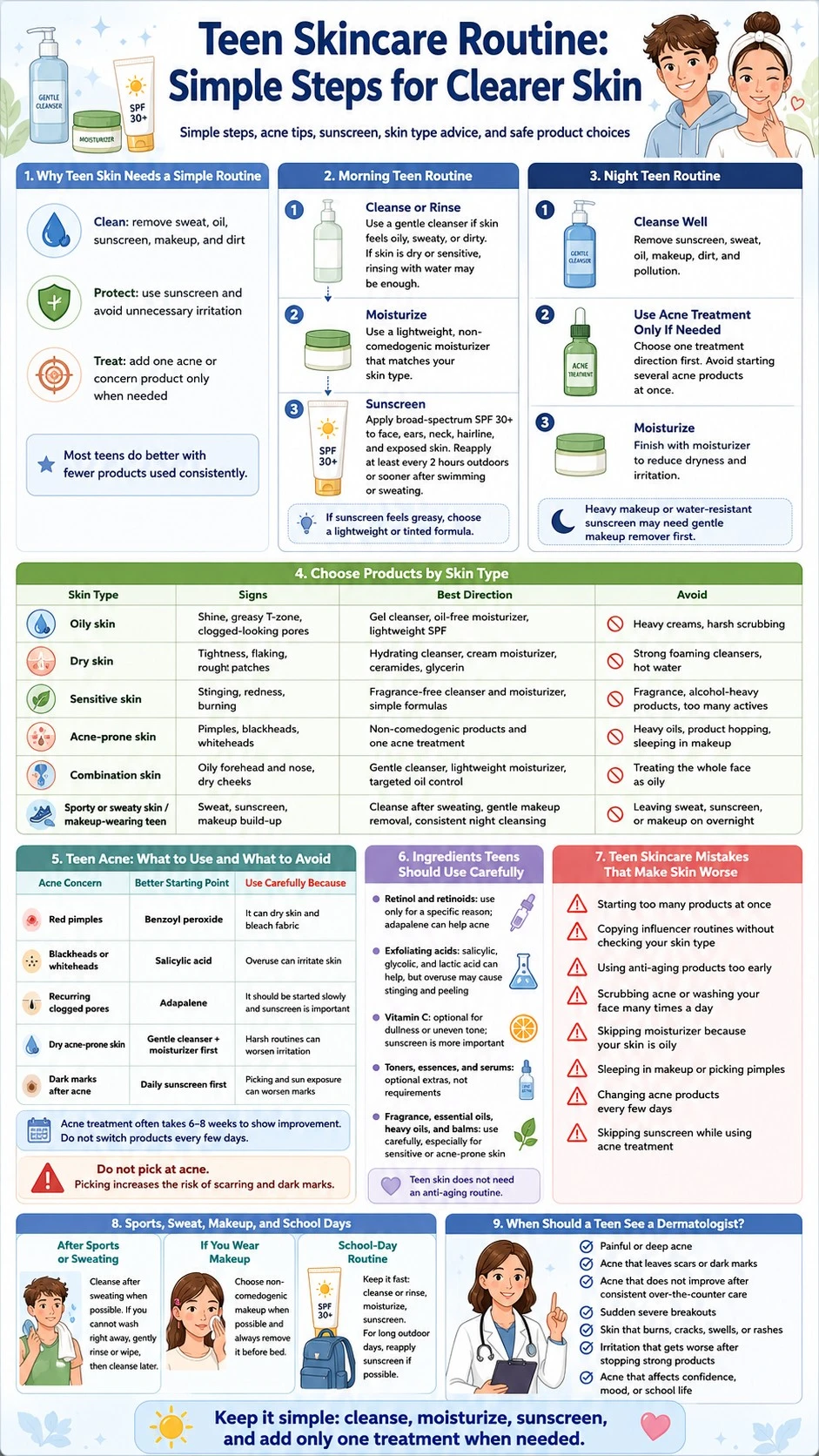
Why Teen Skin Needs a Simple Routine
Teen skin often changes because of hormones, oil production, sweat, sunscreen, makeup, sports, and clogged pores. Social media can make skincare look more complicated than it needs to be, but most teens do better with fewer products used consistently.
The goal is clean, comfortable, protected skin with less irritation. A good routine should do three things:
- Clean: remove sweat, oil, sunscreen, makeup, and dirt.
- Protect: use sunscreen and avoid unnecessary irritation.
- Treat: add one acne or concern product only when needed.
Tweens and teens should learn basic cleansing, moisturizing, and sun protection before adding stronger products. [1]
Morning Teen Skincare Routine
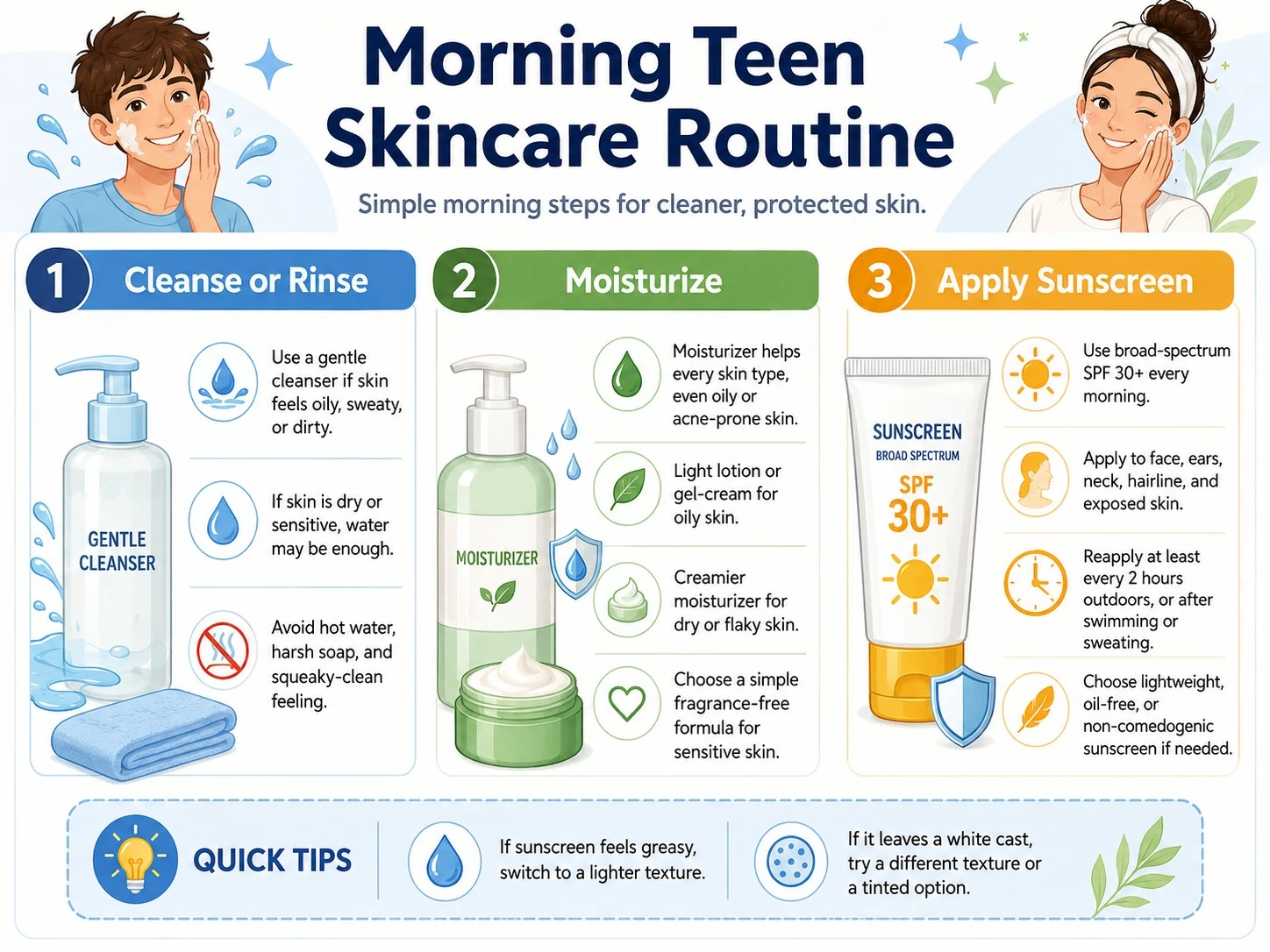
Your morning routine should stay short. It prepares your skin for the day and protects it from sun exposure.
Step 1: Cleanse or Rinse
Use a gentle cleanser if your face feels oily, sweaty, or dirty when you wake up. If your skin is dry, sensitive, or not greasy, rinsing with water can be enough.
Avoid hot water, harsh soap, and cleansers that leave your skin tight or squeaky. Acne-prone skin can use a salicylic acid cleanser for clogged pores or blackheads, but do not combine it with several other acne products at the same time.
Step 2: Moisturize
Moisturizer is not only for dry skin. Oily and acne-prone skin still need it, but the texture should match your skin.
Choose a light lotion or gel-cream for oily skin, a creamier moisturizer for dry or flaky skin, and a simple fragrance-free formula for sensitive skin. Moisturizer helps reduce tightness and makes acne treatments easier to tolerate.
Step 3: Apply Sunscreen
Use broad-spectrum SPF 30 or higher in the morning, especially when you will be outdoors, walking to school, playing sports, or spending time in strong daylight. Apply it to your face, ears, neck, hairline, and exposed skin.
For a daily teen routine, apply enough sunscreen and reapply at least every two hours outdoors, or sooner after swimming or sweating. [2]
If sunscreen feels greasy, choose a lightweight, oil-free, or non-comedogenic sunscreen. If it leaves a white cast, try a different texture or a tinted sunscreen that works better for your skin tone.
Night Teen Skincare Routine
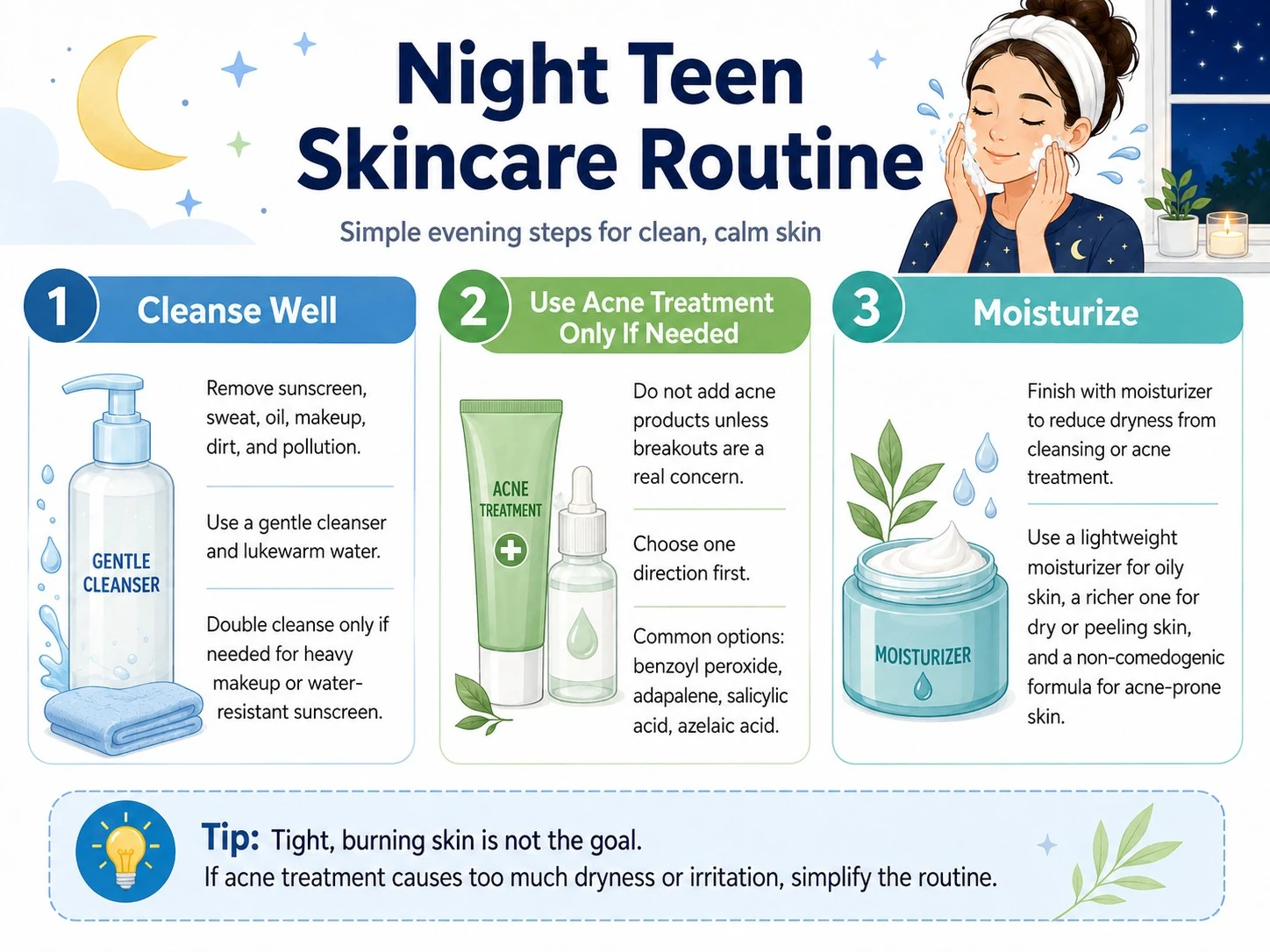
Your night routine removes what built up during the day. It is also the best time to use most acne treatments.
Step 1: Cleanse Well
Cleanse at night to remove sunscreen, sweat, oil, makeup, dirt, and pollution. Even if you do not wear makeup, nighttime cleansing matters.
Use lukewarm water and a gentle, non-abrasive cleanser. Do not scrub your face with a rough towel or cleansing brush. Scrubbing can make acne and irritation worse. [5]
If you wear heavy makeup or water-resistant sunscreen, you may need a gentle makeup remover or cleansing balm before your regular cleanser. Double cleansing can help in that case, but it is not required for every teen every night.
Step 2: Use Acne Treatment Only If Needed
If your skin is clear or only breaks out once in a while, you may not need a daily acne treatment. Do not add acne products just because they are popular.
If acne is a real concern, choose one treatment direction first. Starting benzoyl peroxide, salicylic acid, adapalene, exfoliating toner, and clay masks in the same week makes irritation more likely and results harder to judge.
Common acne treatment options include benzoyl peroxide, adapalene, salicylic acid, and azelaic acid. Benzoyl peroxide and topical retinoids are strongly supported treatment options in updated acne guidance. [3]
Step 3: Moisturize
Finish your night routine with moisturizer. This helps reduce dryness from cleansing and acne treatment.
If your skin feels tight after acne treatment, do not assume the product is working better. Dry, burning skin is not the goal.
Use a lightweight moisturizer for oily skin, a richer one for dry or peeling skin, and a simple non-comedogenic formula if you are acne-prone.
See also: Skincare Routine for Acne-Prone Skin: Clearer Skin Steps
How to Choose Products by Teen Skin Type
Choose teen skincare products by skin type, not packaging, trend, price, or gender. The right formula should match how your skin actually feels: oily, dry, sensitive, acne-prone, or mixed.
| Teen Skin Type | Signs | Best Product Direction | Avoid |
|---|---|---|---|
| Oily skin | Shine, greasy T-zone, clogged-looking pores | Gel cleanser, oil-free moisturizer, lightweight SPF, non-comedogenic products | Heavy creams and harsh scrubbing |
| Dry skin | Tightness, flaking, rough patches | Hydrating cleanser, cream moisturizer, ceramides, glycerin | Strong foaming cleansers and hot water |
| Sensitive skin | Stinging, redness, burning, easy irritation | Fragrance-free cleanser and moisturizer, simple formulas | Fragrance, alcohol-heavy products, too many actives |
| Acne-prone skin | Pimples, blackheads, whiteheads, clogged pores | Non-comedogenic products and one acne treatment | Heavy oils, product hopping, sleeping in makeup |
| Combination skin | Oily forehead and nose, dry cheeks | Gentle cleanser, lightweight moisturizer, targeted oil control | Treating the whole face as oily |
| Sporty or sweaty skin | Sweat, helmet friction, clogged pores near hairline or straps | Cleanse after sweating, use non-comedogenic sunscreen | Leaving sweat and sunscreen on overnight |
| Makeup-wearing teen | Makeup residue, clogged pores, dull skin | Gentle makeup removal and consistent night cleansing | Sleeping in makeup |
The right teen skincare product should make skin calmer, not tighter, shinier, or more irritated.
Teen Acne: What to Use and What to Avoid
Teen acne is common, but random product switching often makes it harder to manage. Keep the basic routine steady, then choose one acne treatment based on the type of breakout.
| Acne Concern | Better Starting Point | Use Carefully Because |
|---|---|---|
| Red pimples | Benzoyl peroxide | It can dry skin and bleach fabric |
| Blackheads or whiteheads | Salicylic acid | Overuse can irritate skin |
| Recurring clogged pores | Adapalene | Start slowly and use sunscreen |
| Dry acne-prone skin | Gentle cleanser and moisturizer first | Harsh routines can worsen irritation |
| Dark marks after acne | Daily sunscreen first | Picking and sun exposure can worsen marks |
Use acne ingredients as focused treatments, not as a complete routine. Benzoyl peroxide and adapalene are stronger options, so introduce them slowly. Salicylic acid can be easier to start with for clogged pores, but overuse can still dry or irritate skin. [3]
Do not judge acne treatment after only a few days. Acne treatment often takes at least six to eight weeks before you start to see fewer breakouts. Changing products every few days can irritate your skin and delay progress. [4]
Important: Do not pick at acne. Picking increases the risk of scarring, dark marks, and longer healing time. If acne is painful, deep, spreading, or leaving marks, get professional help instead of using stronger products on your own.
Ingredients Teens Should Use Carefully
Teen skin does not need an anti-aging routine. Strong or trendy products should be added only when they solve a specific problem.
Use these carefully:
- Retinol and retinoids: Adapalene can help acne, but anti-aging retinol is not a basic teen step.
- Exfoliating acids: Salicylic, glycolic, and lactic acid can help clogged pores or rough texture, but overuse can cause stinging and peeling.
- Vitamin C: Optional for dullness or uneven tone; sunscreen is more important.
- Toners, essences, and serums: Optional extras, not requirements.
- Fragrance, essential oils, heavy oils, and balms: Use carefully, especially on sensitive or acne-prone skin.
The best teen routine keeps skin calm, clean, protected, and easy to manage, not overloaded with trend products.
Teen Skincare Mistakes That Make Skin Worse
Most teen skincare problems get worse from overdoing it, not from being too simple.
Avoid these mistakes:
- Starting too many products at once.
- Copying influencer routines without checking your skin type.
- Using anti-aging products too early.
- Scrubbing acne or washing your face many times a day.
- Skipping moisturizer because your skin is oily.
- Sleeping in makeup or picking pimples.
- Changing acne products every few days.
- Skipping sunscreen while using acne treatment.
Your skin does not need to feel dry, tight, or burning to improve. A routine that constantly irritates your skin needs to be simplified.
What About Sports, Sweat, Makeup, and School Days?
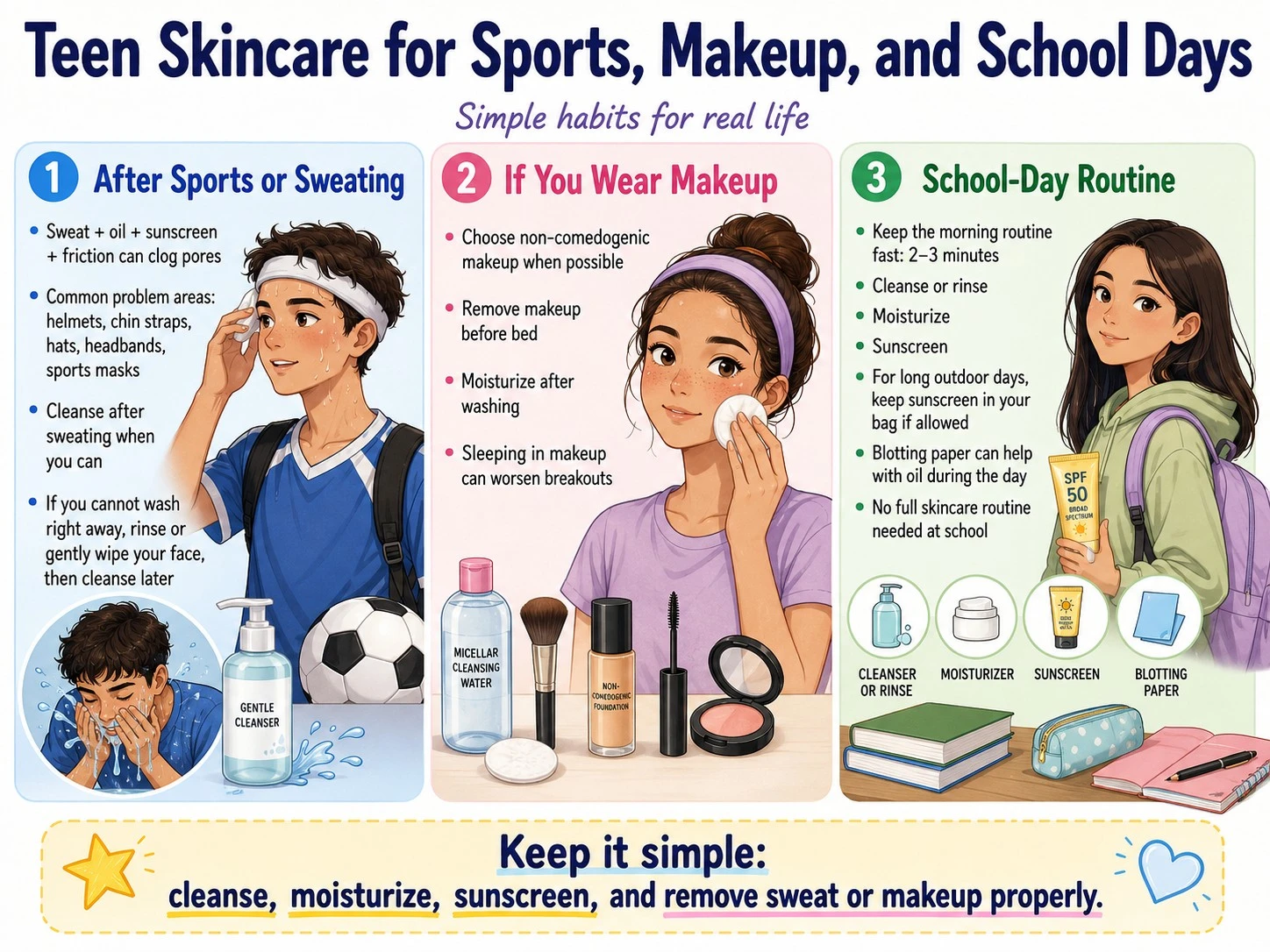
Teen skincare has to fit real life: school, sports, makeup, sunscreen, helmets, masks, and long days.
After Sports or Sweating
Sweat mixed with oil, sunscreen, and friction can clog pores, especially under helmets, chin straps, hats, headbands, and sports masks. Cleanse after sweating when you can. If you cannot wash right away, rinse or gently wipe your face, then cleanse properly later.
If You Wear Makeup
Makeup is not automatically bad for acne-prone skin, but product choice and removal matter. Choose non-comedogenic makeup when possible, remove it before bed, and moisturize after washing. Even non-comedogenic makeup can contribute to breakouts if you sleep in it. [6]
School-Day Routine
A school-day routine should be fast. Most teens should be able to finish the morning routine in two to three minutes: cleanse or rinse, moisturize, sunscreen.
For long outdoor days, keep sunscreen in your bag if your school allows it. Blotting paper can help with oil during the day, but you do not need to do a full skincare routine at school.
When Should a Teen See a Dermatologist?
A basic routine can help mild skin concerns, but some signs need professional care.
A teen should see a dermatologist if they have:
- Painful or deep acne.
- Acne that leaves scars or dark marks.
- Acne that does not improve after consistent over-the-counter care.
- Sudden severe breakouts.
- Skin that burns, cracks, swells, or rashes.
- Irritation that gets worse after stopping strong products.
- Acne that affects confidence, mood, or school life.
Parents should not dismiss acne as “just teenage skin.” Getting help early can reduce stress and lower the risk of lasting marks or scars.
Final Thoughts
The best teen skincare routine is simple, consistent, and based on skin type. Start with cleanser, moisturizer, and sunscreen. If acne is a problem, add one treatment instead of stacking products.
Teen skin needs steady care, gentle products, daily sun protection, and enough patience to let the routine work.
Teen Skincare Routine FAQs
What is the best skincare routine for a teenager?
The best teen skincare routine is gentle cleanser, moisturizer, and sunscreen in the morning, then cleanser and moisturizer at night. If acne is a concern, add one acne treatment as directed.
At what age should teens start skincare?
There is no perfect age. A basic routine can start when a teen begins dealing with oiliness, sweat, sunscreen, acne, or makeup. Tweens should keep skincare even simpler: gentle cleansing, moisturizer, and sunscreen.
Do teens need moisturizer if they have oily skin?
Yes. Oily skin still needs moisturizer. Choose a lightweight, oil-free, non-comedogenic moisturizer. Skipping moisturizer can make skin feel tight and irritated, especially when using acne treatments.
Should teens use retinol?
Teens do not need retinol for anti-aging. Some teens with acne may use acne-focused retinoids such as adapalene, but it should be introduced carefully and used as directed. Sunscreen is important when using retinoids.
What is the best teen skincare routine for acne?
Use a gentle cleanser, non-comedogenic moisturizer, and daily sunscreen. Add one acne treatment such as benzoyl peroxide, salicylic acid, or adapalene. Use it consistently before judging results. [3][4]
Is sunscreen necessary for teens every day?
Yes. Teens should use sunscreen when exposed to daylight, especially outdoors, during sports, or while using acne treatments that can make skin more sensitive. Choose broad-spectrum SPF 30 or higher for daily outdoor use. [2]
Can teens use adult skincare products?
Yes, if the product fits their skin type and is gentle enough. Teens should avoid strong anti-aging products, high-strength exfoliants, heavy oils, and fragranced products unless they truly need them. The label matters more than whether it says “teen” or “adult.”
Sources
[1] American Academy of Dermatology Association. A dermatologist’s guide to skincare from growing up to glowing up
[2] U.S. Food and Drug Administration. Sunscreen: How to Help Protect Your Skin from the Sun
[3] American Academy of Dermatology Association. American Academy of Dermatology issues updated guidelines for the management of acne
[4] American Academy of Dermatology Association. Acne: Diagnosis and treatment
[5] American Academy of Dermatology Association. Face washing 101
[6] American Academy of Dermatology Association. 10 skin care habits that can worsen acne


