


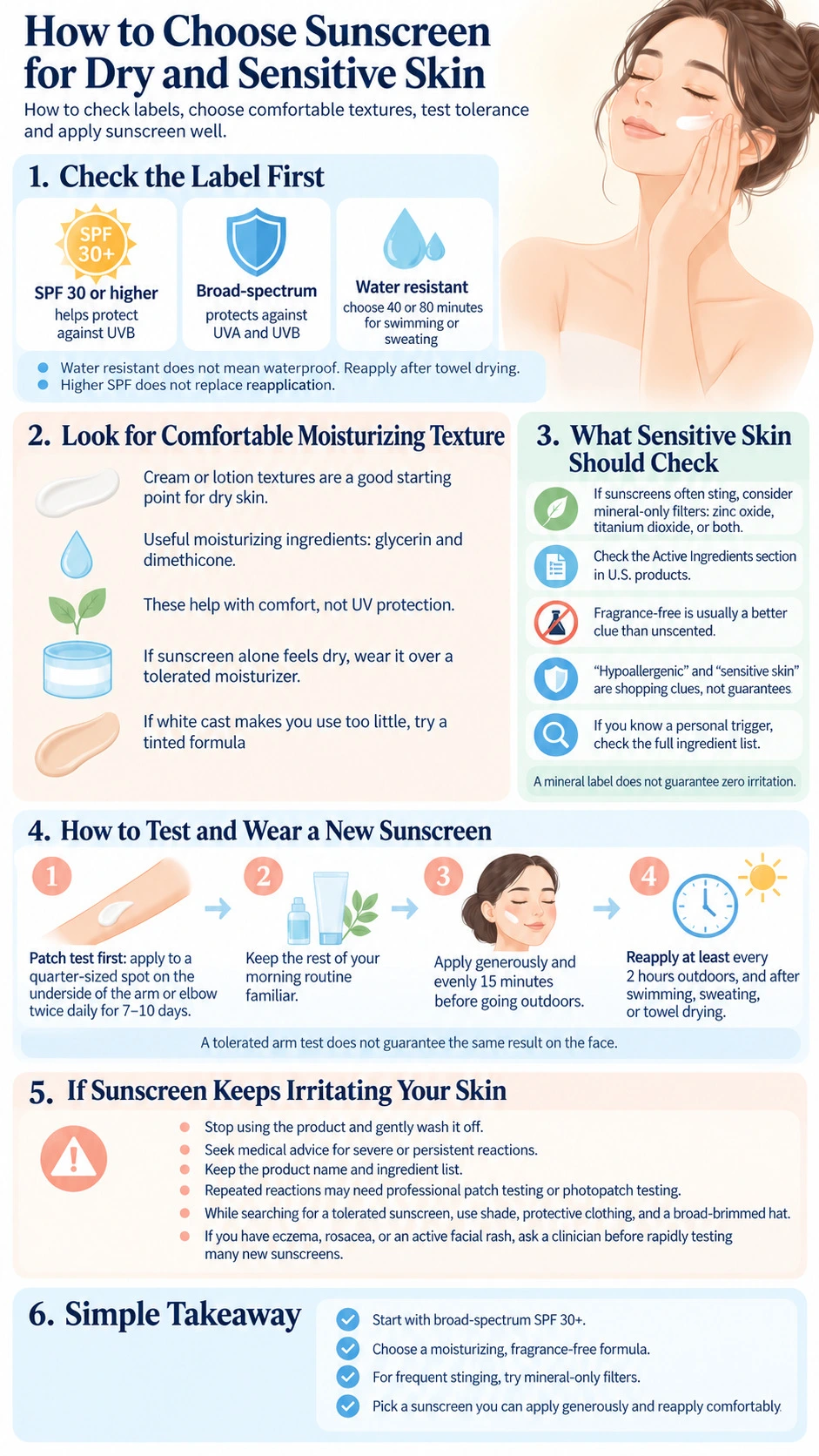
Dry skin needs a sunscreen that feels comfortable without encouraging you to use too little. Sensitive skin adds another requirement: a formula you can tolerate. These needs overlap, but a product can be moisturizing and still irritate you, or feel gentle while providing too little moisture.
What Protection Should You Check on the Label?
Filter your shortlist by protection before comparing texture or extra skincare ingredients. Look for these three features:
- SPF 30 or higher: SPF mainly indicates UVB sunburn protection; choose at least SPF 30.[1][2]
- Broad spectrum: look for protection against both UVA and UVB, rather than relying on the SPF number alone.[3]
- Water resistance: check for a stated 40 or 80 minutes of protection while swimming or sweating.[2]
Water resistant does not mean waterproof or all-day protection; follow reapplication directions, including after towel drying.[3] Check the water-resistance claim before relying on a favorite everyday sunscreen for swimming or an outdoor workout.
SPF 50 offers more UVB protection than SPF 30, but higher SPF does not extend the reapplication interval.[4] Neither number tells you whether a product suits dry or sensitive skin. For the protection tradeoff, see SPF 30 versus SPF 50; assess comfort separately.
Which Textures and Moisturizing Ingredients Should You Look For?
A moisturizing cream sunscreen is a useful starting point for a tight, flaky face.[4] A lighter lotion may also suit you; texture names do not establish how moisturizing the finished product will be.
Useful ingredient clues include glycerin, which helps attract and retain water, and dimethicone, which can reduce evaporative water loss. These are moisturizing functions, not UV protection: they do not replace tested SPF and broad-spectrum claims.[5] You do not need every popular hydrating ingredient in one product. Prioritize ingredients you already tolerate over a long list of skincare extras.
If sunscreen alone leaves your skin uncomfortable, keep a separate, tolerated moisturizer in the routine. Judge the sunscreen over that familiar base rather than changing your cleanser, serum and moisturizer at the same time. This makes the trial easier to interpret and reflects how you will actually wear the product.
Check the finish at the amount needed for coverage. If a white cast makes you apply less, try a suitable tinted formula instead. A tint that matches your skin tone can help reduce the visible residue some sunscreens leave.[1] Shade match and spreadability matter because you need to wear the product properly, not just like its appearance on a fingertip.
How Should Sensitive Skin Check Filters and Labels?
A fragrance-free mineral sunscreen is a reasonable first option when sunscreens sting or burn. Look for zinc oxide, titanium dioxide, or both as the only active sunscreen ingredients.[1] That recommendation concerns the filters, not every other ingredient in the formula.
In U.S. products, check the Active Ingredients section. A sunscreen containing zinc oxide plus a chemical UV filter is a hybrid, rather than a mineral-only product.[3] The fuller mineral versus chemical sunscreen comparison explains these categories. Do not assume that the word “mineral” means moisturizing, or that every chemical sunscreen will irritate you.
Prefer fragrance-free over unscented when avoiding fragrance. An unscented product can still contain fragrance-related ingredients; botanical ingredients can also contribute fragrance.[6] The distinction between fragrance-free and unscented skincare matters more than whether a sunscreen has a noticeable smell.
Treat “hypoallergenic” as a claim to examine, not proof that a product cannot cause a reaction. In the United States, the cosmetic term has no federally standardized definition.[7] A “sensitive skin” label is also a shopping clue rather than a personal tolerance test.
If you have a confirmed allergy, screen the whole ingredient list for that allergen. Sunscreen reactions can involve UV filters or ingredients such as fragrances and preservatives.[8] Avoid your known trigger rather than automatically rejecting every preservative or every ingredient in a broad category.
How to Test and Wear a New Sunscreen
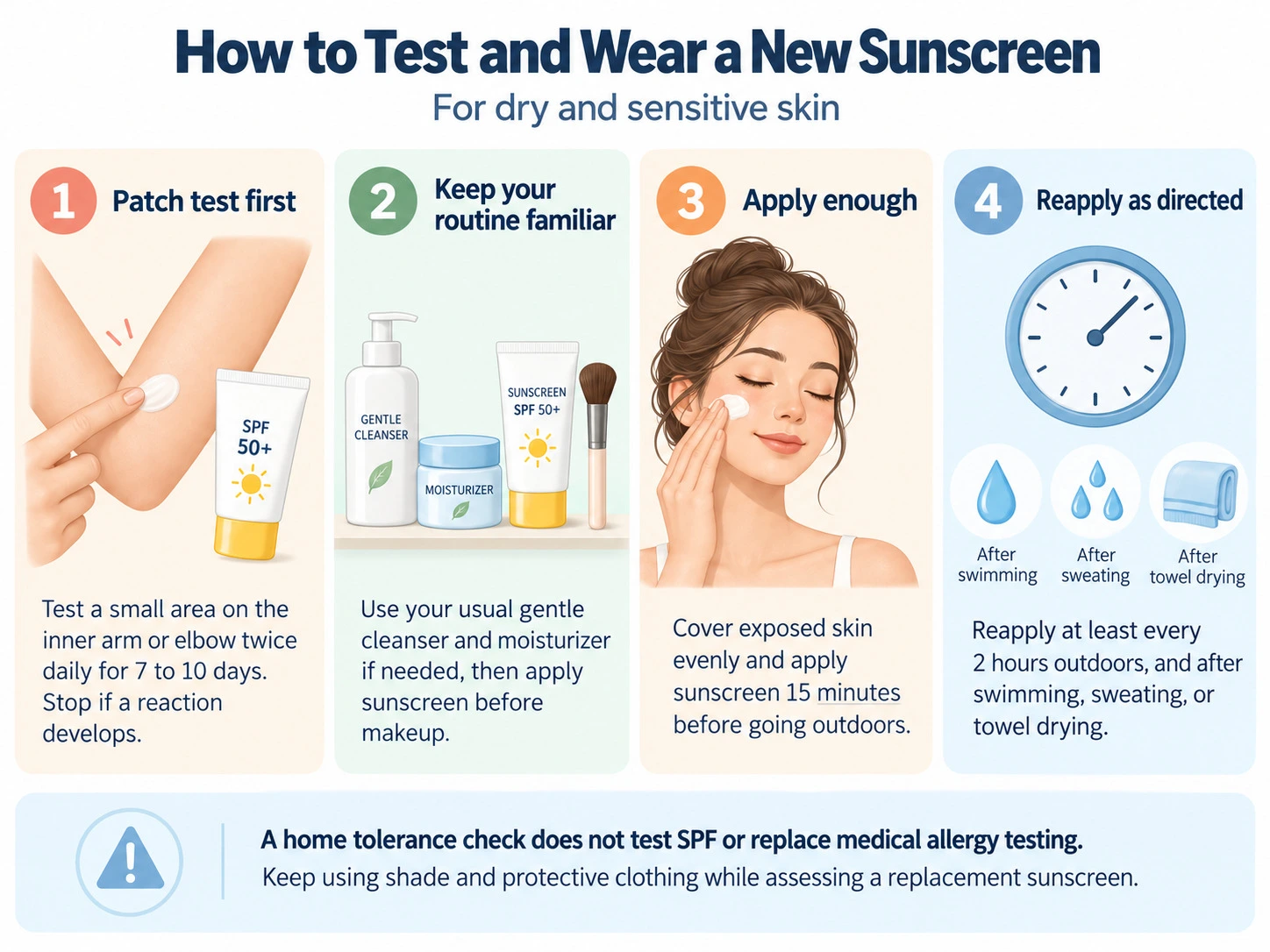
Introduce one sunscreen at a time. A home tolerance check does not test SPF or replace medical allergy testing. If you have a history of a sunscreen rash, ask a clinician about testing before retrying the suspected product.[8]
- Test a small area: apply the sunscreen to a quarter-sized spot on the underside of your arm or elbow twice daily for seven to 10 days, using the usual amount and contact time. Stop if a reaction develops.[6]
- Keep the morning routine familiar: gently cleanse and use a tolerated moisturizer if needed, then apply sunscreen before makeup.[9] The guide to sunscreen and moisturizer order covers that layering decision.
- Apply enough sunscreen: cover exposed skin generously and evenly 15 minutes before going outdoors, following the label.[2] Choose a finish that works without reducing the amount.
- Reapply as directed: reapply at least every two hours outdoors and after swimming, sweating or towel drying as the label directs.[2] Check comfort when reapplying.
After the small-area check, assess full-face comfort, spreadability and reapplication without adding other new skincare products. A tolerated arm test does not guarantee that your face will respond identically. Keep using an already tolerated sunscreen and other sun protection while assessing a replacement.
For coverage details beyond this selection guide, see how to use sunscreen. Sunscreen should work alongside shade and protective clothing, rather than serve as a reason to stay in direct sun longer.
What If Sunscreen Keeps Irritating Your Skin?
Stop using a sunscreen that causes a reaction and gently wash it off. Seek medical advice for a severe or persistent reaction.[6] Do not keep applying a painful product simply because it contains mineral filters or is advertised for sensitive skin.
Keep the product name and full ingredient list, and note when the reaction appeared. Repeated reactions, or a rash associated with sun exposure, deserve professional assessment. A dermatologist may use patch testing or photopatch testing when sunscreen allergy is suspected; a home test cannot identify the responsible ingredient reliably.[8]
While finding a tolerated sunscreen, use shade, protective clothing and a broad-brimmed hat to limit exposure. If you have eczema, rosacea or an active facial rash, ask your clinician how to protect the affected skin rather than testing several new formulas on it in quick succession.
FAQs About Sunscreen for Dry and Sensitive Skin
Is SPF 50 too strong for sensitive skin?
SPF 50 describes protection, not a tolerance guarantee. Assess the formula and reapply on the same schedule as lower-SPF products.[4]
Why does a mineral sunscreen still feel drying?
The UV filters do not define the moisturizing base. A mineral sunscreen may not provide enough comfort for your dry skin. Try a different cream formula or a tolerated moisturizer underneath rather than using less sunscreen.
Can a moisturizer with SPF be your only sunscreen?
Yes, if it offers the protection you need and you apply enough as directed. A small dab does not establish labeled protection. Reapply outdoors as you would with another sunscreen.[4]
Is baby sunscreen automatically better for sensitive adult skin?
No. In the United States, “baby” is not a defined sunscreen protection category. Check the active filters, full formula, SPF, broad-spectrum and water-resistance claims instead of relying on that word.[3]
Sources
[1] American Academy of Dermatology. How do I know if I’m using the right sunscreen?
[2] U.S. Food and Drug Administration. Sunscreen: How to Help Protect Your Skin from the Sun
[3] American Academy of Dermatology. How to decode a sunscreen label
[4] American Academy of Dermatology. Sunscreen FAQs
[5] DermNet. Emollients and moisturisers
[6] American Academy of Dermatology. How to test skin care products
[7] U.S. Food and Drug Administration. Cosmetics Safety Q&A: Hypoallergenic
[8] DermNet. Sunscreen allergy
[9] American Academy of Dermatology. Should I apply my skin care products in a certain order?


