


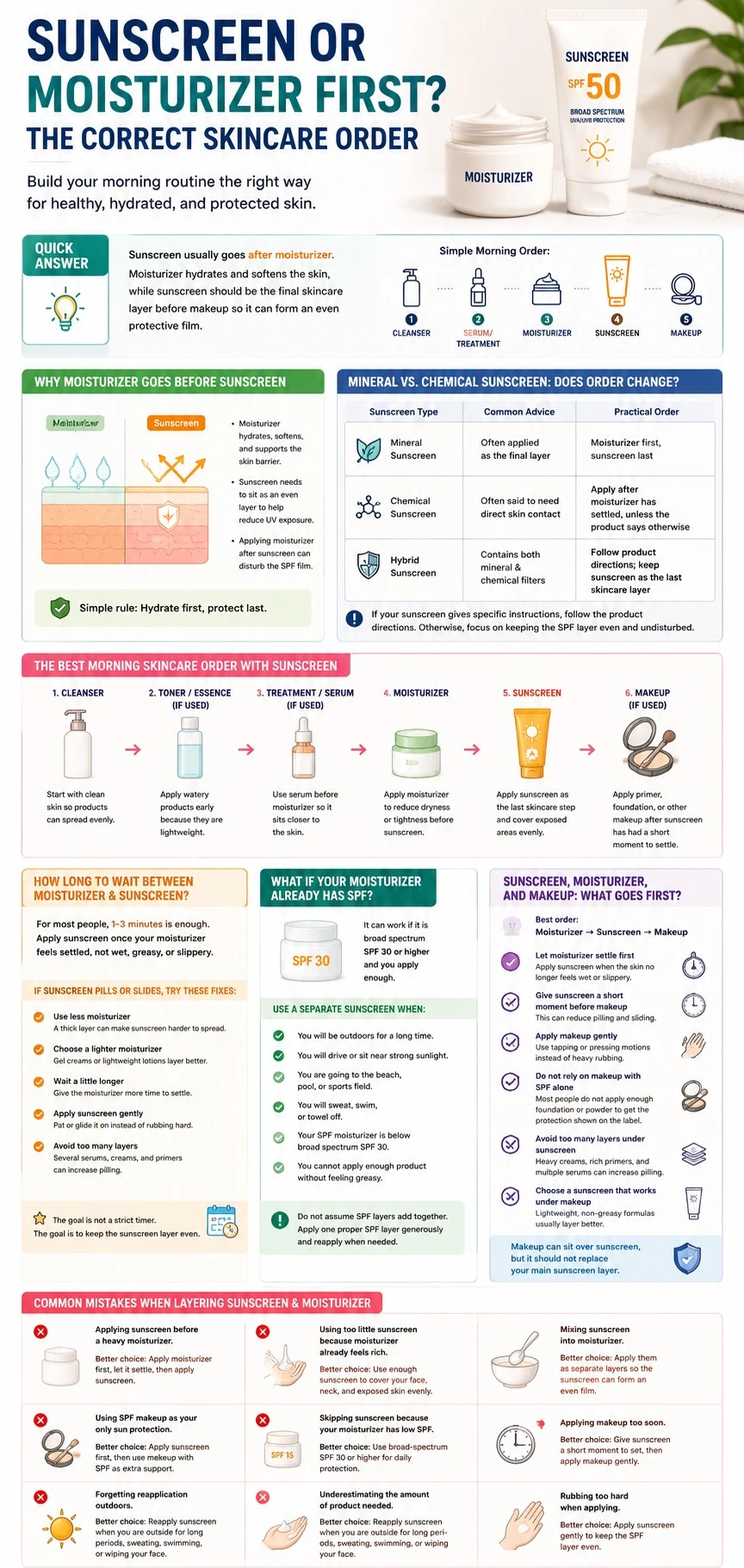
Why Moisturizer Usually Goes Before Sunscreen
Moisturizer goes before sunscreen because each product has a different job. Moisturizer helps reduce dryness and support the skin barrier. Sunscreen needs to sit as an even layer that helps reduce UV exposure.
If you apply moisturizer after sunscreen, the extra rubbing can disturb the sunscreen film. That does not make sunscreen useless, but it can make protection less even.
Simple rule: Hydrate first, protect last.
What About Mineral vs Chemical Sunscreen?
Some advice online says chemical sunscreen should go before moisturizer, while mineral sunscreen should go after moisturizer. For most daily routines, that rule is more confusing than useful. Mineral and chemical sunscreens work differently, but both need even coverage, enough product, and minimal rubbing after application.[4]
Sunscreen Type | Common Advice | Practical Order |
|---|---|---|
Mineral sunscreen | Often applied as the final layer | Moisturizer first, sunscreen last |
Chemical sunscreen | Often said to need direct skin contact | Apply after moisturizer has settled, unless the product says otherwise |
Hybrid sunscreen | Contains both mineral and chemical filters | Follow product directions; keep sunscreen as the last skincare layer |
If your sunscreen gives specific instructions, follow the product directions. Otherwise, focus on keeping the SPF layer even and undisturbed.
The Best Morning Skincare Order With Sunscreen
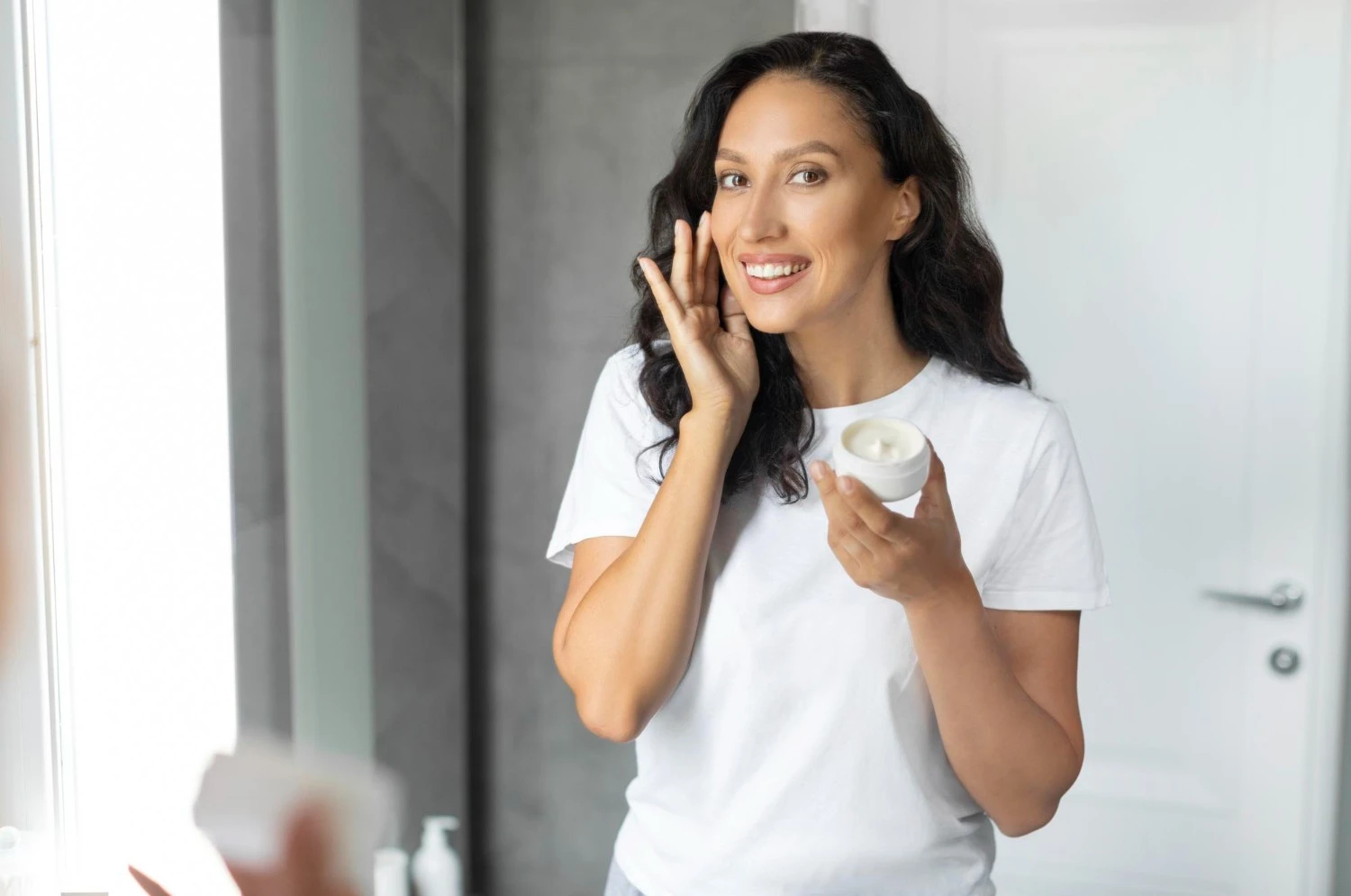
A good morning routine does not need many steps. Apply lighter skincare first, use moisturizer before sunscreen, and keep sunscreen as the final skincare layer before makeup.[1][2]
- Cleanser: Start with clean skin so products can spread evenly.
- Toner or essence, if used: Apply watery products early because they are lightweight.
- Treatment or serum, if used: Use serum before moisturizer so it sits closer to the skin.
- Moisturizer: Apply moisturizer to reduce dryness or tightness before sunscreen.
- Sunscreen: Apply sunscreen as the last skincare step and cover exposed areas evenly.
- Makeup, if used: Apply primer, foundation, or other makeup after sunscreen has had a short moment to settle.
If your products pill, slide, or feel too heavy, give your moisturizer a moment to settle before applying sunscreen.
How Long Should You Wait Between Moisturizer and Sunscreen?
You do not need a long wait between moisturizer and sunscreen. For most people, 1–3 minutes is enough. Apply sunscreen once your moisturizer feels settled, not wet, greasy, or slippery.
If sunscreen pills, flakes, or slides around, try these fixes:
- Use less moisturizer: A thick layer can make sunscreen harder to spread.
- Choose a lighter moisturizer: Gel creams or lightweight lotions often layer better in the morning.
- Wait a little longer: Give the moisturizer more time to settle.
- Apply sunscreen gently: Pat or glide it on instead of rubbing hard.
- Avoid too many layers: Several serums, creams, and primers can increase pilling.
The goal is not to follow a strict timer. The goal is to keep the sunscreen layer even.
What If Your Moisturizer Already Has SPF?
A moisturizer with SPF can work if it is broad spectrum SPF 30 or higher and you apply enough. The problem is that many people use moisturizer in a thin layer, which may not give the same protection shown on the label.
For simple indoor days or short sun exposure, an SPF moisturizer may be enough if you apply it like sunscreen. Treat it as your sunscreen step, not as a light moisturizer layer with a little SPF added.
Use a separate sunscreen when:
- You will be outdoors for a long time.
- You will drive or sit near strong sunlight.
- You are going to the beach, pool, or sports field.
- You will sweat, swim, or towel off.
- Your SPF moisturizer is below broad spectrum SPF 30.
- You cannot apply enough product without feeling greasy.
Do not assume SPF layers add together. SPF moisturizer plus sunscreen does not simply become a higher SPF number. Apply one proper SPF layer generously and reapply when needed.[3]
Sunscreen, Moisturizer, and Makeup: What Goes First?

The best order is moisturizer → sunscreen → makeup. Sunscreen should be the final skincare layer before primer, foundation, or other makeup. This helps the SPF layer stay even instead of being rubbed around by another cream.
Use these tips for smoother layering:
- Let moisturizer settle first: Apply sunscreen when the skin no longer feels wet or slippery.
- Give sunscreen a short moment before makeup: This can reduce pilling and sliding.
- Apply makeup gently: Use tapping or pressing motions instead of heavy rubbing.
- Do not rely on makeup with SPF alone: Most people do not apply enough foundation or powder to get the protection shown on the label.
- Avoid too many layers under sunscreen: Heavy creams, rich primers, and multiple serums can increase pilling.
- Choose a sunscreen that works under makeup: Lightweight, non-greasy formulas usually layer better.
Makeup can sit over sunscreen, but it should not replace your main sunscreen layer.
Common Mistakes When Layering Sunscreen and Moisturizer
Small layering mistakes can make sunscreen harder to apply evenly. Focus on keeping the SPF layer smooth, generous, and undisturbed.
- Mistake: Applying sunscreen before a heavy moisturizer. Better choice: Apply moisturizer first, let it settle, then apply sunscreen.
- Mistake: Using too little sunscreen because moisturizer already feels rich. Better choice: Use enough sunscreen to cover your face, neck, and exposed skin evenly.
- Mistake: Mixing sunscreen into moisturizer. Better choice: Apply them as separate layers so the sunscreen can form an even film.
- Mistake: Using SPF makeup as your only sun protection. Better choice: Apply sunscreen first, then use makeup with SPF as extra support.
- Mistake: Skipping sunscreen because your moisturizer has low SPF. Better choice: Use broad-spectrum SPF 30 or higher for daily protection.
- Mistake: Applying makeup too soon. Better choice: Give sunscreen a short moment to set, then apply makeup gently.
- Mistake: Forgetting reapplication outdoors. Better choice: Reapply sunscreen when you are outside for long periods, sweating, swimming, or wiping your face.


