


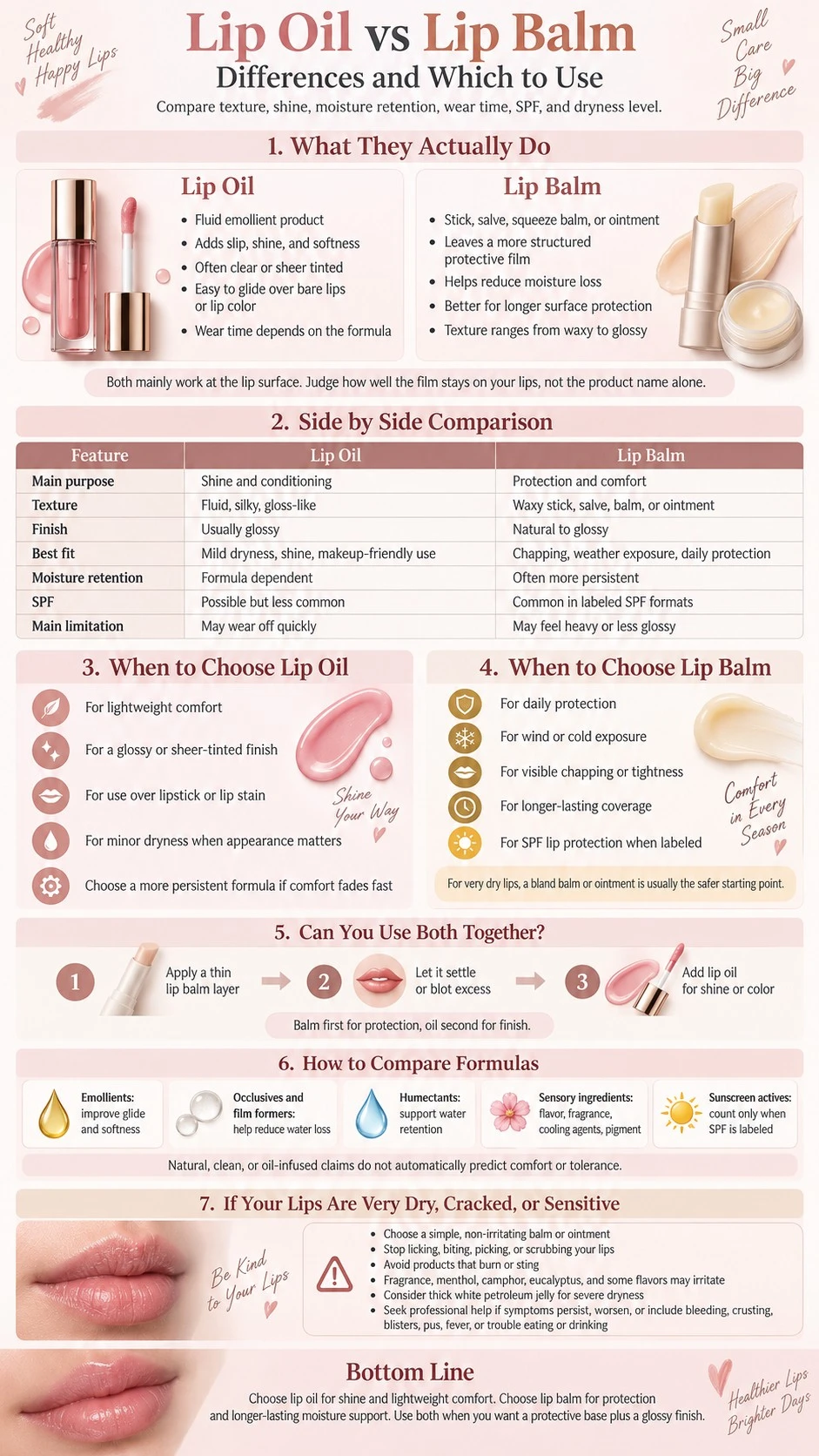
Lip oil and lip balm overlap more than their names suggest. Both can contain plant oils, synthetic emollients, waxes, butters, silicones, humectants, color, flavor, and fragrance. Some lip oils feel almost like gloss, while some squeeze-tube balms are fluid and shiny.
The useful distinction is not that oil “hydrates deeply” while balm only sits on top. Both mainly work at the lip surface. Compare how the product spreads, how persistent its film is, whether it reduces tightness, and whether you need shine, portability, tint, or sun protection.
What Lip Oil and Lip Balm Actually Do
Lip oil adds slip, shine, and surface conditioning
A lip oil is usually a fluid blend built around oils, esters, and other emollients. These materials spread across rough surface cells, reduce friction, and give the lips a smoother feel. Film-forming ingredients may also help slow moisture loss, but the degree varies by formula.
The fluid texture makes lip oil easy to glide over bare lips, lipstick, or lip stain. Many formulas provide clear shine or a sheer tint rather than opaque color. That cosmetic finish is part of the product’s job, not evidence that it moisturizes better than a less glossy product.
Despite the name, a lip oil is not necessarily a bottle of pure botanical oil. Modern formulas may combine plant oils with synthetic emollients, thickeners, film formers, pigments, and flavor. A thicker oil can stay in place well; a very light one may disappear quickly after talking, eating, drinking, or wiping.
Lip balm leaves a more structured protective film
Lip balm is a broad category that includes wax sticks, squeeze balms, salves, and ointments. It usually combines emollients with waxes or other occlusive materials that give the formula body and help it remain on the surface. The full guide to how lip balm works explains these functions in more detail.
A persistent film slows water from escaping from the outer lip layer. In a four-week study of 20 women, a highly occlusive oil-and-wax formulation improved several measures of lip roughness more than a lower-occlusivity version. The result supports the value of occlusion, but it does not prove that every balm is better than every oil.[1]
Balms also vary widely. A hard wax stick may feel protective but drag over cracked lips. A soft petrolatum ointment may be glossier and more occlusive than products sold as lip oils. Category name, package, and texture provide clues; actual film persistence determines how long the surface feels protected.
Lip Oil vs Lip Balm: Side-by-Side Comparison
The table separates the usual category patterns from features that depend on the individual formula.
| Comparison point | Lip oil | Lip balm |
|---|---|---|
| Main purpose | Adds slip, shine, softness, and sometimes sheer color | Softens lips and provides a practical protective film |
| How it works | Spreads fluid emollients and may leave a light film | Uses emollients plus waxes or occlusives to form a more structured coating |
| Typical texture | Fluid, silky, cushiony, or gloss-like | Waxy stick, salve, squeeze balm, or ointment |
| Finish | Usually glossy; may be clear, tinted, or shimmery | Can be natural, satin, waxy, glossy, or tinted |
| Best fit | Comfortable lips, mild dryness, shine, and use with makeup | Daily protection, chapping, weather exposure, and longer wear |
| Typical frequency | Reapply when shine or comfort fades | Reapply when the protective film wears away |
| Place in routine | Alone, over lip color, or over balm | Alone, under lip color, or beneath lip oil |
| Moisture retention | Formula-dependent; lighter oils may wear away quickly | Often more persistent, especially in ointment or occlusive formats |
| SPF | Possible only when specifically tested and labeled; less common | Widely available in separately labeled SPF formats |
| Main limitation | May prioritize shine, migrate, or require frequent reapplication | May feel waxy, heavy, or less glossy; a hard stick may tug |
| When to avoid or stop | When it burns, stings, itches, swells, or worsens redness | When it burns, stings, itches, swells, or worsens redness |
Neither name guarantees hydration, repair, non-stickiness, or suitability for sensitive lips. A well-balanced lip oil can feel more comfortable than a dry wax stick, while a bland ointment can protect severely chapped lips better than a decorative oil.
When Should You Choose Lip Oil?
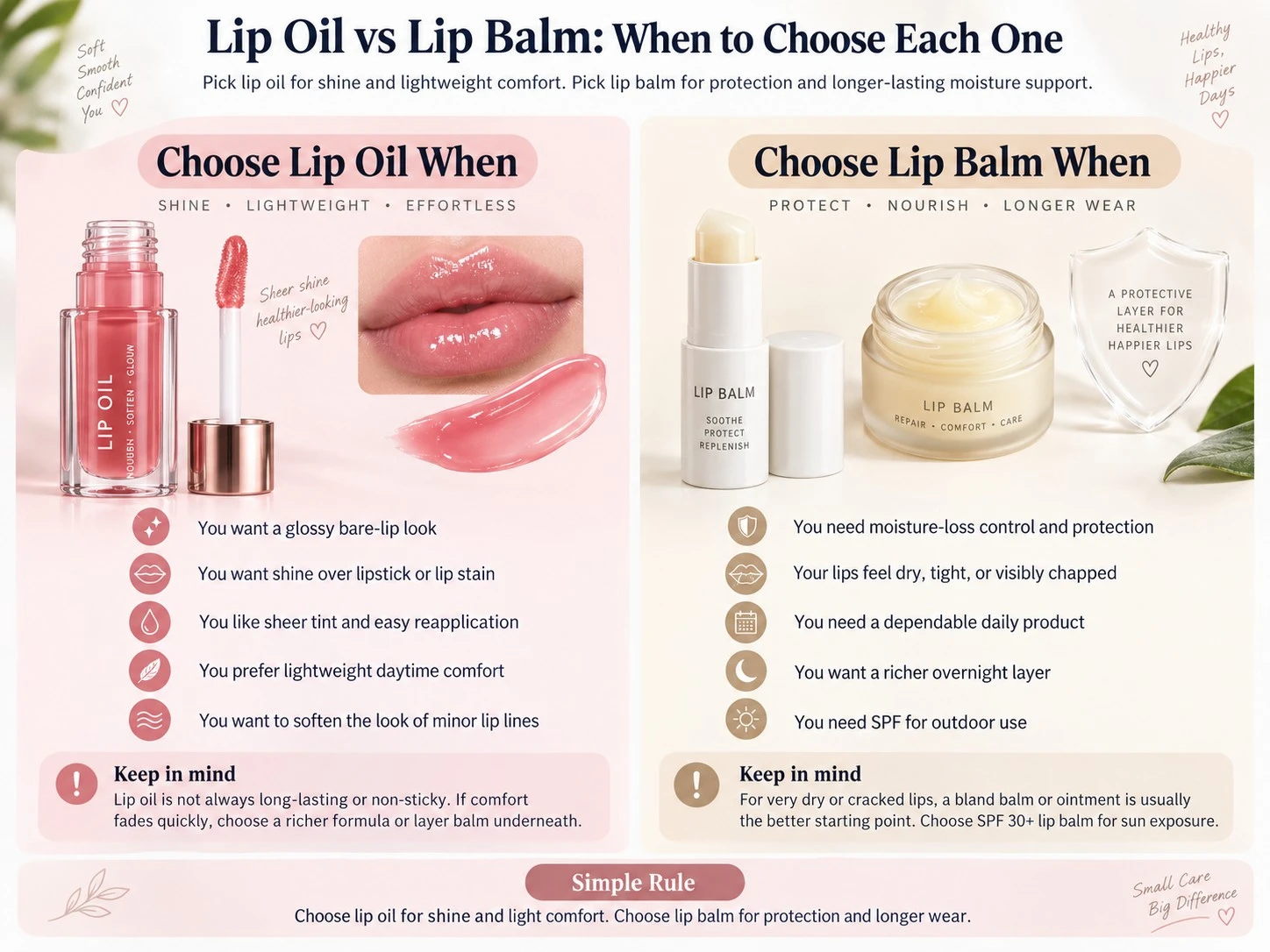
Choose lip oil when your lips are comfortable or only mildly dry and you want conditioning with visible shine. It is especially useful when you dislike the drag of a wax stick or want a product that glides over makeup.
Lip oil is a practical choice for:
- a glossy bare-lip look without opaque lipstick;
- adding shine over a compatible lip stain, liner, or lipstick;
- sheer tint that is easy to reapply without a mirror;
- lightweight daytime comfort when a heavier balm feels excessive;
- softening the look of minor surface lines while the product is present.
Do not assume that every lip oil is non-sticky or long-lasting. Applicator, viscosity, film formers, pigment, and the amount applied change the result. If the oil disappears within minutes and tightness returns, choose a more persistent formula or place a balm underneath it.
When Should You Choose Lip Balm?
Choose lip balm when moisture-loss control and protection matter more than a glassy finish. Balm is usually the more dependable starting point for dry weather, wind, repeated wiping, tightness, and visible chapping.
A bland balm or ointment is also easier to judge when your lips are already irritated. For very dry or cracked lips, a thick ointment such as white petroleum jelly seals in water longer than waxes or oils. Apply a non-irritating product several times a day and before bed.[2]
For outdoor use, choose a broad-spectrum SPF 30 or higher lip balm and reapply it as directed. Shine, tint, wax, and plant oils do not provide reliable ultraviolet protection without an SPF label.[2]
If you prefer a richer overnight layer, the practical differences between lip balm and lip mask depend more on formula persistence and wear time than on the product name.
Can You Use Lip Oil and Lip Balm Together?
Yes. Layering can combine the protective feel of balm with the shine or tint of lip oil. Use the products in this order:
- Apply a thin, even layer of lip balm. Give dry areas enough coverage without building a thick, slippery coat.
- Let the balm settle briefly. If the surface feels overloaded, blot excess rather than rubbing the lips together repeatedly.
- Add lip oil where you want shine or color. Use a small amount so the layers do not migrate beyond the lip line.
The order is not a chemical requirement. Balm first is simply more practical when protection is the base job and oil supplies the finish. If one lip oil already gives lasting comfort, you do not need to add balm underneath it.
Layering can reduce wear time for lipstick or cause liner to feather. When color longevity matters, keep balm thin, let it settle, blot if needed, apply color, and use oil only at the center of the lips.
How to Compare Lip Oil and Lip Balm Formulas
The front label describes a format; the ingredient list and the way the product wears reveal more about performance. Look for the roles the formula combines:
- Emollients: Plant oils, mineral oil, esters, butters, silicones, and similar materials improve glide and soften rough surface cells.
- Occlusives and film formers: Petrolatum, waxes, dimethicone, and other persistent materials help slow water loss. The guide to humectants, emollients, and occlusives explains why these jobs overlap but are not identical.
- Humectants: Glycerin or hyaluronic acid can help hold water within a balanced formula, but they do not guarantee lasting comfort when the surface film wears away quickly.
- Sensory ingredients: Flavor, fragrance, cooling agents, plumping ingredients, pigment, and shimmer affect experience more than basic moisture retention.
- Sunscreen actives: Count a product as sun protection only when it carries a labeled SPF and directions for use.
“Natural,” “clean,” “nourishing,” and “infused with oils” do not predict tolerance. If fragrance is a concern, check the distinction between fragrance-free and unscented rather than relying on a product’s smell.
Your own wear test matters. A suitable product should spread without hard rubbing, leave the lips comfortable, and remain useful for a reasonable part of the situation you bought it for. Constant reapplication can mean the film wears away quickly, the formula encourages licking, or the underlying trigger has not changed.
What If Your Lips Are Very Dry, Cracked, or Sensitive?
When lips are cracked, burning, or actively peeling, choose simplicity over shine. Use a bland, non-irritating balm or ointment and stop licking, biting, picking, or scrubbing the surface. A lip oil can still be comfortable, but the word “oil” does not make a flavored, fragranced, tinted, or plumping formula appropriate for damaged lips.
Stop using any product that burns, stings, or feels uncomfortable. Common ingredients that can irritate chapped lips include fragrance, menthol, camphor, eucalyptus, and some flavors. Thick white petroleum jelly is often a useful simple option when the lips are very dry and cracked.[2]
Persistent redness, scaling, cracking, itching, burning, or pain can reflect contact cheilitis rather than ordinary dryness. Lip cosmetics, sunscreens, fragrance or flavorings, preservatives, toothpaste, and dental materials can all be relevant exposures.[3] Switching repeatedly between oils and balms will not identify the cause.
Seek professional evaluation if symptoms persist for two to three weeks despite simple care, repeatedly affect the same area, or involve bleeding, crusting, blisters, severe pain, spreading swelling, pus, fever, or trouble eating or drinking.[2] Get urgent help for breathing or swallowing symptoms.
FAQs About Lip Oil and Lip Balm
Is lip oil better than lip balm for dry lips?
Not automatically. Lip oil can soften and condition mildly dry lips, but a persistent balm or thick ointment usually makes more sense when moisture-loss control is the priority. Compare the complete formula and how long the film stays in place.
Can lip oil replace lip balm?
Yes, if the lip oil keeps your lips comfortable for the situation in which you use it. It may not replace a more occlusive balm for severe chapping, windy or cold conditions, overnight protection, or labeled SPF outdoors.
Do you apply lip oil before or after lip balm?
Apply lip balm first when you want it to form the protective base, then add a small amount of lip oil for shine or tint. If the oil alone provides enough comfort, use it by itself rather than adding unnecessary layers.
Can you use lip oil every day?
Yes, a comfortable lip oil can be used daily and reapplied when needed. Stop using it if the full formula repeatedly causes burning, stinging, itching, swelling, or worsening redness.
Sources
[1] Tamura E, et al. The Efficacy of a Highly Occlusive Formulation for Dry Lips
[2] American Academy of Dermatology Association. 7 Dermatologists’ Tips for Healing Dry, Chapped Lips
[3] DermNet. Allergic Contact Cheilitis


