


Micellar water and a regular facial cleanser can both remove oil, dirt, and daily buildup, but they are used differently. Micellar water is applied with a pad and can be used without a sink, while most gel, cream, and foaming cleansers are massaged onto wet skin and rinsed away.
One distinction matters from the start: micellar water is technically a type of cleanser. In this comparison, “cleanser” means a conventional rinse-off facial cleanser. The better option depends on what you need to remove, how your skin tolerates wiping and rinsing, and whether one step leaves your face fully clean.
Micellar Water vs Cleanser: Key Differences
The comparison is mainly about application, removal strength, rinsing, and routine role. Individual formulas vary, so judge the finished product rather than assuming every micellar water is mild or every rinse-off cleanser is stronger.
| Feature | Micellar Water | Rinse-Off Cleanser |
|---|---|---|
| Typical format | Water-like liquid containing mild surfactants | Gel, cream, lotion, foam, powder, or bar |
| Application | Applied with a cotton or reusable pad | Usually massaged with fingertips on damp skin |
| Removal | Residue is lifted onto the pad | Residue is suspended and rinsed away with water |
| Rinsing | Often labeled no-rinse, although rinsing may feel better for some skin | Normally requires complete rinsing |
| Best use | Light makeup, quick cleansing, travel, or first cleanse | Routine washing of oil, sweat, sunscreen, and daily buildup |
| Heavy makeup | May require several pads or a waterproof formula | A standard cleanser may also need a separate makeup-removal step |
| Main advantage | Convenient and requires little or no water | Provides a complete rinse and avoids repeated pad wiping |
| Possible drawback | Can leave surfactant or makeup residue and create friction if over-wiped | Can feel drying if the formula, water temperature, or washing frequency is too aggressive |
What Is Micellar Water?
Micellar water is a water-based cleansing solution containing surfactants, often with humectants or other supporting ingredients. Surfactant molecules have water-compatible and oil-compatible regions. In solution, they can organize into structures called micelles and help loosen oil, makeup, and debris from the skin.[1][2]
You apply the product to a cotton or reusable pad, press it against the skin, and wipe away the loosened material. This makes micellar water useful when a sink is unavailable or when you want to remove makeup before washing.
The name does not guarantee that a formula is fragrance-free, alcohol-free, suitable around the eyes, or effective against waterproof makeup. Some versions are simple water-like solutions, while biphasic or waterproof formulas may contain a separate oily layer and need shaking before use.
What Is a Regular Facial Cleanser?
A regular facial cleanser is usually designed to mix with water, lift oil and water-soluble debris, and rinse away. It can come as a gel, cream, lotion, foam, powder, or synthetic detergent bar. Surfactant type and formulation influence cleansing strength, lather, rinse feel, and irritation potential.[2][3]
A rinse-off cleanser is not automatically more effective than micellar water for every task. A mild cream cleanser may struggle with waterproof mascara, while a targeted micellar formula may remove it quickly. However, rinsing gives a conventional cleanser a practical advantage when you need to remove sweat, loose debris, and residual cleansing ingredients across the entire face.
Can Micellar Water Replace Cleanser?
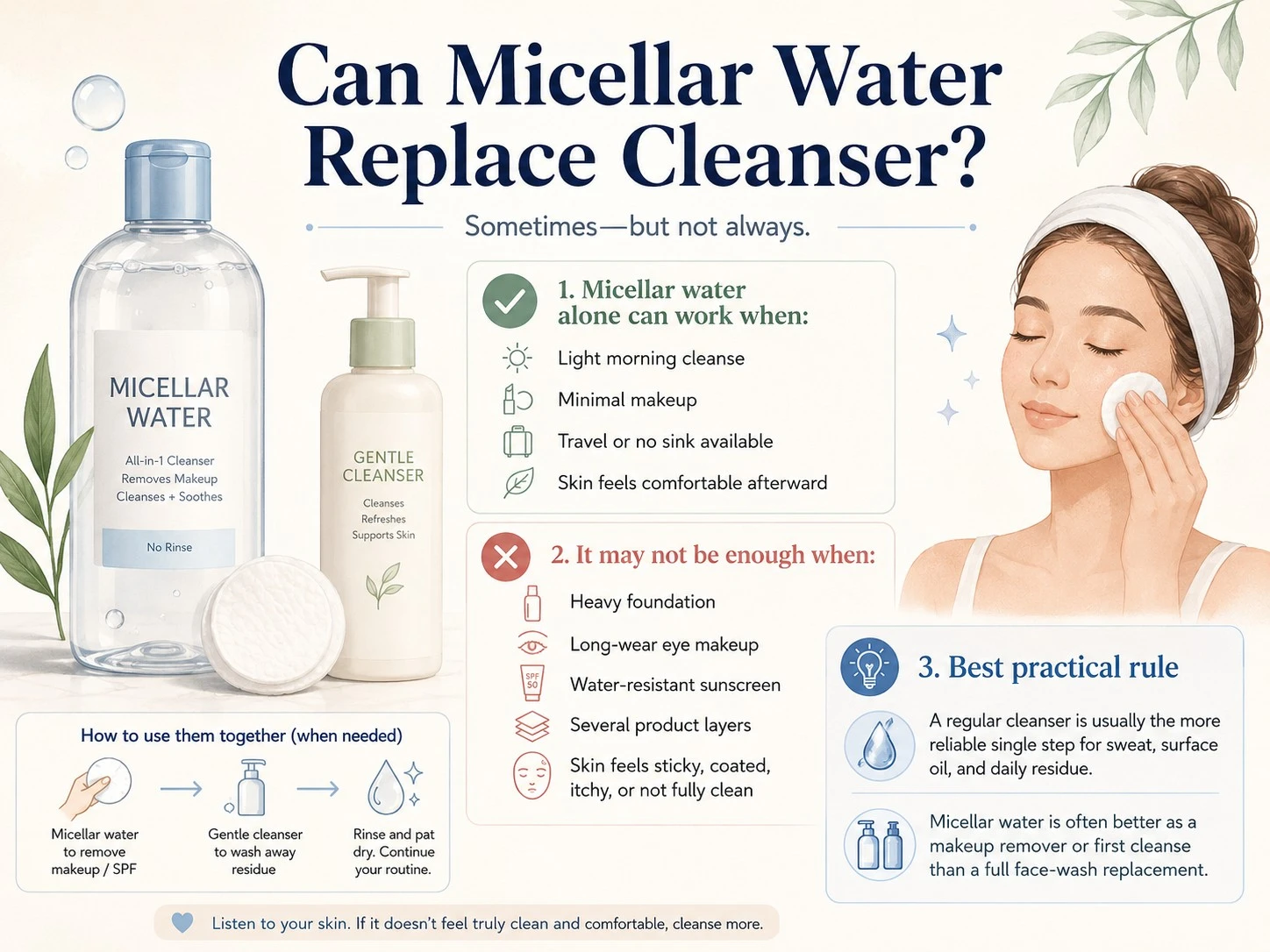
Sometimes. Micellar water can serve as the only cleansing step when it removes the day’s buildup, does not require repeated rubbing, and leaves the skin comfortable. It is especially practical for a light morning cleanse, minimal makeup, travel, or periods when a very simple routine is easier to tolerate.
It is less likely to be enough when you wear heavy foundation, long-wear eye makeup, water-resistant sunscreen, or several layers of products. It may also be a poor standalone choice if the skin feels sticky, coated, itchy, or not fully clean afterward.
A regular cleanser is usually the more reliable single step when the main goal is washing away sweat, surface oil, and ordinary daily residue. Micellar water is often more useful as a makeup remover or first cleanse than as a universal replacement for face wash.[1][4]
Which Removes Makeup and Sunscreen Better?
Neither format wins in every situation. Match the method to the product film you are trying to remove and stop increasing friction when the first method is not working.
| What You Need to Remove | Better Starting Option | What to Check |
|---|---|---|
| No makeup and light daily buildup | Gentle rinse-off cleanser | Skin feels clean without tightness |
| Light makeup | Micellar water or a suitable cleanser | No pigment remains around the hairline, eyes, or jaw |
| Long-wear foundation or lipstick | Micellar water, cleansing oil, or balm first | Removal does not require forceful wiping |
| Waterproof eye makeup | Eye-safe waterproof micellar or oil-based remover | Follow the label and avoid pulling the eyelids |
| Light non-water-resistant sunscreen | Effective rinse-off cleanser may be enough | No film or tinted residue remains |
| Water-resistant or heavy sunscreen | Micellar, balm, or oil first; cleanser if needed | Check the hairline, nose, ears, and jaw |
| Heavy sweat without makeup | Rinse-off cleanser | Use lukewarm water and avoid scrubbing |
When micellar water requires several soaked pads and repeated passes, a cleansing balm or oil may reduce friction. Compare those oil-based formats in Cleansing Balm vs Cleansing Oil.
Do You Need to Use Micellar Water and Cleanser Together?
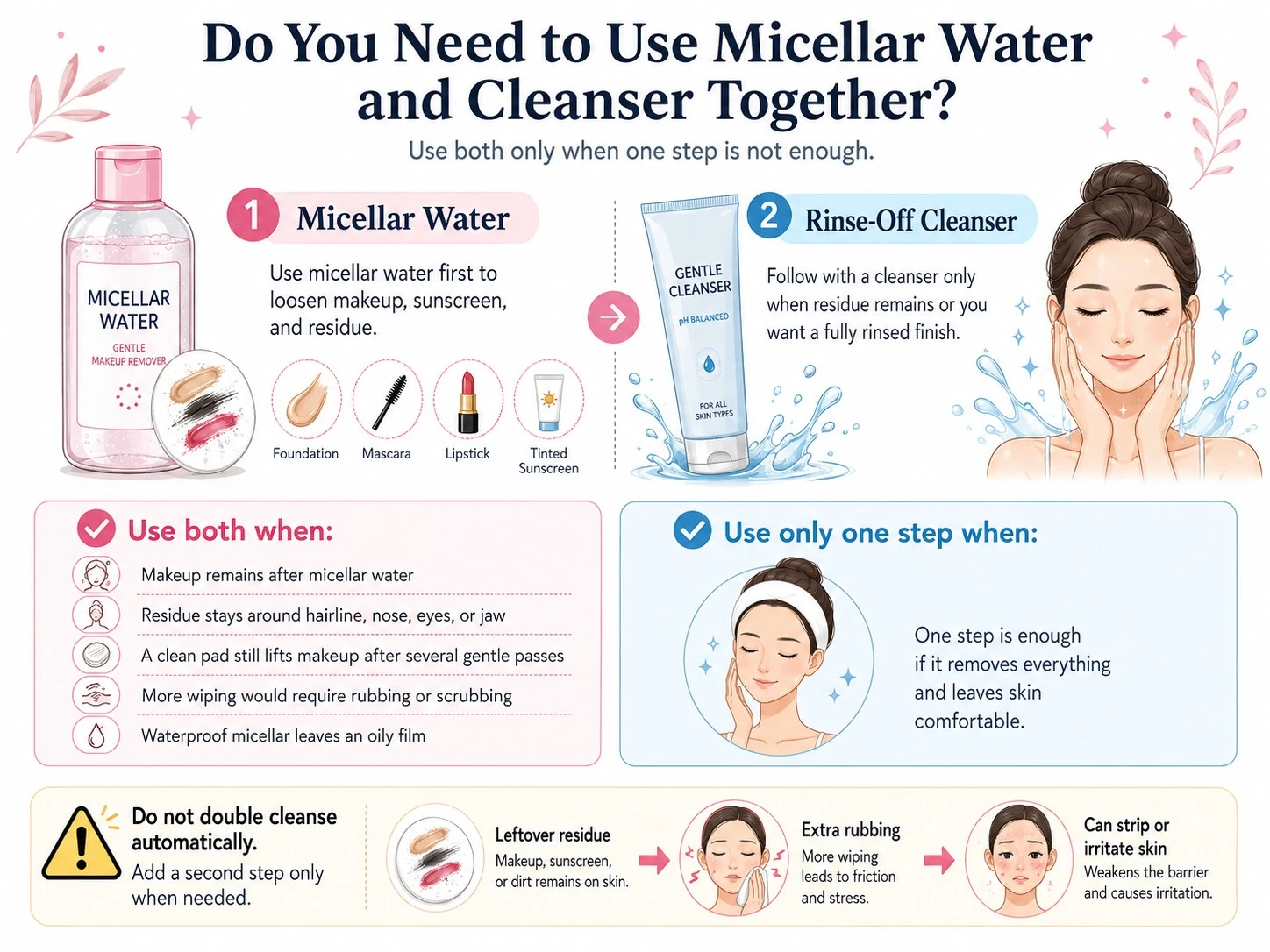
Not every day and not for every person. Using micellar water followed by a rinse-off cleanser is a form of double cleansing. It can help when micellar water loosens makeup efficiently but does not remove everything, or when a standard cleanser cannot remove makeup comfortably on its own.[4][5]
Use both when:
- Foundation, mascara, lipstick, or tinted sunscreen remains after micellar water.
- Residue collects around the hairline, sides of the nose, eyes, or jaw.
- A clean pad continues lifting substantial makeup after several gentle passes.
- Removing the remaining product would require repeated wiping or scrubbing.
- A waterproof micellar formula leaves an oily film that you prefer to rinse away.
Use only one step when it removes everything and leaves the skin comfortable. When micellar water is not enough, add a suitable second cleanser rather than using more pads and increasing friction. Double cleansing without a real removal need adds extra wiping, surfactant exposure, and water contact without necessarily improving the result.
Should You Rinse Micellar Water Off?
Follow the directions on the specific product. Many micellar waters are formulated and labeled for no-rinse use, so rinsing is not universally required. However, a no-rinse claim does not mean you should leave the formula on when your skin feels uncomfortable.
Rinse with lukewarm water or follow with a mild cleanser when:
- The face feels sticky, greasy, waxy, or coated after use.
- You notice persistent tightness, itching, burning, or heat.
- The skin becomes increasingly sensitive after repeated wiping.
- Eye makeup removal causes ongoing stinging or irritation.
- You used several pads to remove heavy makeup or water-resistant sunscreen.
- The micellar water is intended as the first step rather than the complete cleanse.
Sensitive and rosacea-prone skin often benefits from gentle cleansing and complete removal of cleanser residue.[6] Rinse instead of wiping more aggressively. If burning, redness, itching, or eye irritation continues after rinsing, stop using the product rather than replacing it with a much stronger cleanser.
Which Is Better for Your Skin Type?
Skin type can guide the first choice, but makeup, sunscreen, climate, treatment use, and current barrier condition also matter. Use the method that achieves removal with the least unnecessary rubbing and post-cleanse discomfort.
- Dry skin: A hydrating micellar water or mild cream cleanser can work. Rinse if micellar residue feels tight or sticky.
- Oily skin: Micellar water can remove surface oil, but a gentle gel or foaming cleanser may provide a more complete rinse after sweat or heavy sunscreen.
- Combination skin: Either can work. Avoid stripping the T-zone at the cost of dry, irritated cheeks.
- Sensitive or reactive skin: Choose a fragrance-free formula and minimize repeated wiping. A very gentle rinse-off cleanser may create less friction than several cotton pads.
- Acne-prone skin: Micellar water does not treat acne unless the product contains a relevant active. Use a mild non-comedogenic cleanser and keep proven acne treatment at the center of the routine.
- Treatment-stressed skin: Gentle or emulsion cleansers, including suitable micellar water, can be useful when acne treatment has made the skin dry or sensitive.[7]
Use the Skin Type Guide if you are unsure whether your baseline skin is dry, oily, combination, or sensitive. If previously comfortable products begin to sting, review the signs of a Damaged Skin Barrier.
How to Use Micellar Water Correctly
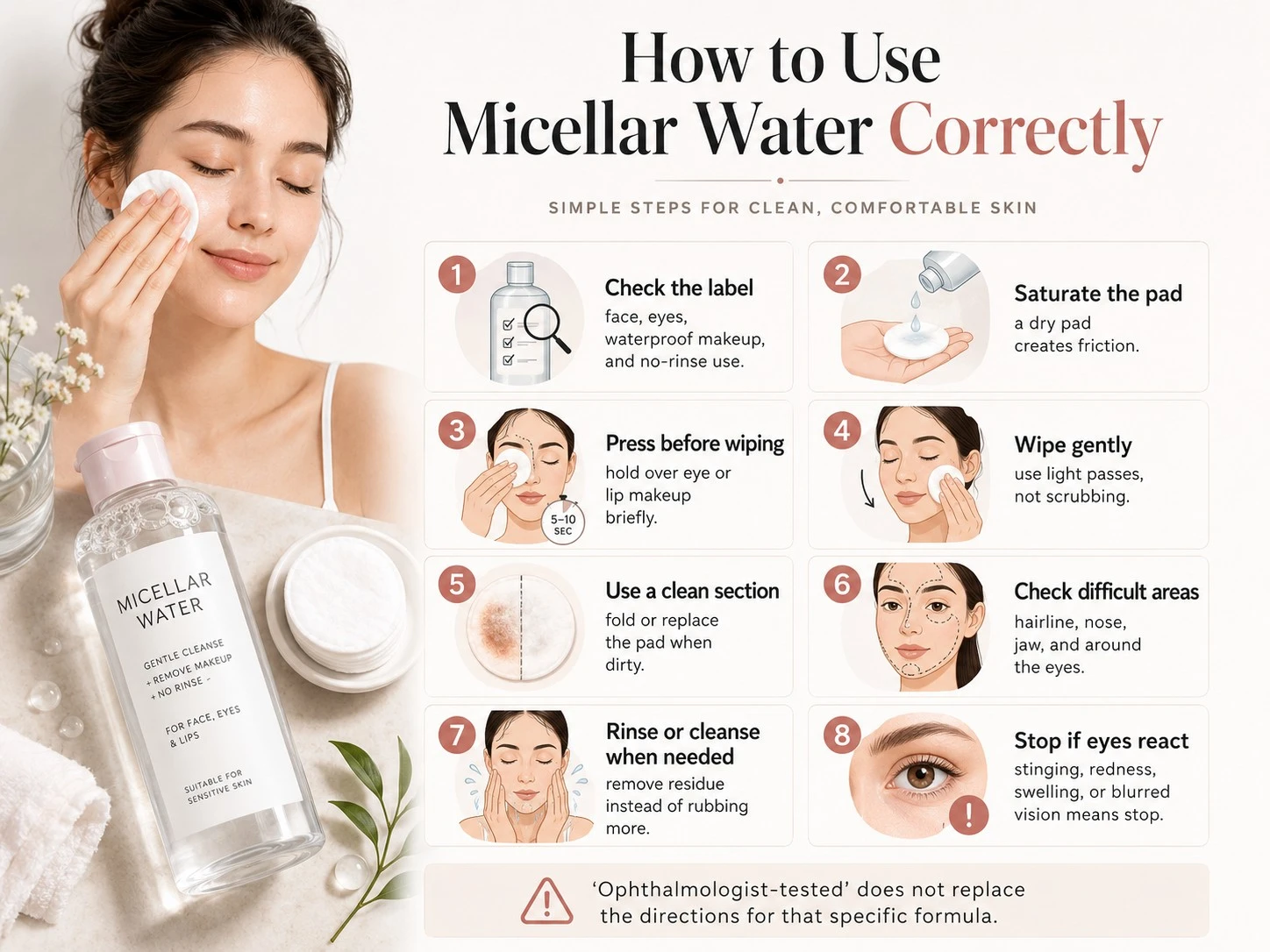
- Check the label: Confirm whether the formula is intended for the face, eyes, waterproof makeup, and no-rinse use.
- Saturate the pad: A nearly dry pad creates more friction and removes less product.
- Press before wiping: Hold the pad over eye or lip makeup briefly to help loosen the film.
- Wipe gently: Use light passes rather than scrubbing back and forth.
- Use a clean section: Fold or replace the pad when it becomes covered with makeup and dirt.
- Check difficult areas: Inspect the hairline, sides of the nose, jaw, and around the eyes.
- Rinse or cleanse when needed: Remove remaining residue rather than continuing to rub.
Stop using the product around the eyes if it causes persistent stinging, redness, swelling, or blurred vision. “Ophthalmologist-tested” does not replace the directions for that specific formula.
How to Use a Rinse-Off Cleanser Correctly
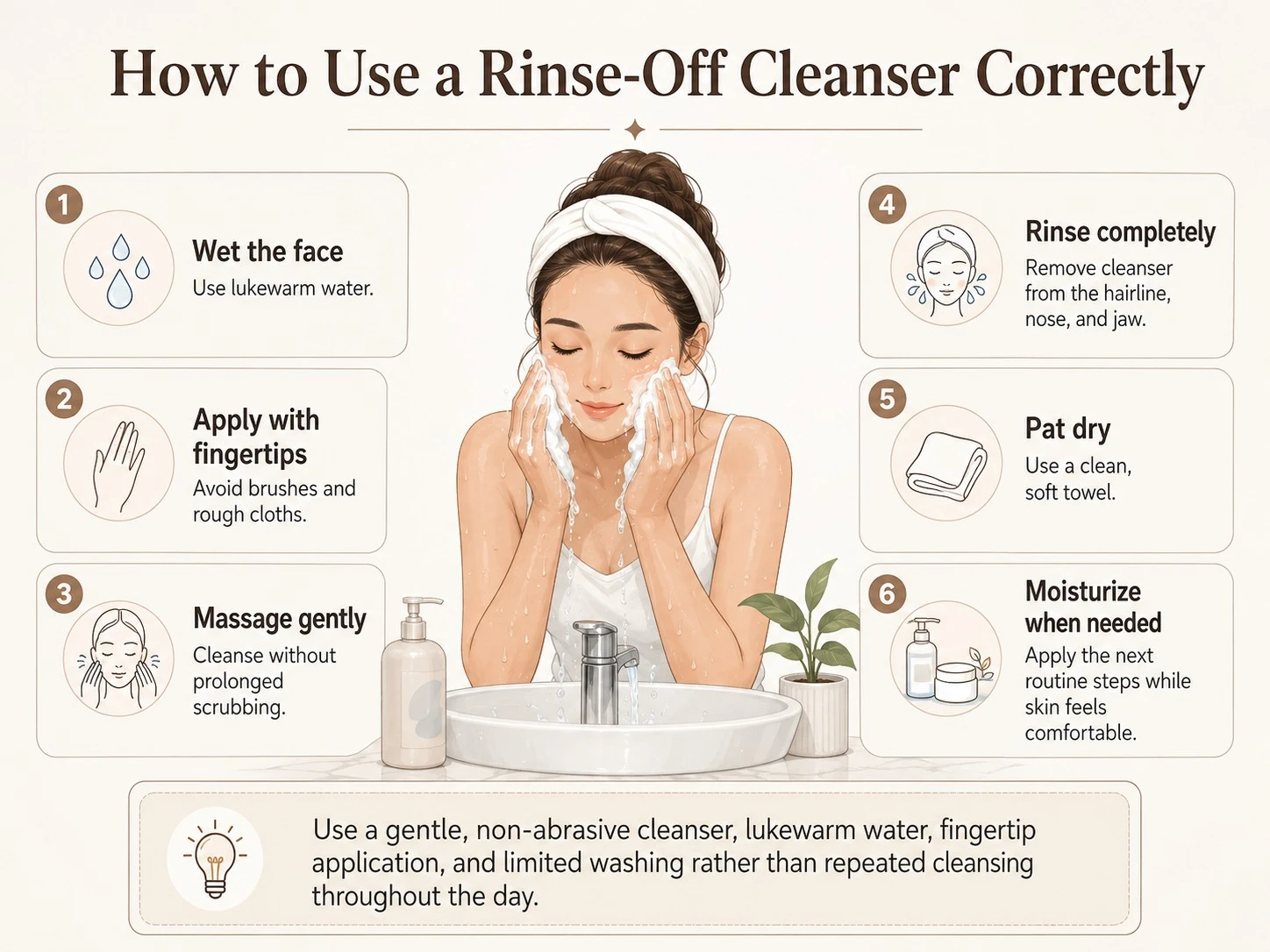
- Wet the face with lukewarm water: Hot water can increase dryness and irritation.
- Apply with fingertips: Brushes and rough cloths add unnecessary friction.
- Massage gently: Spend enough time to cover the face without prolonged scrubbing.
- Rinse completely: Remove cleanser from the hairline, nose, jaw, and other creases.
- Pat dry: Use a clean, soft towel instead of rubbing.
- Moisturize when needed: Apply the next routine steps while the skin remains comfortable.
Dermatologists recommend a gentle, non-abrasive cleanser, lukewarm water, fingertip application, and limited washing rather than repeated cleansing throughout the day.[3] See How Often Should You Wash Your Face? for morning, evening, and post-sweat guidance.
Common Micellar Water and Cleanser Mistakes
- Treating micellar water as a toner and applying it after cleansing without a clear reason.
- Using a dry pad and repeatedly dragging it across sensitive skin.
- Assuming every micellar water is automatically fragrance-free or eye-safe.
- Expecting one standard micellar formula to remove all waterproof makeup and sunscreen.
- Leaving a formula on the skin despite persistent stinging or sticky residue.
- Double cleansing automatically when one step already works.
- Using a harsh second cleanser to compensate for incomplete makeup removal.
- Washing repeatedly to control oil or acne.
- Changing micellar water, cleanser, moisturizer, and treatment at the same time.
Introduce one cleansing change at a time. Reactive skin can use the method in our Patch Testing Guide before applying a new fragranced or active formula across the face.
Final Thoughts
Micellar water is a convenient cleanser and makeup remover, while a conventional facial cleanser is designed for a water-assisted wash and complete rinse. Micellar water is often the better tool for light makeup, travel, or a first cleanse. A rinse-off cleanser is usually the better default for sweat, surface oil, and routine daily washing.
You do not need both unless two steps improve removal. Choose the shortest routine that removes what you wear without repeated wiping, residue, tightness, or irritation. Cleansing comes first in most routines; the Skincare Routine Order guide explains what follows.
FAQs About Micellar Water vs Cleanser
Is micellar water the same as cleanser?
Micellar water is a type of cleanser. In common product comparisons, “cleanser” usually refers to gel, cream, or foaming formulas that are applied with water and rinsed away.
Can I use micellar water instead of washing my face?
Yes, when it removes your light daily buildup and leaves no uncomfortable residue. A rinse-off cleanser is a better choice when you are sweaty, oily, wearing heavy products, or not fully clean after micellar water.
Do I need cleanser after micellar water?
Not always. Follow with a gentle cleanser when makeup, sunscreen, oily residue, or micellar solution remains. Skip the second step when one cleanse is complete and comfortable.
Should I rinse after using micellar water?
Follow the product directions. No-rinse formulas can be left on when well tolerated, but rinsing is reasonable if the skin feels sticky, tight, itchy, or irritated.
Is micellar water good for acne-prone skin?
It can be a gentle cleansing or makeup-removal option, but it is not automatically an acne treatment. Avoid repeated rubbing, choose a non-comedogenic formula when available, and use proven acne treatment separately.
Can micellar water remove sunscreen?
It may remove light sunscreen, but effectiveness depends on the sunscreen film and micellar formula. Water-resistant, tinted, or heavy sunscreen may require an oil-based remover or a follow-up cleanser.
Sources
[1] Cleveland Clinic. Micellar Water: What It Is and How To Use It
[2] DermNet. Soaps and Cleansers
[3] American Academy of Dermatology. Face Washing 101
[4] Cleveland Clinic. How Often Should You Wash Your Face?
[5] Cleveland Clinic. Double Cleansing Method Explained
[6] American Academy of Dermatology. 7 Rosacea Skin Care Tips Dermatologists Recommend
[7] American Academy of Dermatology. Isotretinoin: The Truth About Safety, Side Effects, and Skin Care


