


Toner generally goes before serum because it is used immediately after cleansing and usually has a lighter, more fluid texture. The default sequence is simple, but the word “toner” now covers products ranging from gentle hydrating liquids to leave-on acid exfoliants. What the toner contains—and how your skin responds—matters more than following a rigid layering slogan.
This guide gives you the usual order, explains when the formula changes the decision, and shows how to adjust the routine if products pill, sting, or feel unnecessarily complicated.
Why Toner Usually Goes Before Serum
Toner is normally the first leave-on step after cleansing. Serum follows as a more targeted treatment step, then moisturizer helps reduce moisture loss and sunscreen finishes the daytime routine. Product order can affect how comfortably and evenly products are applied, and a basic evidence-based sequence places treatment after cleansing and moisturizer or sunscreen after treatment.[1]
Using toner first also fits the practical rule of moving from more fluid products to richer layers. A watery toner spreads easily over clean skin. A serum may contain polymers, oils, or film-forming ingredients that create more resistance to whatever is applied on top. Putting toner over that layer can disturb the serum or make both products feel uneven.
This does not mean toner “opens pores,” changes pore size, or is required to make serum penetrate. Toner is an optional product category. When used, its usual place is after cleansing; a simple routine can still work with cleanser, an appropriate treatment, moisturizer, and daytime sunscreen.[2] For a wider view of every step, see the complete skincare routine order.
Correct Morning and Night Skincare Order
The same basic toner-before-serum rule works in the morning and evening. The main differences are sunscreen in the morning and night-specific treatments such as retinoids.
| Step | Morning routine | Evening routine | Practical note |
|---|---|---|---|
| 1 | Cleanser | Cleanser | Remove sweat, sunscreen, makeup, and surface residue as needed. |
| 2 | Toner, optional | Toner, optional | Use a formula and frequency your skin tolerates. |
| 3 | Serum or treatment | Serum or treatment | Follow product-specific directions, especially for stronger actives. |
| 4 | Moisturizer | Moisturizer | A lighter skin type may not need the same texture as dry skin. |
| 5 | Sunscreen | Not needed | Keep sunscreen as the final skincare step before makeup. |
If you also use essence, the common sequence is toner, essence, then serum. The toner, essence, and serum comparison explains how their roles differ rather than treating them as mandatory versions of the same step.
How to Apply Toner Before Serum
- Cleanse gently. Rinse away cleanser and pat off excess water. Follow any direction that requires completely dry skin.
- Apply a small, even layer of toner. Use clean hands or a cotton pad according to the product directions. Do not scrub the skin to make the toner work faster.
- Let the toner settle. For a simple hydrating toner, this often takes only enough time for it to stop running. A fixed multi-minute wait is usually unnecessary.
- Apply the serum. Spread the recommended amount gently across the face. Avoid combining several new treatment serums in the same routine.
- Finish the routine. Apply moisturizer, then sunscreen as the final morning skincare step. At night, finish with moisturizer unless another product has specific directions.
The correct amount and frequency depend on the product rather than its position alone. See how to use toner and how to use face serum for those separate decisions.
When the Toner Formula Changes the Routine
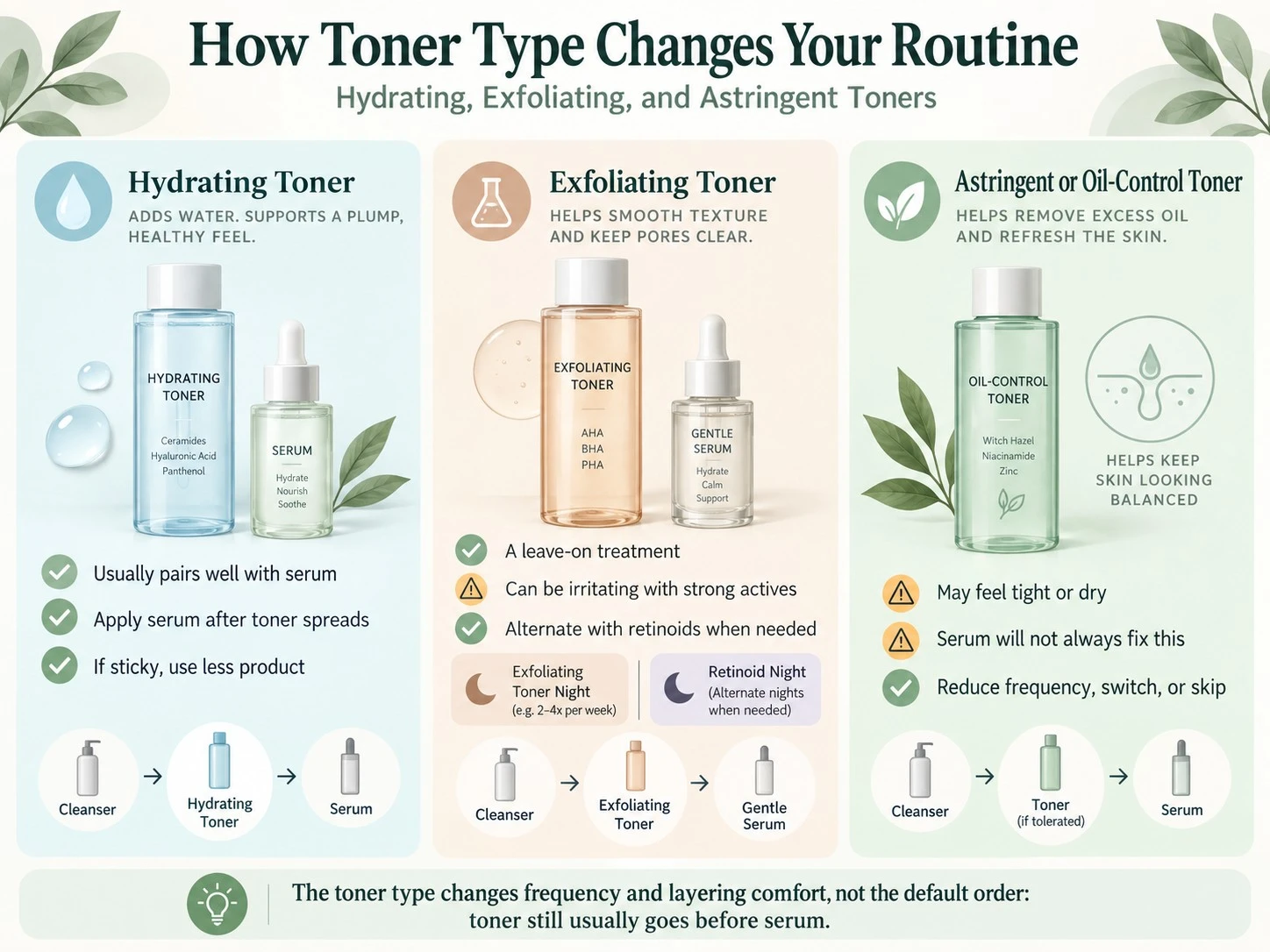
The default order stays toner before serum, but the toner type changes how quickly and how often you should layer the two products.
Hydrating Toner
A hydrating toner usually pairs easily with a hydrating or barrier-support serum. Apply the serum after the toner has spread, while the skin still feels comfortable and slightly damp if both labels allow it. If the combination feels sticky, use less of each product before adding a longer waiting period.
Exfoliating Toner
An exfoliating toner is a leave-on treatment, even if its texture looks like water. Acids such as glycolic, lactic, or salicylic acid can make the complete routine more irritating when combined with another strong exfoliant or a retinoid. Too many treatment products can irritate the skin, so alternating routines or reducing frequency is often more useful than trying to solve the problem through application order alone.[1]
Retinoids can cause dryness and irritation, especially when introduced too quickly. Start slowly, use them at night as directed, moisturize, and use daytime sun protection.[3] If your evening toner exfoliates, using it on different nights from retinol is a straightforward option. The hydrating vs exfoliating toner guide can help you identify which role your product actually performs.
Astringent or Strong Oil-Control Toner
A high-alcohol or strongly degreasing toner may leave skin tight, dry, or uncomfortable. Adding serum after it does not automatically cancel that effect. Reduce the toner frequency, choose a gentler formula, or skip the step if dryness persists. The goal is a tolerable routine, not using every product you own.
When Can Serum Go Before Toner?
Serum before toner is an exception, not the usual fix. Consider a different order only when the product directions or a clinician specifically place a treatment on clean, dry skin before other leave-on products. In that case, the treatment instruction has more value than the category label.
A product called “toner” may also be a mist intended for later refreshment rather than the post-cleansing step. That use does not rewrite the basic routine; it means the product is functioning as a mist at that moment. If a thick toner and a very fluid serum layer poorly, following the thinner-to-thicker order may improve application, but skipping one layer is often simpler.
Do not reverse the products because you believe serum always needs bare skin. Toner does not form one universal type of barrier, and serum formulas are not all designed alike. When instructions conflict, use the directions for the more treatment-focused product or ask the prescribing clinician.
How Long Should You Wait Between Toner and Serum?
There is no universal waiting time between toner and serum. For compatible hydrating products, apply serum once the toner is evenly distributed and no longer running. The skin can remain slightly damp unless either product says otherwise.
Wait until the toner feels settled or dry when its directions require dry skin, when immediate layering causes pilling, or when you need to see whether a potentially irritating toner stings on its own. Waiting longer does not make an incompatible or overly irritating combination compatible.
If layers remain tacky, roll into flakes, or take several minutes to settle, first reduce the amount. Then try using only one serum or moving one product to the other routine. A shorter routine is usually more reliable than assigning an arbitrary delay to every step.
Common Toner and Serum Layering Mistakes
- Treating every toner as gentle: Check whether it contains exfoliating acids, strong astringents, or other treatment ingredients before adding another active serum.
- Using too much product: Extra toner and serum increase tack and pilling without proving that the skin receives more benefit.
- Starting several actives together: Add one new treatment at a time so you can identify the cause if irritation develops.
- Scrubbing with a cotton pad: Toner application should not depend on forceful rubbing, especially when the formula already exfoliates.
- Ignoring product directions: Formula-specific instructions can override general texture rules, particularly for retinoids, prescription treatments, and leave-on acids.
- Forgetting the final steps: Serum normally goes before moisturizer, and sunscreen remains the final morning skincare layer.
FAQs About Toner and Serum Order
Can you use serum without toner?
Yes. Toner is optional, and serum does not require toner to work. Cleanse first, apply the serum according to its directions, then use moisturizer and daytime sunscreen.
Should toner dry before applying serum?
A hydrating toner does not usually need to become completely dry before serum. Let it stop running, then apply the serum. Wait longer when the toner or serum directions require dry skin or when quick layering causes pilling.
Can you use toner and serum twice a day?
You can use compatible hydrating formulas morning and night if your skin tolerates them. Exfoliating toners, retinoids, and other stronger treatments may need lower frequency. Follow each label and reduce use if dryness, burning, or peeling develops.
Can you apply vitamin C serum after toner?
Yes, a vitamin C serum can generally follow a gentle hydrating toner. If the toner contains exfoliating acids and the combination irritates your skin, use them at different times or on different days. The exact formula matters more than the ingredient category alone; see the vitamin C guide for use and stability details.
What should you do if toner and serum sting?
Rinse off the products if the burning is strong or continues, and stop the suspected irritant. Resume with a simple cleanser, moisturizer, and daytime sunscreen once the skin feels comfortable. Seek medical advice for severe swelling, blistering, eye involvement, breathing symptoms, or a reaction that persists or worsens.
Sources
[1] American Academy of Dermatology Association. Should I Apply My Skin Care Products in a Certain Order?
[2] Cleveland Clinic. How To Order Your Skin Care Routine
[3] American Academy of Dermatology Association. Retinoid or Retinol?


