


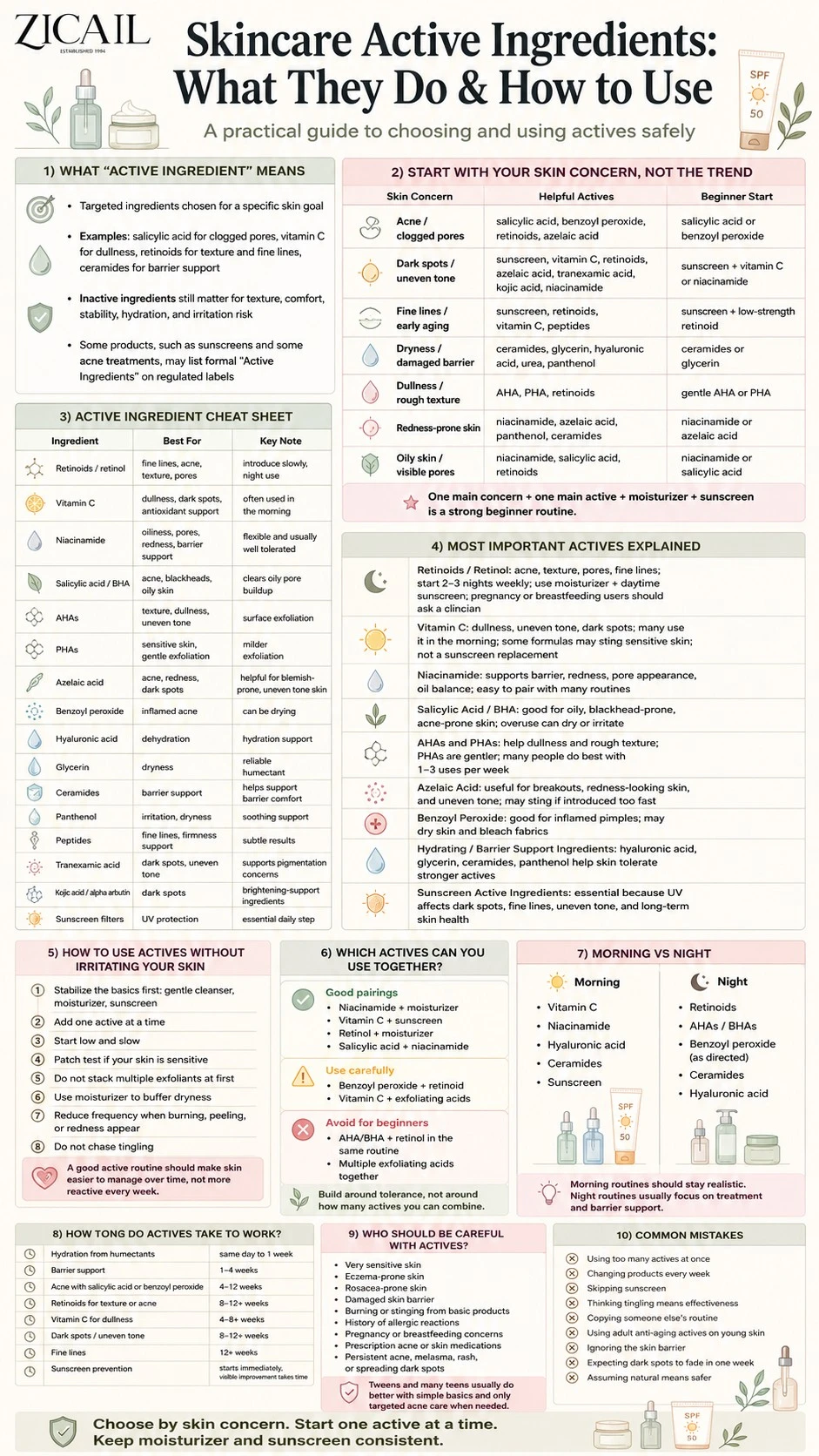
What Does “Active Ingredient” Mean in Skincare?
In beauty content, an active ingredient usually means an ingredient chosen for a targeted skin goal. For example, salicylic acid is often used for clogged pores, vitamin C for dullness and uneven tone, retinoids for texture and fine lines, and ceramides for barrier support.
On some product labels, “Active Ingredients” can also have a formal regulatory meaning. For example, in the U.S., sunscreens and some acne treatments may be regulated as over-the-counter drug products or drug-cosmetic products, depending on their intended use. In those cases, “Active Ingredients” may appear in a Drug Facts label. [1]
Inactive ingredients are not useless. They can affect texture, spreadability, stability, hydration, fragrance, irritation risk, and comfort. A moisturizer can still work well because of its base, humectants, emollients, and barrier-supportive ingredients, even if it does not market one dramatic active.
Start With Your Skin Concern, Not the Trend
The easiest way to choose skincare active ingredients is to start with one skin concern. Do not build a routine around every ingredient that is popular online.
| Skin Concern | Ingredients to Consider | Best First Choice for Beginners |
|---|---|---|
| Acne / clogged pores | Salicylic acid, benzoyl peroxide, retinoids, azelaic acid | Salicylic acid or benzoyl peroxide |
| Dark spots / uneven tone | Sunscreen, vitamin C, retinoids, azelaic acid, tranexamic acid, kojic acid, niacinamide | Sunscreen + vitamin C or niacinamide |
| Fine lines / early aging | Sunscreen, retinoids, vitamin C, peptides | Sunscreen + low-strength retinoid |
| Dryness / damaged barrier | Ceramides, glycerin, hyaluronic acid, urea, panthenol | Ceramides or glycerin |
| Dullness / rough texture | AHA, PHA, retinoids | Gentle AHA or PHA |
| Redness-prone skin | Niacinamide, azelaic acid, panthenol, ceramides | Niacinamide or azelaic acid |
| Oily skin / visible pores | Niacinamide, salicylic acid, retinoids | Niacinamide or salicylic acid |
Skincare ingredients are easier to choose when you group them by skin concern, such as acne, redness, dark spots, large pores, dry skin, oily skin, fine lines, or rough texture. [2]
For most people, one main concern, one main active, moisturizer, and sunscreen is a better starting point than a routine full of trending ingredients.
Skincare Active Ingredients Cheat Sheet
This cheat sheet gives a fast overview of common skincare active ingredients. It is not a prescription plan; your skin type, product strength, and tolerance still matter.
| Ingredient | Best For | What It Does | Use With Care If |
|---|---|---|---|
| Retinoids / retinol | Fine lines, acne, texture, pores | Supports smoother-looking skin over time | Sensitive skin, pregnancy, irritation-prone skin |
| Vitamin C | Dullness, dark spots, antioxidant support | Helps brighten the look of skin and support protection against environmental stress | Very sensitive skin |
| Niacinamide | Oiliness, visible pores, redness, barrier support | Supports barrier comfort, more even-looking tone, and oil balance | Usually well tolerated |
| Salicylic acid / BHA | Acne, blackheads, oily skin | Oil-soluble exfoliant that helps clear pore buildup | Dry or sensitive skin |
| AHAs | Texture, dullness, uneven tone | Exfoliate surface dead skin cells | Sensitive skin, over-exfoliation |
| PHAs | Sensitive skin, gentle exfoliation | Mild surface exfoliation with hydration support | Introduce slowly |
| Azelaic acid | Acne, redness, dark spots | Helps with blemish-prone skin and uneven-looking tone | Very reactive skin |
| Benzoyl peroxide | Inflamed acne | Helps reduce acne-causing bacteria | Dryness, irritation, fabric bleaching |
| Hyaluronic acid | Dehydration, plump feel | Helps attract water to the skin surface | Works best with moisturizer |
| Glycerin | Dryness, barrier support | Reliable humectant that helps skin feel hydrated | Rare issue |
| Ceramides | Barrier support, dryness | Helps support skin barrier comfort | Rare issue |
| Panthenol | Irritation, dryness | Soothing and barrier-supportive | Rare issue |
| Peptides | Fine lines, firmness support | Supports smoother, firmer-looking skin | Results are often subtle |
| Tranexamic acid | Dark spots, uneven tone | Helps improve uneven-looking pigmentation | Persistent pigmentation needs medical care |
| Kojic acid / alpha arbutin | Dark spots | Brightening-support ingredients | Irritation-prone skin |
| Sunscreen filters | Sun damage prevention | Help protect from UV damage | Essential daily step |
You do not need all of these. Choose one or two actives that fit your main concern, then keep moisturizer and sunscreen in the routine to improve tolerance. [2]
The Most Important Active Ingredients Explained

The table gives a quick comparison. The sections below explain how the most common actives fit into a real skincare routine.
Retinoids and Retinol
Retinoids are commonly used for acne, rough texture, large pores, fine lines, and visible signs of aging. [2] Retinol is a common over-the-counter form. Other forms include retinal and prescription retinoids.
Retinoids are best introduced slowly, usually at night. A beginner can start two or three nights per week, then increase only if the skin stays comfortable. Starting too fast often leads to dryness, flaking, or irritation.
Use moisturizer with retinoids and sunscreen during the day. People who are pregnant, trying to become pregnant, or breastfeeding should ask a clinician before using retinoids. Retinoids, including over-the-counter retinol and adapalene, are generally avoided during pregnancy, so pregnancy or breastfeeding users should ask a clinician before using them. [8]
Vitamin C
Vitamin C is often used for dullness, uneven tone, dark spots, and antioxidant support. Many people use vitamin C in the morning under sunscreen.
Vitamin C products can feel different depending on the form, strength, pH, and packaging. Some formulas are gentle, while others may sting sensitive skin. If your skin reacts easily, start less often or choose a gentler vitamin C derivative.
Vitamin C is not a replacement for sunscreen. It works best in a routine that also protects the skin from UV exposure.
Niacinamide
Niacinamide is one of the most flexible skincare actives. It can support the skin barrier, help with the look of redness, improve the appearance of pores, and support oil balance.
It is a good beginner active because many people tolerate it well. It also pairs well with moisturizers, sunscreen, retinoids, and many acne routines.
Do not expect niacinamide to solve every skin concern by itself. Its value is that it supports several goals without being too aggressive, which makes it easy to keep in a daily routine.
Salicylic Acid / BHA
Salicylic acid is a beta hydroxy acid, or BHA. It is often used for oily skin, blackheads, clogged pores, and acne-prone skin because it can work inside oily buildup.
More salicylic acid is not better. If you use it too often, especially with other exfoliants or retinoids, your skin may become dry, tight, flaky, or irritated.
Start with low frequency. If your skin is dry or sensitive, use it carefully and support the routine with moisturizer.
AHAs and PHAs
AHAs, such as glycolic acid, lactic acid, and mandelic acid, exfoliate the skin surface. They are often used for dullness, rough texture, and uneven-looking tone.
PHAs are a gentler exfoliating option for people who find AHAs too strong, but they can still irritate if overused.
Exfoliation is not a daily requirement. Many people do better with one to three uses per week instead of daily acid use. AHA products can increase sun sensitivity, so daily sun protection matters when using them. [4]
Azelaic Acid
Azelaic acid is useful for blemish-prone skin, redness-looking skin, and uneven tone. It is often a good option for people who want support for both breakouts and discoloration but do not want a harsh exfoliant.
Some people tolerate azelaic acid better than stronger acids or retinoids, but it can still cause dryness, tingling, or irritation when introduced too quickly.
If you have rosacea, melasma, painful acne, or stubborn dark spots, see a dermatologist for the right strength and routine.
Benzoyl Peroxide
Benzoyl peroxide is a common acne active used for inflamed pimples. It helps reduce acne-causing bacteria and is often used in acne care routines. [3]
It can work well, but it can also dry the skin and bleach towels, pillowcases, and clothing. Use white fabrics or let the product dry fully before contact.
Benzoyl peroxide becomes harder to tolerate when paired with too many drying products. If irritation builds, reduce frequency and keep moisturizer in the routine.
Hyaluronic Acid, Glycerin, Ceramides, and Panthenol
Hydrating and barrier-supportive ingredients may not sound as dramatic as retinol or acids, but they matter.
Hyaluronic acid and glycerin help skin feel more hydrated. Ceramides help support the skin barrier. Panthenol can help soothe dry or uncomfortable skin.
These ingredients do not replace targeted actives, but they help your skin tolerate retinoids, exfoliating acids, and acne treatments.
Sunscreen Active Ingredients
Sunscreen is one of the most important active ingredient categories because UV exposure affects dark spots, fine lines, uneven tone, and long-term skin health. If you use retinoids, exfoliating acids, or brightening ingredients but skip sunscreen, your routine will be less effective.
In sunscreen products, active ingredients are the UV filters that help protect skin from harmful ultraviolet rays. Approved filters and label wording can vary by market, so sunscreen ingredient lists may look different from country to country. For example, U.S. sunscreen guidance lists active ingredients such as zinc oxide and titanium dioxide, and newer sunscreen filters may be handled differently across markets. [5][6]
For everyday users, the practical message is simple: choose a broad-spectrum sunscreen you can use consistently, apply enough, and reapply when you are outdoors, sweating, or exposed for long periods.
How to Use Active Ingredients Without Irritating Your Skin
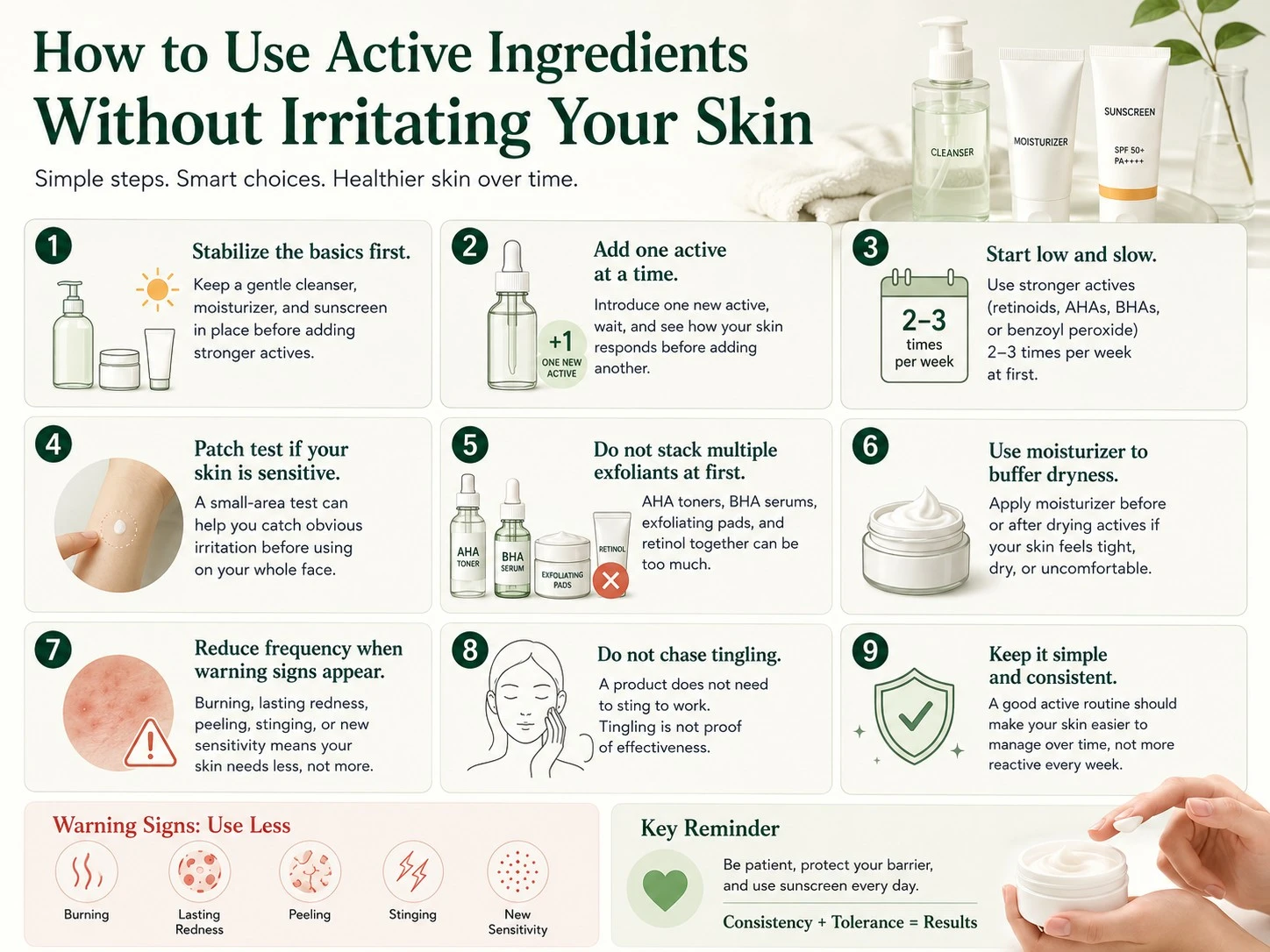
Active ingredients work best when your routine is simple enough to tolerate. Many irritation problems come from adding too many products too quickly.
Use this approach:
- Stabilize the basics first.
Keep a gentle cleanser, moisturizer, and sunscreen in place before adding stronger actives. - Add one active at a time.
If you start retinol, vitamin C, and an exfoliating acid in the same week, you will not know which product caused irritation. - Start low and slow.
Use stronger actives such as retinoids, AHAs, BHAs, or benzoyl peroxide two or three times per week at first. - Patch test if your skin is sensitive.
A small-area test can help you catch obvious irritation before using a product on your whole face. - Do not stack multiple exfoliants at first.
AHA toner, BHA serum, exfoliating pads, and retinol in the same routine is too much for many people. - Use moisturizer to buffer dryness.
Apply moisturizer before or after drying actives if your skin feels tight or uncomfortable. - Reduce frequency when warning signs appear.
Burning, lasting redness, peeling, stinging, or new sensitivity means your skin needs less, not more. - Do not chase tingling.
A product does not need to sting to work. Tingling is not proof of effectiveness.
A good active routine should make your skin easier to manage over time, not more reactive every week.
Which Active Ingredients Can You Use Together?
Some active ingredients work well together. Others can be too irritating for beginners, especially when used at high strength or too often.
| Combination | Beginner-Friendly? | Practical Advice |
|---|---|---|
| Niacinamide + moisturizer | Yes | Good for most routines |
| Vitamin C + sunscreen | Yes | Strong morning pairing |
| Retinol + moisturizer | Yes | Helps reduce dryness |
| Salicylic acid + niacinamide | Often yes | Useful for oily or breakout-prone skin |
| AHA/BHA + retinol | Not for beginners | Use on different nights first |
| Benzoyl peroxide + retinoid | Use carefully | Can be drying; follow product directions |
| Multiple exfoliating acids | Not ideal for beginners | Increases irritation risk |
| Vitamin C + exfoliating acids | Use carefully | Can be too strong for sensitive skin |
Do not build a routine around how many actives you can combine. Build it around how well your skin tolerates the few actives that matter.
A simple routine with one targeted active, moisturizer, and sunscreen often works better than a crowded routine with several strong products.
Morning vs Night: When Should You Use Actives?
Timing depends on the ingredient and your skin tolerance. Some actives are flexible. Others are easier to manage at night.
| Active | Morning / Night | Why |
|---|---|---|
| Vitamin C | Morning or as directed | Often paired with sunscreen |
| Niacinamide | Morning or night | Flexible and generally easy to use |
| Retinoids | Night | Easier to manage irritation and routine consistency |
| AHAs / BHAs | Night or as directed | Easier for beginners to manage irritation and sun sensitivity |
| Hyaluronic acid | Morning or night | Hydration support |
| Ceramides | Morning or night | Barrier support |
| Benzoyl peroxide | As directed | Depends on product type |
| Sunscreen | Morning / daytime | UV protection |
Morning routines should stay realistic. For many people, cleanser or rinse, antioxidant or niacinamide if used, moisturizer if needed, and sunscreen are enough.
Night routines can focus on treatment and barrier support, including retinoids, exfoliating acids, or acne treatments when needed.
How Long Do Skincare Active Ingredients Take to Work?
Skincare active ingredients need consistent use. Hydration may improve quickly, but acne, pigmentation, texture, and fine lines take longer.
| Ingredient / Goal | Realistic Timeline |
|---|---|
| Hydration from humectants | Same day to 1 week |
| Barrier support | 1–4 weeks |
| Acne with salicylic acid or benzoyl peroxide | 4–12 weeks |
| Retinoids for texture or acne | 8–12+ weeks |
| Vitamin C for dullness | 4–8+ weeks |
| Dark spots / uneven tone | 8–12+ weeks |
| Fine lines | 12+ weeks |
| Sunscreen prevention | Starts immediately, visible improvement takes time |
These timelines are not guarantees. Product strength, skin type, consistency, sunscreen use, and the cause of the concern all matter.
If acne, dark spots, irritation, or peeling does not improve after a reasonable trial, do not keep adding more actives. A dermatologist can help determine whether you need a different product, prescription treatment, or diagnosis.
Who Should Be Careful With Active Ingredients?
Some people need a slower approach with active ingredients. Be careful if you have:
- Very sensitive skin.
- Eczema-prone skin.
- Rosacea-prone skin.
- A damaged skin barrier.
- Burning, peeling, or stinging from basic products.
- A history of allergic reactions to skincare.
- Pregnancy or breastfeeding concerns.
- Prescription acne or skin medications.
- Persistent acne, melasma, rash, or spreading dark spots.
Tweens and many teens do not need adult anti-aging actives. Tweens and many teens should avoid active ingredients such as retinol, vitamin C, and exfoliating acids when those products target adult concerns like wrinkles, sun damage, and uneven skin tone. Young skin can be thinner, more sensitive, and more prone to irritation from these actives. [7]
Teen skincare should stay simple for most people: gentle cleanser, moisturizer if needed, sunscreen, and acne care only when needed. Painful, scarring, or persistent acne should be managed with a dermatologist.
See a dermatologist if: you have painful acne, scarring acne, sudden rash, severe burning, persistent peeling, melasma, rosacea flares, or dark spots that keep spreading.
Common Mistakes With Skincare Active Ingredients
Most active ingredient problems come from using too much too soon. Avoid these mistakes:
- Using too many actives at once.
Better: choose one main concern and one main active. - Changing products every week.
Better: give actives enough time to work. - Skipping sunscreen.
Better: use daily SPF, especially with retinoids, acids, or brightening products. - Thinking tingling means effectiveness.
Better: mild temporary sensation can happen, but burning is a warning sign. - Copying someone else’s routine.
Better: choose based on your skin type, concern, budget, and tolerance. - Using adult anti-aging actives on young skin.
Better: teens usually need cleanser, moisturizer, sunscreen, and acne care only when needed. - Ignoring the skin barrier.
Better: use moisturizer and reduce active frequency when irritation appears. - Expecting dark spots to fade in one week.
Better: give pigment-focused actives enough time and use sunscreen daily. - Assuming natural means safer.
Better: judge ingredients by evidence, formulation, dose, and skin tolerance. Natural ingredients can irritate too.
A good routine targets your concern without making your skin harder to manage.
Where to Go Next
Use this guide as your active ingredient starting point, then go deeper based on your skin concern:
- For routine order, read Skincare Routine Order.
- If your routine is not working, read Why Your Skincare Routine Isn’t Working.
- If acne is your main concern, read Acne Skincare Routine.
- If your skin feels dry or reactive, read Skin Barrier Repair.
- If sunscreen feels confusing, read Sunscreen Basics.
Final Thoughts
Skincare active ingredients work best in a simple, consistent routine. Start with your main skin concern, choose one active that fits that goal, and support your skin with moisturizer and sunscreen.
The strongest routine is the one your skin can tolerate and use consistently. If your skin gets irritated, reduce frequency instead of adding more products.
FAQs About Skincare Active Ingredients
What are active ingredients in skincare?
In everyday skincare language, active ingredients are ingredients used to target visible skin concerns such as acne, dark spots, dryness, dullness, texture, fine lines, oiliness, or sun damage. Examples include retinol, vitamin C, niacinamide, salicylic acid, azelaic acid, benzoyl peroxide, and sunscreen filters.
What is the difference between active and inactive ingredients?
Active ingredients are usually chosen for a targeted skin goal. Inactive ingredients are not useless. They can affect texture, hydration, spreadability, stability, comfort, fragrance, and irritation risk. A formula works as a whole product, not only because of one active ingredient.
What active ingredient should I start with?
Start with your main skin concern. For acne or clogged pores, consider salicylic acid or benzoyl peroxide. For dullness or dark spots, start with sunscreen plus vitamin C or niacinamide. For dryness, start with ceramides, glycerin, or hyaluronic acid. For fine lines, sunscreen and a low-strength retinoid are common starting points.
Can I use retinol and vitamin C together?
Some people can use retinol and vitamin C in the same overall routine, but beginners should not start both at once. A practical approach is to use vitamin C in the morning and retinol at night, or introduce one product first and add the other only after your skin adjusts.
Can I use niacinamide with other active ingredients?
Yes, niacinamide is generally flexible and works well in many routines, including with moisturizers, sunscreen, retinoids, vitamin C, and acne products. If your skin is reactive, introduce it slowly like any new skincare product.
How many active ingredients should I use?
Most people do not need many active ingredients. Beginners should start with one main active, then add another only if the skin stays comfortable and there is a clear reason. Too many actives can cause dryness, burning, peeling, redness, and barrier damage.
How often should I use active ingredients?
It depends on the ingredient. Hydrating and barrier-supportive ingredients can often be used daily. Stronger actives such as retinoids, AHAs, BHAs, and benzoyl peroxide should often be introduced slowly, such as two or three times per week, before increasing frequency.
Can active ingredients damage the skin barrier?
Yes. Active ingredients can irritate the skin barrier when they are too strong, used too often, or combined with too many other actives. Warning signs include burning, peeling, tightness, stinging, lasting redness, and sudden sensitivity. Reduce frequency and focus on moisturizer if this happens.
Are active ingredients safe for teens?
Many teens do not need adult anti-aging actives such as retinol, vitamin C, or exfoliating acids for concerns like wrinkles or sun damage. Teen routines should usually focus on gentle cleansing, moisturizer when needed, sunscreen, and acne care only when needed. Severe or scarring acne should be treated by a dermatologist.
Do active ingredients work without sunscreen?
Some actives can still help, but skipping sunscreen weakens routines for dark spots, uneven tone, sun damage, fine lines, and exfoliation. If you use retinoids, acids, vitamin C, or brightening ingredients, daily sunscreen makes the routine more effective and helps prevent new damage.
Sources
[1] U.S. Food & Drug Administration. Is It a Cosmetic, a Drug, or Both? (Or Is It Soap?)
[2] Journal of the American Academy of Dermatology / PubMed. Skincare ingredients recommended by cosmetic dermatologists
[3] American Academy of Dermatology. American Academy of Dermatology issues updated guidelines for the management of acne
[4] U.S. Food & Drug Administration. Alpha Hydroxy Acids
[5] U.S. Food & Drug Administration. Sunscreen: How to Help Protect Your Skin from the Sun
[6] U.S. Food & Drug Administration. FDA Expands Sunscreen Options for the First Time in 20 Years
[7] American Academy of Dermatology. A dermatologist’s guide to skincare from growing up to growing older
[8] American Academy of Dermatology. Dermatologist-approved pregnancy skin care


