


What Is Sunscreen and Why Does It Matter?
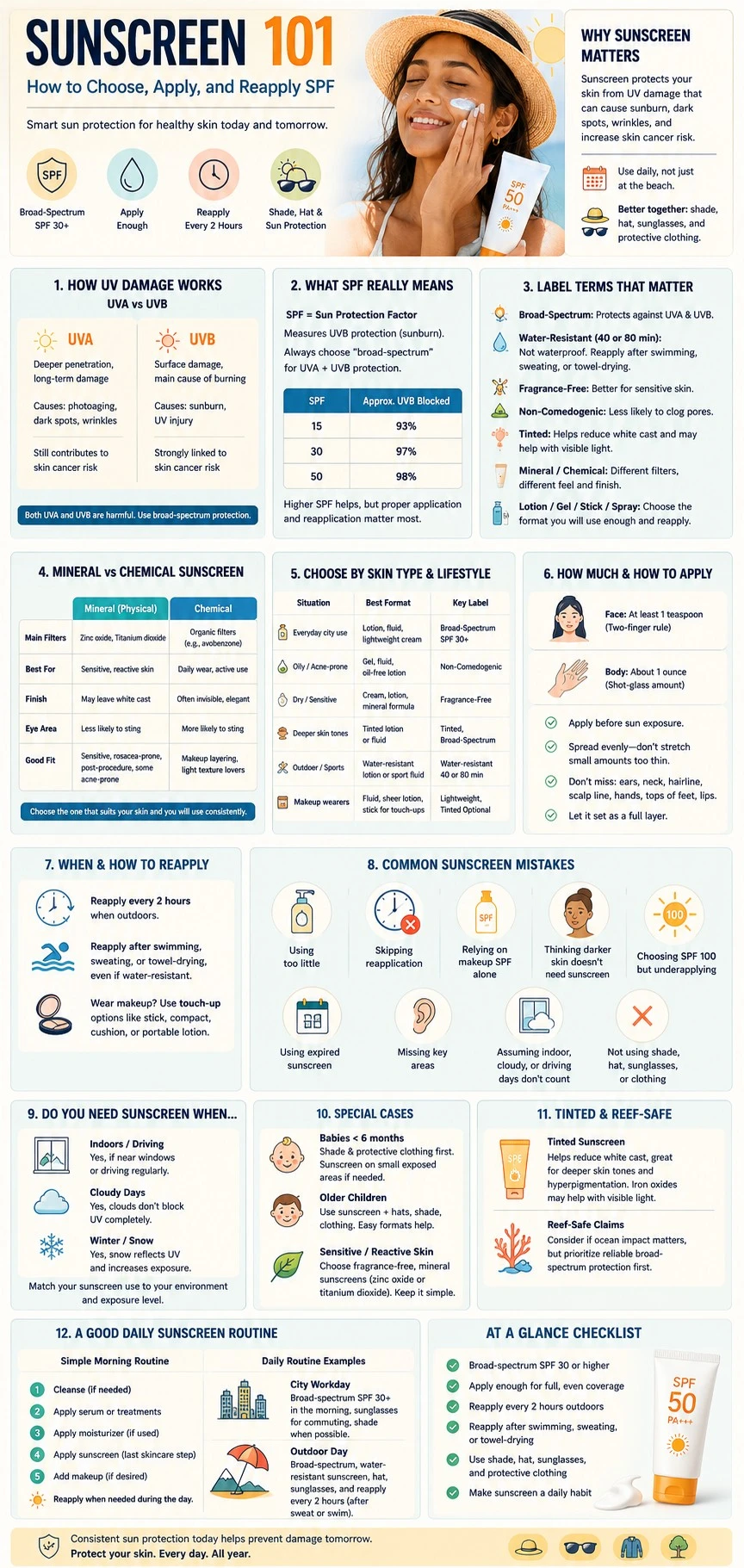
Sunscreen helps protect your skin from ultraviolet, or UV, damage. Over time, that damage can lead to sunburn, faster visible aging, dark spots, and a higher risk of skin cancer. That is why sunscreen is a core part of daily skin protection, not just a cosmetic extra.
It is not only for beach days, pool days, or summer trips. Walking outside, driving, running errands, sitting near windows, and cloudy-day outdoor time can all add to your routine UV exposure.
Sunscreen works best when you treat it as one part of a full sun-protection routine. Use it with shade, protective clothing, a hat, and UV-blocking sunglasses instead of relying on sunscreen alone.
How UV Damage Works: UVA vs UVB in Simple Terms
Sun damage mainly comes from two types of ultraviolet radiation: UVA and UVB. Both can damage the skin, but they do not affect it in the same way. SPF mainly reflects UVB protection, while broad-spectrum sunscreen helps cover both UVA and UVB.
UVA | UVB | |
|---|---|---|
What it does | Reaches deeper into the skin and builds long-term damage | Causes more direct surface damage and burning |
What skin problems it causes | Photoaging, pigment issues, dark spots, and wrinkles | Sunburn and direct UV injury |
Why sunscreen needs to cover it | UVA still contributes to skin damage and skin cancer risk | UVB is strongly linked to sunburn and also contributes to skin cancer risk |
Both UVA and UVB can raise skin cancer risk, so SPF alone is not enough. A good sunscreen should be broad-spectrum.
What SPF Really Means
SPF stands for Sun Protection Factor. It tells you how well a sunscreen helps protect against UVB rays, which are the rays most closely linked to sunburn. It does not measure total sun protection, and it does not tell you how well a product covers UVA on its own. That is why SPF should always be read together with the words broad-spectrum on the label.
For most readers, SPF 30 is the practical baseline for regular use, while SPF 50 can be a smart step up for long outdoor days. Higher SPF can help, but it does not make sunscreen last all day or replace reapplication every 2 hours outdoors, after swimming, or after sweating.
SPF | Approx. UVB blocked |
|---|---|
15 | 93% |
30 | 97% |
50 | 98% |
The jump from SPF 30 to SPF 50 is helpful, but it is not a substitute for proper application and reapplication.
Broad-Spectrum, Water-Resistant, and Other Label Terms That Actually Matter
Sunscreen labels are easier to read when you focus on the terms that affect real protection.
Broad-spectrum: This means the sunscreen is designed to protect against both UVA and UVB rays. It is one of the most important words on the label.
Water-resistant: This means the sunscreen keeps working for a limited time during sweating or swimming, usually 40 or 80 minutes. It does not mean waterproof, and you still need to reapply after swimming, sweating, or towel-drying.
Fragrance-free: A useful label for people with sensitive, reactive, or easily irritated skin. It does not guarantee zero irritation, but it can reduce one common trigger.
Non-comedogenic: This suggests the formula is less likely to clog pores, which can be helpful for oily or acne-prone skin. It is a practical clue, not a perfect guarantee.
Tinted: Tinted sunscreens can help reduce white cast and are often especially useful for people dealing with dark spots or hyperpigmentation. Some also help with visible light protection.
Mineral / chemical: These terms tell you which UV filters the product uses. They affect texture, finish, skin feel, and how well the formula fits your skin type.
Lotion / gel / stick / spray: This is the format, not the protection level. Pick the format you are most likely to apply generously and reapply correctly.
Mineral vs Chemical Sunscreen: Which One Should You Choose?
Neither type is automatically better. Mineral and chemical sunscreens can both work well, so the better choice is the one that fits your skin, feels comfortable, and is easy to use consistently.
Mineral sunscreen | Chemical sunscreen | |
|---|---|---|
Main filters | Zinc oxide and/or titanium dioxide | Organic UV filters such as avobenzone and others |
Best known for | Often preferred for sensitive or reactive skin | Often feels lighter and blends in more easily |
Finish on skin | More likely to leave white cast, especially on deeper skin tones | Often more invisible and cosmetically elegant |
Eye area feel | Less likely to sting for some users | More likely to sting around the eyes for some users |
Good fit for | Sensitive skin, rosacea-prone skin, post-procedure skin, some acne-prone users | Daily wear, makeup layering, active use, users who dislike heavy texture |
Mineral sunscreens are often a strong starting point for sensitive or reactive skin, while chemical sunscreens usually feel lighter and blend more easily. Tinted mineral formulas can be a smart option if you want mineral protection with less white cast, especially if uneven tone or post-acne marks are a concern.
How to Choose the Right Sunscreen for Your Skin Type and Lifestyle
The right sunscreen should match your skin, routine, and daily exposure. Use these quick guidelines to narrow your choice, then see our full guide if you want a deeper breakdown.
- For everyday city use
Choose a broad-spectrum SPF 30+ sunscreen with a light, comfortable finish. Lotion, fluid, and lightweight cream textures are usually the easiest to wear every day. - For oily or acne-prone skin
Look for lightweight, non-comedogenic, or oil-free formulas. Gel, fluid, and lighter lotion textures usually feel better than rich creams. - For dry or sensitive skin
Choose fragrance-free formulas with a comfortable cream or lotion texture. Mineral sunscreen is often a good starting point for sensitive skin. - For deeper skin tones
Choose a formula that blends well and does not leave a gray or chalky cast. Tinted sunscreens can be especially helpful if white cast is a problem. - For outdoor sports, beach, and swimming
Choose broad-spectrum, water-resistant sunscreen labeled for 40 or 80 minutes. SPF 50+ is usually the better fit for longer outdoor exposure. - For makeup wearers
Choose a sunscreen that layers smoothly and does not pill. Lightweight fluids, sheer lotions, and some tinted formulas often work best.
Still not sure which formula fits you best? Read our full guide on how to choose the right sunscreen.
How Much Sunscreen to Use and How to Apply It Correctly
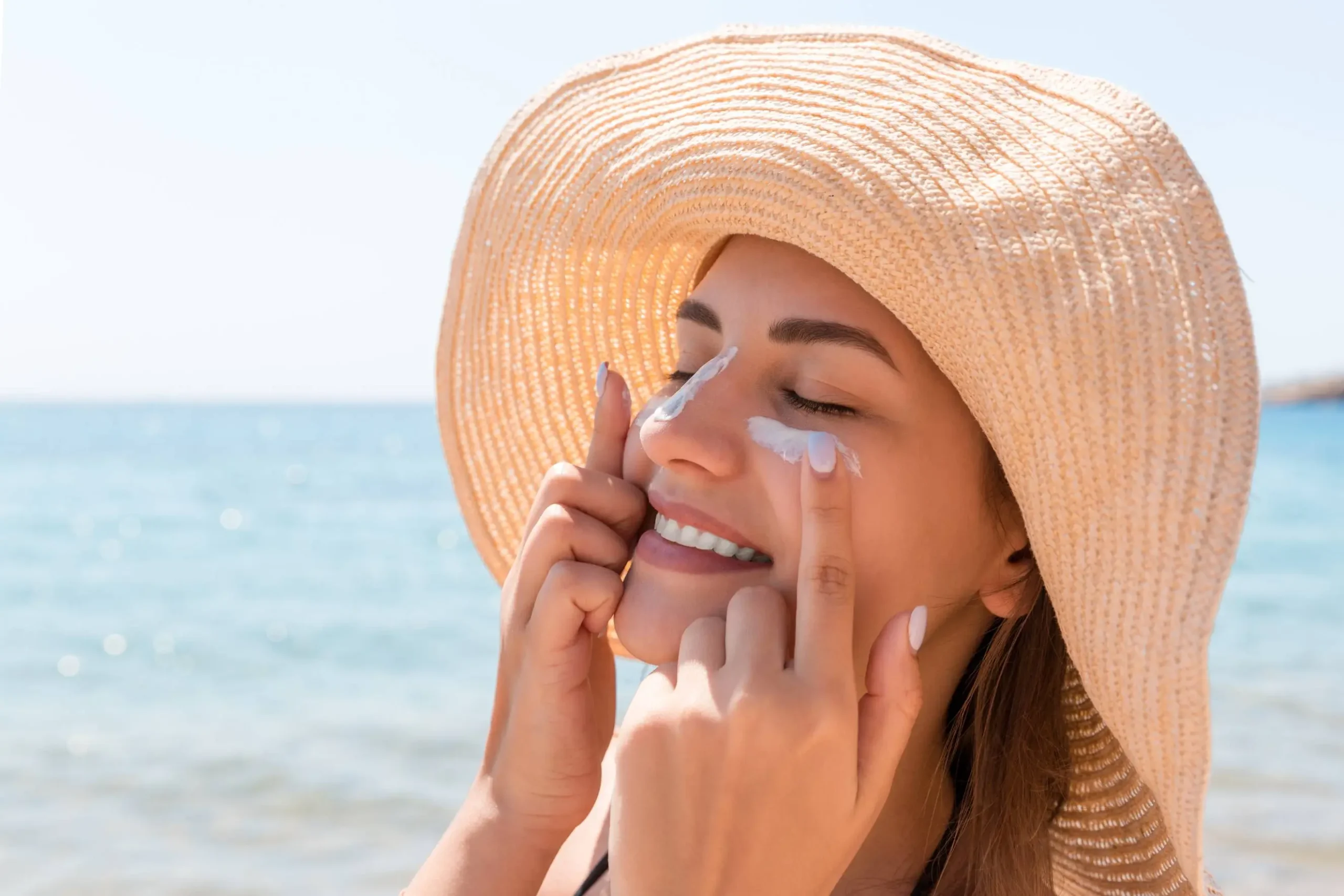
Using enough sunscreen matters as much as choosing the right one. Most people apply too little, so the goal is generous, even coverage.
Use at least 1 teaspoon for the face. A common visual shortcut is the two-finger method, but the real goal is a full, even layer across the entire face.
Use about 1 ounce for the body, or roughly a shot-glass amount, when large areas of skin are exposed.
Apply sunscreen before sun exposure instead of waiting until you are already outside.
Spread it evenly rather than stretching a small amount too far. Thin coverage lowers real protection.
Do not miss easy-to-forget areas such as the ears, neck, hairline or scalp line, hands, tops of feet, and lips.
Let the product sit as a full layer instead of wiping it away or skimping on high points of the face.
See also: How Much Sunscreen to Use on Your Face
When to Reapply Sunscreen and Why It Matters More Than Most People Think
Reapplication is where sunscreen use often fails. One morning application is not enough once sunscreen starts to wear off, rub off, or get removed by sweat, water, and towels.
Reapply every 2 hours when you are outdoors.
Reapply after swimming, sweating, or towel-drying, even if the sunscreen is water-resistant.
Do not treat water-resistant as waterproof or all-day protection.
If you wear makeup, plan ahead with a touch-up format that is easier to use midday.
Practical reapplication options include stick, compact, cushion, or portable lotion formats.
Common Sunscreen Mistakes That Reduce Protection
- Using too little sunscreen. This lowers protection quickly. Most adults need more than a thin swipe on the face or a small dab for the body.
- Skipping reapplication. One morning application is not enough for a full outdoor day. Reapply every 2 hours when outdoors.
- Relying on makeup SPF alone. Makeup with SPF can help, but most people do not apply enough foundation, tint, or powder to reach the labeled protection. Treat it as a bonus, not your main sunscreen.
- Thinking darker skin does not need sunscreen. Deeper skin tones still need sun protection because UV exposure can contribute to skin cancer, uneven tone, and hyperpigmentation.
- Choosing SPF 100, then underapplying it. A very high SPF number does not fix poor technique. Broad-spectrum coverage, enough product, and reapplication matter more.
- Using expired sunscreen. Old sunscreen may not perform well, especially if it has been stored in heat, a beach bag, or a hot car.
- Missing key areas. Ears, neck, hands, scalp line, tops of feet, and lips are easy to forget and easy to burn.
- Assuming indoor, cloudy, or driving days do not count. Routine exposure still adds up, especially near windows and during short outdoor time.
Do You Need Sunscreen Indoors, on Cloudy Days, or in Winter?
Near windows and while driving
Sunscreen can still make sense indoors if you sit near windows or drive regularly. If you stay away from windows most of the day, the need is lower. If you work beside bright windows or drive often, daily sunscreen is still a smart habit.
On cloudy days
Clouds do not block UV completely. Even on overcast or cool days, UV can still reach your skin, so sunscreen should not be saved only for bright summer weather. A cloudy commute, lunch walk, or errand run can still add up over time.
In winter and around snow
Winter does not cancel UV exposure. In snowy settings, reflection can increase the amount of UV reaching your skin, so sun protection becomes more important, not less. A normal winter workday is not the same as skiing, hiking, or spending hours outdoors, so match your sunscreen use to your exposure level.
Special Cases: Children, Babies, and People With Sensitive Skin
Babies under 6 months
For babies under 6 months, shade and protective clothing come first. Current pediatric guidance advises keeping babies out of direct sun when possible. If shade and protective clothing are not available, sunscreen can be used on small exposed areas such as the face or the backs of the hands.
Older children
For older babies and children, sunscreen should be part of a broader routine. Use it on exposed skin, but also rely on hats, shade, and lightweight protective clothing. Easy-to-apply formats help because children move, sweat, and miss spots more easily than adults.
Sensitive or reactive skin
If your skin is sensitive, reactive, or easily irritated, keep the formula simple. Fragrance-free sunscreens are often a better starting point, and mineral formulas with zinc oxide or titanium dioxide may be easier to tolerate. The goal is to find one your skin can handle consistently.
Is Tinted or “Reef-Safe” Sunscreen Worth It?
Tinted sunscreen
Tinted sunscreen is worth considering if you deal with dark spots, hyperpigmentation, or white cast. It can be especially helpful for deeper skin tones because it often blends better than untinted mineral formulas. Formulas with iron oxides may also help with visible light, which can worsen pigment issues in some people.
Reef-safe claims
“Reef-safe” can matter if ocean impact is part of your buying decision, but it should not be your first filter. These labels are not fully standardized, so first choose reliable broad-spectrum protection that you will actually use properly. Reef-related claims can then be a secondary factor between otherwise good options.
What a Good Daily Sunscreen Routine Actually Looks Like
A good sunscreen routine should feel simple enough to repeat every day. In most morning routines, sunscreen goes on as the last skincare step before makeup. The rest depends on how much daylight exposure your day actually includes.
Simple routine
Cleanse if needed.
Apply serum or treatment products.
Apply moisturizer if you use one.
Apply sunscreen as the last skincare step.
Add makeup after sunscreen, if desired.
Reapply when needed during the day.
Daily routine example
City workday: Broad-spectrum SPF 30+ in the morning, plus sunglasses for commuting and shade when possible.
Outdoor day: Broad-spectrum, water-resistant sunscreen, hat, sunglasses, and a clear reapplication plan every 2 hours and after sweating or swimming.
Final Takeaway
The best sunscreen is broad-spectrum, SPF 30 or higher, and easy enough to wear every day. Most people do not need a perfect formula. They need one they will apply generously, reapply correctly, and use with shade, hats, sunglasses, and protective clothing.


