

What Is Gel Sunscreen?
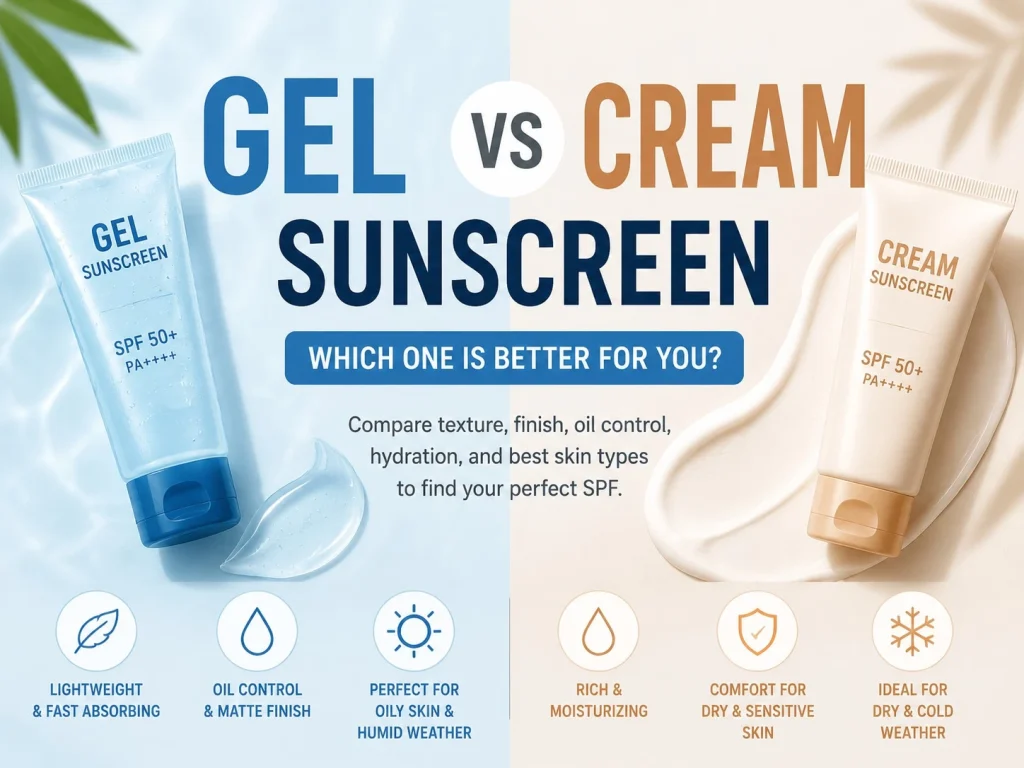
Gel sunscreen is a lightweight sunscreen format designed to spread easily, absorb quickly, and leave less residue. It is popular with people who want sun protection without a thick or greasy feel.
Gel sunscreen is often chosen for:
-
lightweight, fast-absorbing texture
-
clear, translucent, or low-residue finish
-
less visible white cast than many thick cream formulas
-
better comfort in hot or humid weather
-
easier wear under makeup, especially for oily skin
-
a cleaner feel for people who dislike heavy sunscreen
A good gel sunscreen should still be broad-spectrum and comfortable enough to apply generously. A light feel only helps if you use enough product.
What Is Cream Sunscreen?
Cream sunscreen is a richer sunscreen format with a more moisturizing feel. It is common in daily face sunscreen, body sunscreen, and products designed for dry or sensitive skin.
Cream sunscreen is often chosen for:
-
thicker, more moisturizing texture
-
better comfort for dry or sensitive skin
-
dewy, satin, or soft-finish appearance
-
less tightness after cleansing or sun exposure
-
more comfort in cold, dry, or windy weather
-
a more cushiony feel on the skin
Cream sunscreen can feel heavier in hot or humid climates, especially for oily skin. But for skin that feels dry, rough, or easily uncomfortable, the richer texture can make daily SPF use much easier to maintain.
Gel vs Cream Sunscreen: Key Differences
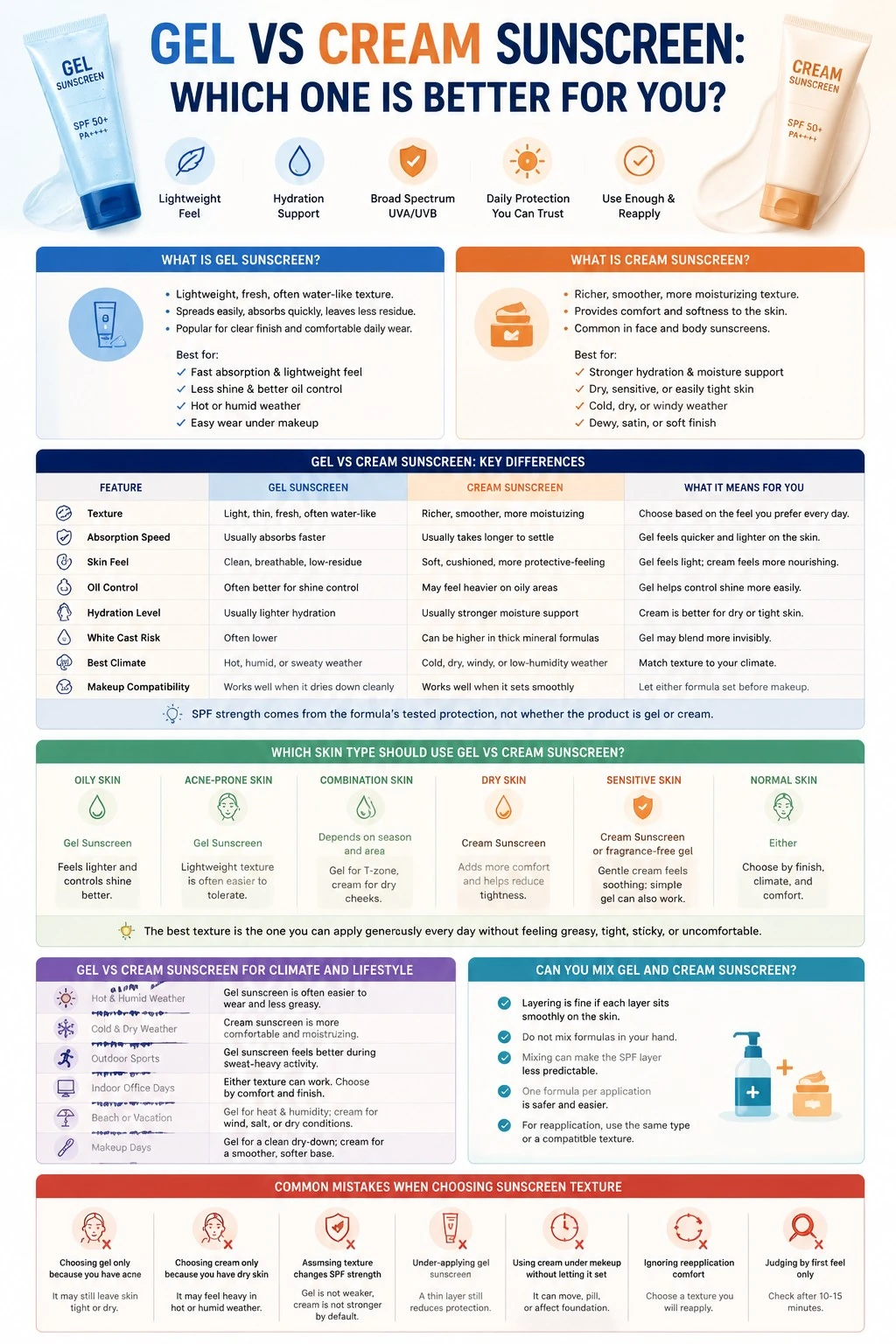
Gel and cream sunscreens mainly differ in texture, absorption, finish, oil control, hydration, climate comfort, and how they layer with makeup. The SPF strength comes from the formula’s tested protection, not whether the product feels like a gel or cream.
| Feature | Gel Sunscreen | Cream Sunscreen |
|---|---|---|
| Texture | Light, thin, fresh, often water-like | Richer, smoother, more moisturizing |
| Absorption speed | Usually absorbs faster | Usually takes longer to settle |
| Skin feel | Clean, breathable, low-residue | Soft, cushioned, more protective-feeling |
| Oil control | Often better for shine control | May feel heavier on oily areas |
| Hydration level | Usually lighter hydration | Usually stronger moisture support |
| White cast risk | Often lower because the texture spreads thinly | Can be higher in thicker mineral formulas |
| Best climate | Hot, humid, or sweaty weather | Cold, dry, windy, or low-humidity weather |
| Makeup compatibility | Works well under makeup when it dries down cleanly | Works well when it sets smoothly and does not pill |
Use this table as a texture guide. The best option still depends on your skin behavior, climate, and how well the product fits your daily routine.
Which Skin Type Should Use Gel vs Cream Sunscreen?
Choose by how your skin behaves during the day, not by the label alone. The right texture should let you apply enough sunscreen without feeling greasy, tight, sticky, or uncomfortable.
| Skin Type | Better Option | Why |
|---|---|---|
| Oily skin | Gel sunscreen | Feels lighter and usually controls shine better. |
| Acne-prone skin | Gel sunscreen | A lightweight, non-greasy texture is often easier to tolerate. |
| Combination skin | Depends on season and area | Gel may suit the T-zone, while cream may feel better on dry cheeks. |
| Dry skin | Cream sunscreen | Adds more comfort and helps reduce tightness. |
| Sensitive skin | Cream sunscreen or fragrance-free gel | A gentle cream often feels more soothing, but a simple fragrance-free gel can also work. |
| Normal skin | Either | Choose by finish, climate, and personal comfort. |
For most people, the best texture is the one they can apply generously every morning. If a gel leaves your skin tight, move toward a creamier formula. If a cream feels heavy or shiny by midday, a gel or lighter lotion may fit better.
See also: What Is My Skin Type? Simple Test & Skincare Guide
Gel vs Cream Sunscreen for Climate and Lifestyle
Climate and lifestyle can change which sunscreen feels better. A formula that works in winter may feel too heavy in summer, while a gel that feels perfect in humidity may not feel comfortable in dry weather.
-
Hot and humid weather: gel sunscreen is often easier to wear because it feels lighter and less greasy.
-
Cold and dry weather: cream sunscreen is usually more comfortable because it adds more moisture and softness.
-
Outdoor sports: gel sunscreen can feel better during sweat-heavy activity, especially if you dislike a sticky finish.
-
Indoor office days: either texture can work; choose based on comfort, finish, and how it layers with your routine.
-
Beach or vacation use: choose by both sweat level and hydration needs. Gel may feel fresher in heat, while cream may feel better if sun, wind, or saltwater makes skin dry.
-
Makeup days: gel works well when you want a cleaner dry-down; cream works well when your base makeup needs a smoother, softer layer.
Can You Mix Gel and Cream Sunscreen?
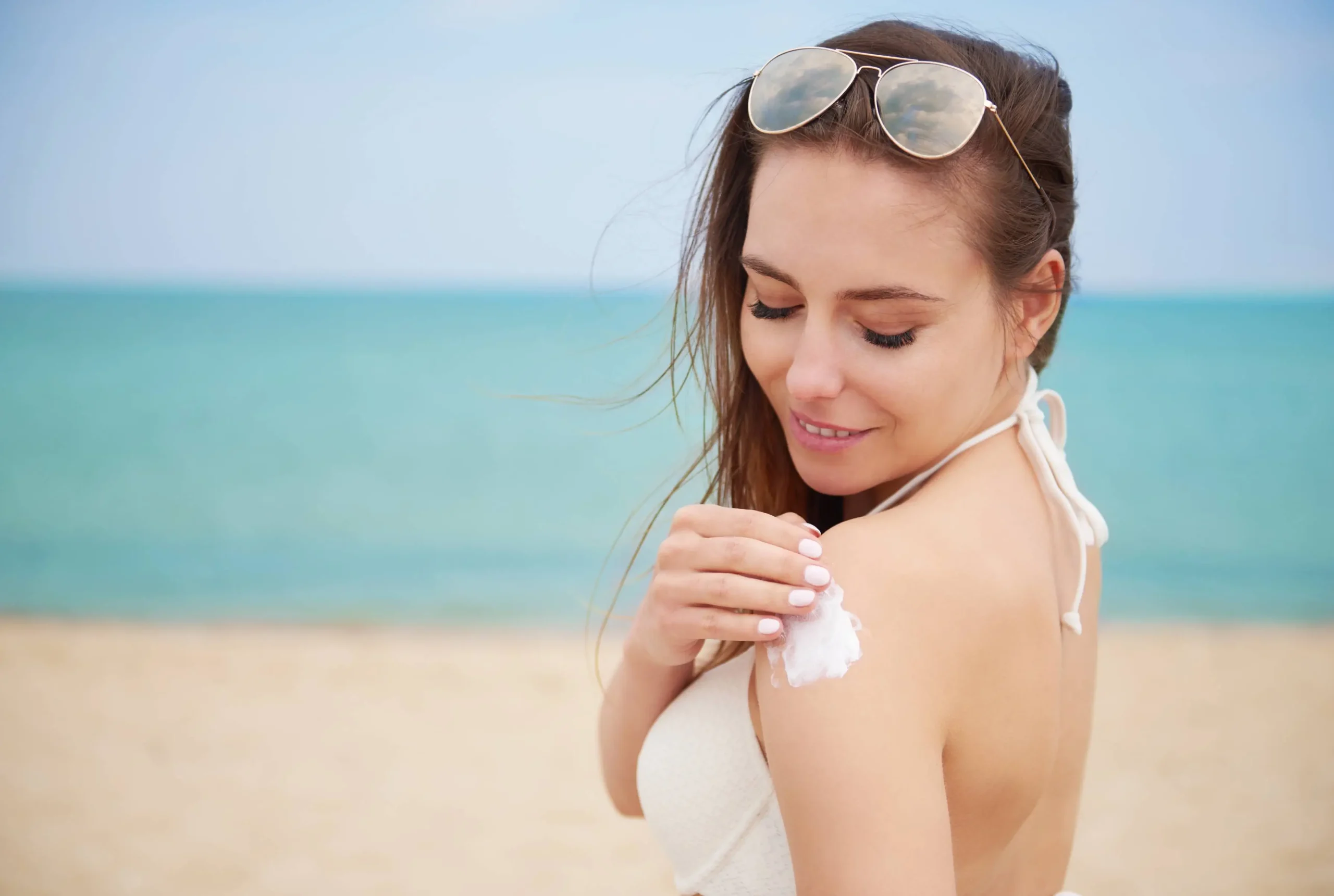
Layering gel and cream sunscreen products can work, but mixing them together in your hand is not ideal. Sunscreen needs to form an even film on the skin, and blending two formulas before application can make the SPF layer less predictable.
-
Layering is fine if each layer sits smoothly on the skin.
-
Do not mix formulas in your hand if it changes the texture, spread, or coverage.
-
One formula per application is safer and easier to apply evenly.
-
For reapplication, use the same type or a compatible texture when possible to reduce pilling or patchiness.
Common Mistakes When Choosing Sunscreen Texture
-
Choosing gel sunscreen only because you have acne: Gel may feel lighter, but some formulas can still leave skin tight or dry. If your skin feels stripped, choose a more balanced gel or a light lotion.
-
Choosing cream sunscreen only because you have dry skin: Cream can help with comfort, but a rich formula may feel heavy in hot or humid weather. Match the texture to both skin and climate.
-
Assuming texture changes SPF strength: Gel is not weaker, and cream is not stronger by default. SPF protection depends on the tested formula and how much you apply.
-
Under-applying gel sunscreen because it feels light: A thin layer still reduces protection. Apply enough product even if the texture disappears quickly.
-
Using cream sunscreen under makeup without letting it set: A rich layer can move, pill, or affect foundation. Let it settle before applying makeup.
-
Ignoring reapplication comfort: The best texture is one you can reapply without avoiding it.
-
Judging sunscreen only by first feel: Check how it looks and feels after 10–15 minutes, not just during application.
Final Takeaway: Gel or Cream Sunscreen?
Gel and cream sunscreens can both provide strong UV protection when they are broad-spectrum, applied generously, and reapplied as needed. Gel sunscreen is usually better for lightweight comfort, oil control, humid weather, and a cleaner finish. Cream sunscreen is usually better for hydration, dry skin, sensitivity, and barrier comfort. The best choice is the texture you can apply enough, wear comfortably, and reapply consistently.


