


What SPF Measures — and What It Does Not
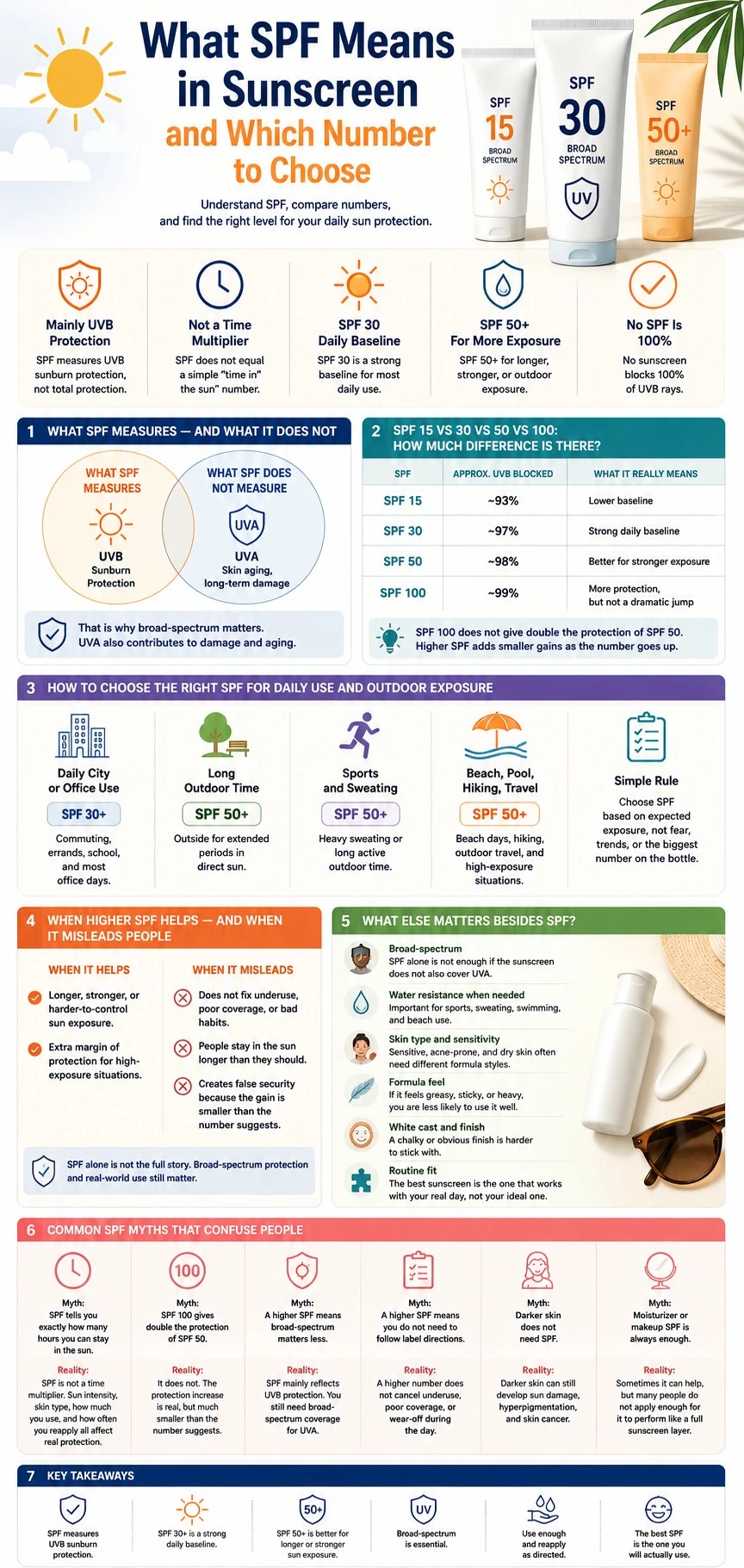
SPF is tied to sunburn protection. More specifically, it reflects how well a sunscreen protects skin from UVB radiation, the part of sunlight most closely linked to sunburn. That is why a higher SPF means more UVB protection.
But SPF is not a complete measure of all sun damage. It does not fully describe UVA protection, and it does not tell the whole story about long-term skin damage or skin aging. That is why SPF alone is not enough. Broad-spectrum matters because UVA also contributes to damage and aging.
SPF 15 vs 30 vs 50 vs 100: How Much Difference Is There?
The difference between SPF numbers is real, but it is smaller than many people think. SPF 30 already provides strong protection, while higher numbers add smaller gains rather than dramatic jumps.
SPF | Approx. UVB blocked | What it really means |
|---|---|---|
SPF 15 | ~93% | Lower baseline |
SPF 30 | ~97% | Strong daily baseline |
SPF 50 | ~98% | Better for stronger exposure |
SPF 100 | ~99% | More protection, but not a dramatic jump |
The key point is simple: SPF 100 does not give double the protection of SPF 50. Higher SPF can still help, especially in stronger exposure conditions, but the gains get smaller as the number goes up.
See slao: SPF 30 vs SPF 50
How to Choose the Right SPF for Daily Use and Outdoor Exposure

The right SPF depends on how much sun you actually expect, not just the highest number on the shelf. For most daily routines, SPF 30+ is a strong baseline. SPF 50+ makes more sense when exposure will be longer, stronger, or harder to avoid.
- Daily city or office use: Choose SPF 30+ for commuting, errands, school, and most office days.
- Long outdoor time: Choose SPF 50+ if you will be outside for extended periods in direct sun.
- Sports and sweating: Choose SPF 50+ if you expect heavy sweating or long active outdoor time.
- Beach, pool, hiking, travel: Choose SPF 50+ for beach days, hiking, outdoor travel, and similar high-exposure situations.
A simple rule works well: choose SPF based on expected exposure, not fear, trends, or the biggest number on the bottle.
Still not sure which formula fits you best? Read our full guide on how to choose the right sunscreen.
When Higher SPF Helps — and When It Misleads People
High SPF helps, but misunderstanding it causes bad decisions.
- Higher SPF can be useful when sun exposure is longer, stronger, or harder to control.
- Higher SPF does not fix underuse, poor coverage, or bad sunscreen habits.
- Many people treat high SPF like extra safety and stay in the sun longer than they should.
- Very high SPF can create a false sense of security because the protection gain is smaller than the number suggests.
- SPF alone is not the full sunscreen story. Broad-spectrum protection and real-world use still matter.
The real mistake is not choosing SPF 50 instead of SPF 30. It is thinking a higher number makes everything else less important.
What Else Matters Besides SPF When Choosing Sunscreen?
SPF matters, but it is only one part of a good sunscreen choice. A sunscreen can have a strong SPF number and still be the wrong pick for your skin or routine.
- Broad-spectrum: SPF alone is not enough if the sunscreen does not also cover UVA.
- Water resistance when needed: This matters more for sports, sweating, swimming, and beach use than for routine indoor-outdoor days.
- Skin type and sensitivity: Sensitive skin, acne-prone skin, and dry skin often need different formula styles.
- Formula feel: If it feels greasy, sticky, or heavy, you are less likely to use it well.
- White cast and finish: A formula that looks too chalky or obvious is harder to stick with.
- Routine fit: The best sunscreen is the one that works with your real day, not your ideal one.
If you want the full breakdown beyond SPF, read our guide on how to choose the right sunscreen.
Common SPF Myths That Confuse People
A lot of SPF confusion comes from simple myths that sound practical but lead to bad choices.
- Myth: SPF tells you exactly how many hours you can stay in the sun.
Reality: SPF is not a simple time multiplier. Sun intensity, skin type, how much sunscreen you use, and how often you reapply all affect real protection. - Myth: SPF 100 gives double the protection of SPF 50.
Reality: It does not. The protection increase is real, but much smaller than the number suggests. - Myth: A higher SPF means broad-spectrum matters less.
Reality: SPF mainly reflects UVB protection. You still need broad-spectrum coverage for UVA. - Myth: A higher SPF means you do not need to follow label directions.
Reality: A higher number does not cancel underuse, poor coverage, or wear-off during the day. - Myth: Darker skin does not need SPF.
Reality: Darker skin can still develop sun damage, hyperpigmentation, and skin cancer. - Myth: Moisturizer or makeup SPF is always enough.
Reality: Sometimes it can help, but many people do not apply enough for it to perform like a full sunscreen layer.


