
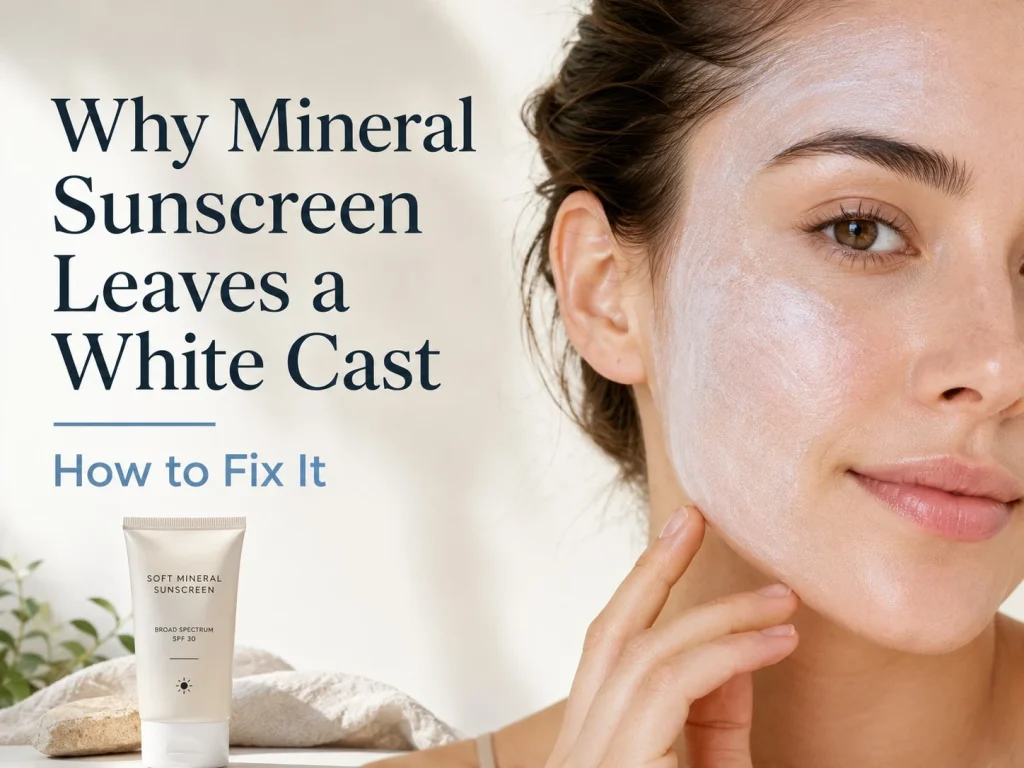

What Sunscreen White Cast Looks Like
Sunscreen white cast looks like a pale film left on the skin after application. It may appear white, gray-white, blue-gray, or ashy, depending on your skin tone and the formula. It can look even across the face or collect around textured areas.
White cast is different from pilling. Pilling looks like small balls, flakes, or rolled-up product. Dry flakes come from the skin itself. Flashback is a photo effect that appears under camera lighting, while white cast is visible in normal light.
Signs include:
- Chalky or gray-white finish
- Ashy look on deeper skin tones
- Pale film around hairline, brows, nose, or beard area
- Streaks after rubbing
- Makeup looking lighter or uneven over sunscreen
Why Mineral Sunscreen Leaves a White Cast
Zinc oxide and titanium dioxide are common mineral UV filters. They help sunscreen protect the skin, but they can also make the formula more visible on the surface. White cast usually comes from the filter system, mineral load, particle dispersion, formula base, pigment balance, skin texture, and application. [3][4]
Two mineral sunscreens with similar filters can look very different because formula design matters.
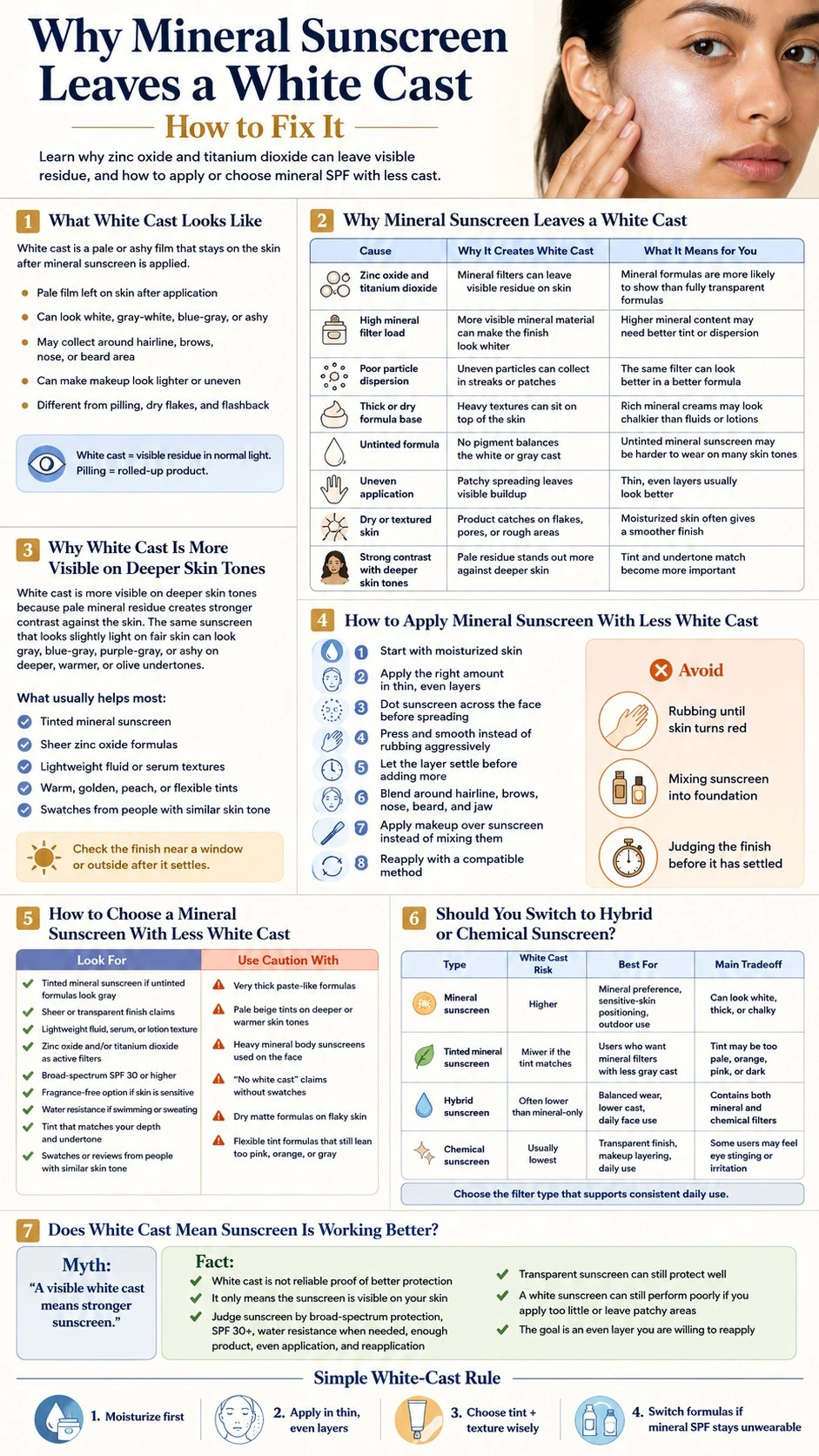
| Cause | Why It Creates White Cast | What It Means for You |
|---|---|---|
| Zinc oxide and titanium dioxide | Mineral filters can leave visible residue on the skin. | Mineral formulas are more likely to show than fully transparent formulas. |
| High mineral filter load | More visible mineral material can make the finish look whiter. | Higher mineral content may need better tint or dispersion. |
| Poor particle dispersion | Uneven particles can collect in streaks or patches. | The same filter can look better in a better formula. |
| Thick or dry formula base | Heavy textures can sit on top of the skin. | Rich mineral creams may look chalkier than fluids or lotions. |
| Untinted formula | No pigment balances the white or gray cast. | Untinted mineral sunscreen may be harder to wear on many skin tones. |
| Uneven application | Rubbing or patchy spreading leaves visible buildup. | Thin, even layers usually look better. |
| Dry or textured skin | Product catches on flakes, pores, or rough areas. | Moisturized skin often gives a smoother finish. |
| Strong contrast with deeper skin tones | Pale residue stands out more against deeper skin. | Tint and undertone match become more important. |
Why White Cast Is More Visible on Deeper Skin Tones
White cast is more visible on deeper skin tones because pale mineral residue creates stronger contrast against the skin. The same sunscreen that looks slightly light on fair skin can look gray, blue-gray, purple-gray, or ashy on deeper, warmer, or olive undertones. [3][4]
This does not mean deeper skin has a sunscreen problem. It means the formula is not blending well with that skin tone. White cast is a cosmetic wear issue, and it can make people use less sunscreen or avoid mineral sunscreen completely.
What usually helps most:
- Tinted mineral sunscreen
- Sheer zinc oxide formulas
- Lightweight fluid or serum textures
- Warm, golden, peach, or flexible tints
- Swatches from people with similar skin tone
The best test is not how the sunscreen looks under bathroom lighting. Check it near a window or outside after it settles. If it still looks gray or washed out, the formula or tint is not a good match.
How to Apply Mineral Sunscreen With Less White Cast
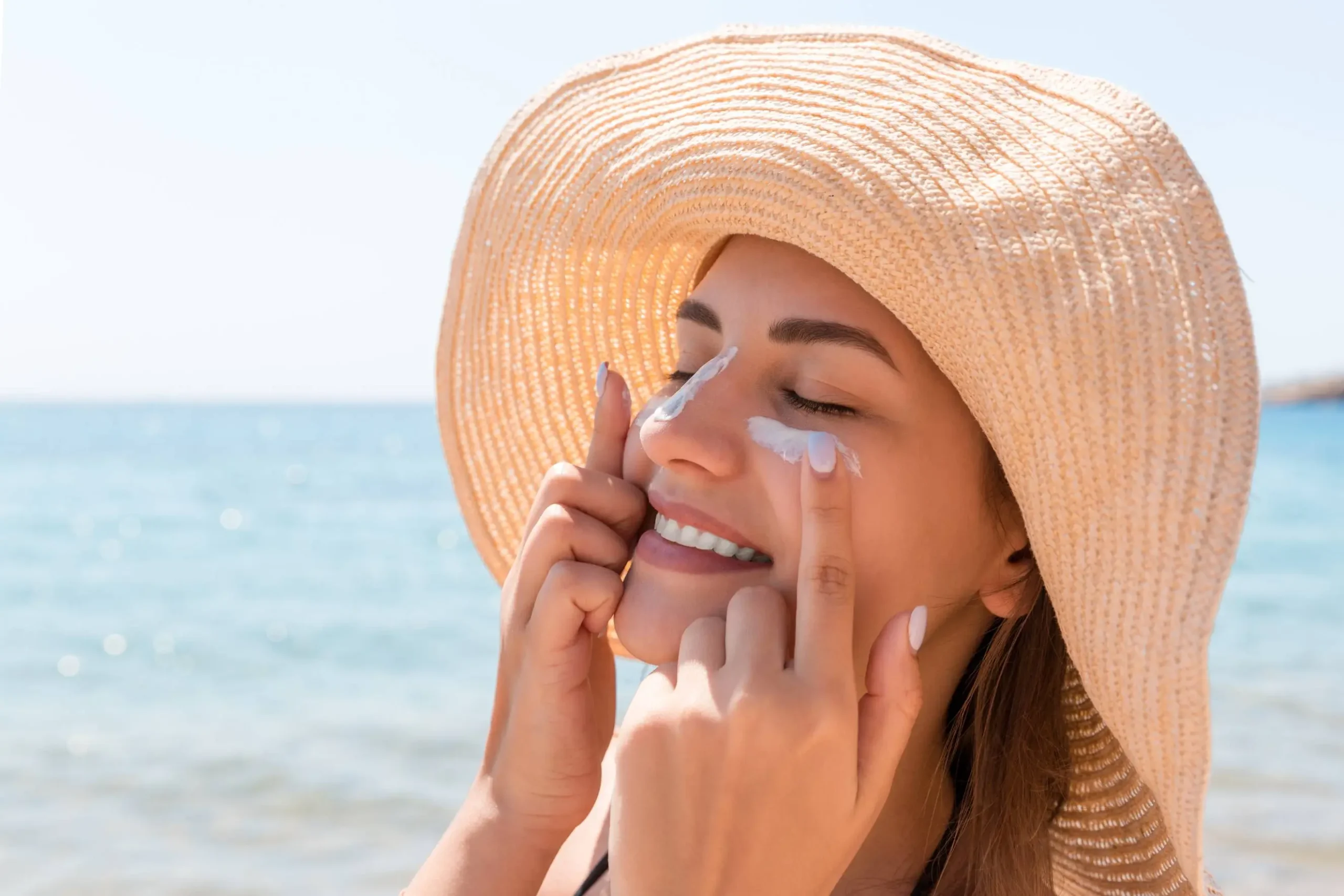
Application can reduce streaks, patchiness, and chalky buildup, but it cannot turn every mineral sunscreen invisible. The goal is to apply enough sunscreen while making the finish smoother and more even. [1][2]
- Start with moisturized skin
Dry or flaky skin makes mineral sunscreen catch on rough texture. - Apply the right amount in thin, even layers
Do not use less sunscreen just to reduce white cast. Build coverage gradually instead of applying one heavy layer. - Dot sunscreen across the face before spreading
Place small dots on the forehead, cheeks, nose, chin, and jaw before blending. - Press and smooth instead of rubbing aggressively
Hard rubbing can create streaks, redness, or uneven buildup. - Let the layer settle before adding more
Some mineral sunscreens look less white after a few minutes. - Blend around hairline, brows, nose, beard, and jaw
These areas collect pale residue easily. - Apply makeup over sunscreen instead of mixing them
Mixing sunscreen into foundation can make the SPF layer less even. - Reapply with a compatible method
Use a method that does not lift or patch the sunscreen underneath.
Avoid:
- Rubbing until skin turns red
- Mixing sunscreen into foundation
- Judging the finish before it has settled
See also: How to Use Sunscreen Correctly for Full Protection
How to Choose a Mineral Sunscreen With Less White Cast
The best low-white-cast mineral sunscreen depends on formula design, texture, tint, skin tone, and how much product you apply. “No white cast” is a marketing claim, not a guarantee. A sunscreen can look sheer on one skin tone and gray, orange, pink, or chalky on another.
Tinted mineral sunscreen is often the most practical fix when untinted formulas look gray. A tint helps balance the pale look of zinc oxide or titanium dioxide so the finish sits closer to your natural skin tone. Some tinted formulas use pigments such as iron oxides, but the shade still has to match your depth and undertone.
Look for:
- Tinted mineral sunscreen if untinted formulas look gray
- Sheer or transparent finish claims
- Lightweight fluid, serum, or lotion texture
- Zinc oxide and/or titanium dioxide as active filters
- Broad-spectrum SPF 30 or higher [1][2]
- Fragrance-free option if skin is sensitive
- Water resistance if swimming or sweating
- Tint that matches your depth and undertone
- Swatches or reviews from people with similar skin tone
Use caution with:
- Very thick paste-like formulas
- Pale beige tints on deeper or warmer skin tones
- Heavy mineral body sunscreens used on the face
- “No white cast” claims without swatches
- Dry matte formulas on flaky skin
- Flexible tint formulas that still lean too pink, orange, or gray
Should You Switch to Hybrid or Chemical Sunscreen?
If mineral sunscreen always looks white, gray, or chalky, switching is reasonable. If white cast makes you underapply or skip SPF, a tinted mineral, hybrid, or chemical sunscreen may be a better daily choice.
You do not need to fear non-mineral sunscreen just because mineral sunscreen is often marketed as gentle. Some people prefer mineral filters. Others get better daily wear from hybrid or chemical formulas. Choose based on finish, skin tolerance, and real use.
| Type | White Cast Risk | Best For | Main Tradeoff |
|---|---|---|---|
| Mineral sunscreen | Higher | Mineral preference, sensitive-skin positioning, outdoor use | Can look white, thick, or chalky |
| Tinted mineral sunscreen | Lower if the tint matches | Users who want mineral filters with less gray cast | Tint may be too pale, orange, pink, or dark |
| Hybrid sunscreen | Often lower than mineral-only | Balanced wear, lower cast, daily face use | Contains both mineral and chemical filters |
| Chemical sunscreen | Usually lowest | Transparent finish, makeup layering, daily use | Some users may feel eye stinging or irritation |
Filter type should support consistent use, not make SPF harder to wear.
Does White Cast Mean Sunscreen Is Working Better?
No. White cast is not reliable proof that sunscreen is working better. It only means the sunscreen is visible on your skin. A chalky finish does not automatically mean higher SPF, stronger UVA protection, or better real-world coverage.
Judge sunscreen by the label and how you use it: broad-spectrum protection, SPF 30 or higher, water resistance when needed, enough product, even application, and reapplication during continued exposure. [1][2]
A transparent sunscreen can still protect well, and a white sunscreen can still perform poorly if you apply too little or leave patchy areas. The goal is not to see sunscreen on your face. The goal is to use enough sunscreen in an even layer that you are willing to reapply.
Final Takeaway: Mineral Sunscreen White Cast
Mineral sunscreen leaves a white cast because zinc oxide, titanium dioxide, formula design, mineral load, particle dispersion, skin tone contrast, skin texture, and application all affect how visible the sunscreen looks. The fix is not to use less SPF. Choose a better formula, try a tinted option, apply thin even layers, and start with moisturized skin. If mineral sunscreen still makes you underapply or avoid sunscreen, it is not your best daily SPF. Use the sunscreen you can wear generously and reapply consistently.


