


What Is Tinted Sunscreen?
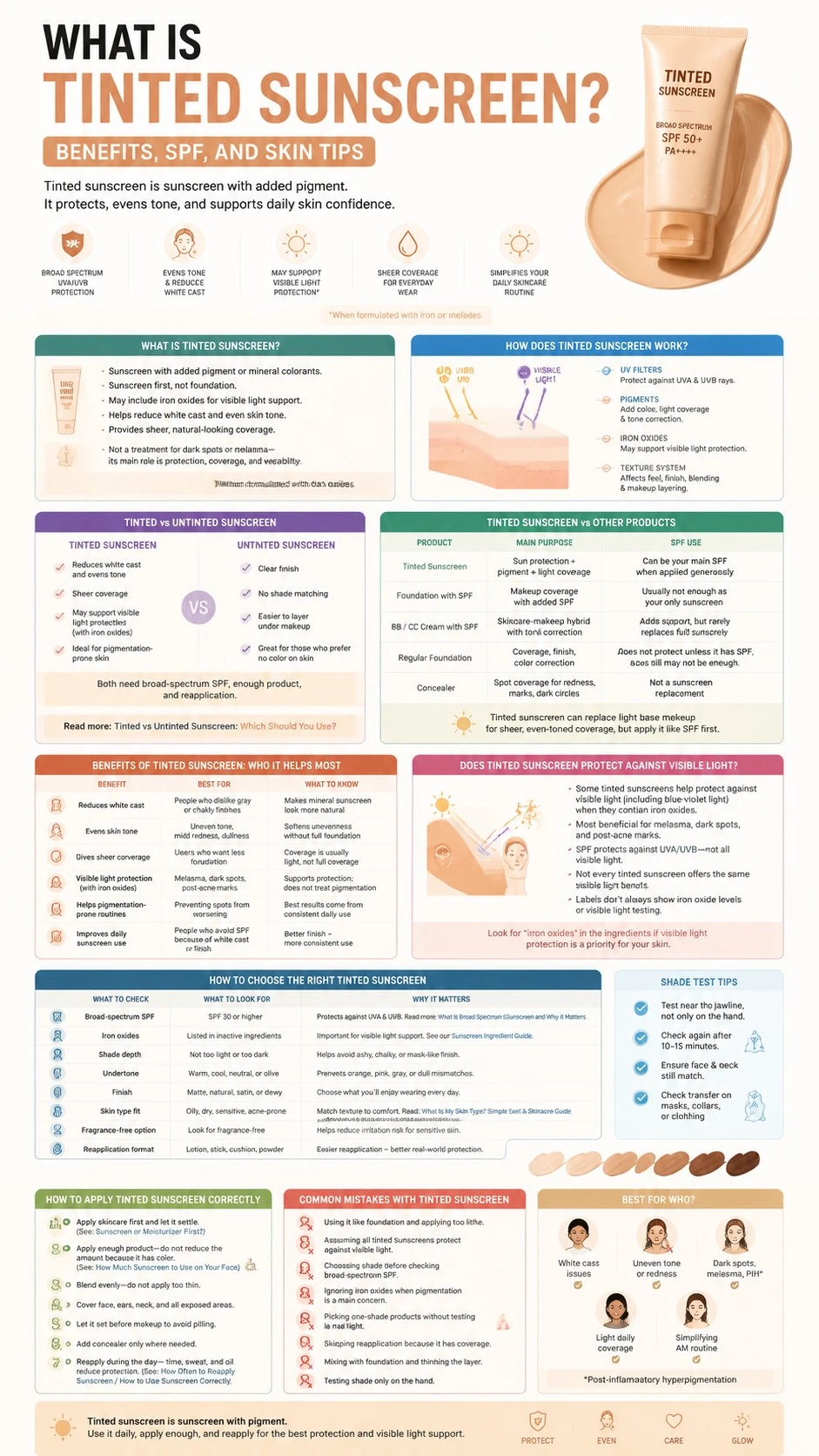
Tinted sunscreen is sunscreen with added pigment or mineral colorants. It should be used as sunscreen first, not as makeup with SPF. Some formulas use iron oxides or similar pigment systems that can add visible light support. [2][3]
Tinted sunscreen can help with:
reducing white cast, especially from mineral sunscreen
evening out uneven tone
providing sheer, natural-looking coverage
supporting visible light protection when formulated with iron oxides
simplifying a light makeup routine
Tinted sunscreen should not be treated as a treatment for melasma, dark spots, or post-acne marks. Its main value is protection, coverage, and daily wearability.
How Does Tinted Sunscreen Work?
Tinted sunscreen works by combining sunscreen filters with pigments. The filters protect against UVA and UVB, while the tint changes how the product looks on skin. This is why tinted sunscreen can feel closer to light base makeup, even though its main purpose is still sun protection.
UV filters: provide UVA and UVB protection.
Pigments: add color, light coverage, and tone correction.
Iron oxides: may support visible light protection, especially in pigmentation-prone routines.
Texture system: affects feel, finish, blending, and makeup layering.
A tint does not mean stronger SPF. A tinted SPF 30 and a non-tinted SPF 30 are still SPF 30 when both are tested and used correctly. The extra value is usually finish, white cast control, and possible visible light support.
Tinted Sunscreen vs Untinted Sunscreen: Quick Difference
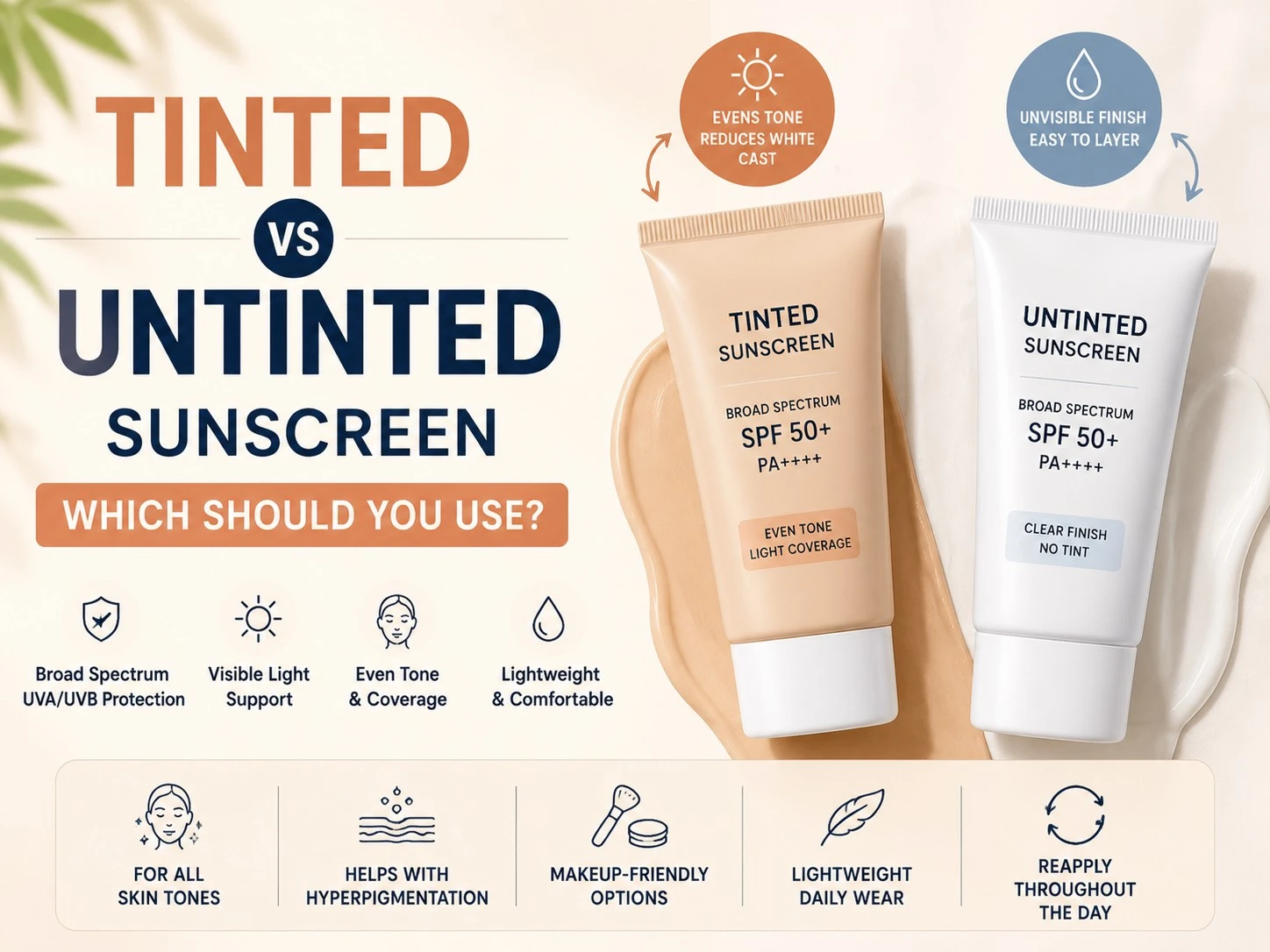
Tinted and untinted sunscreens can both provide UV protection when they are broad-spectrum and used correctly. The main difference is that tinted sunscreen contains pigment, while untinted sunscreen does not. That pigment can help reduce white cast, add light coverage, and support visible light protection when iron oxides are included. Untinted sunscreen is often better if you want a clear finish, no shade matching, or easy layering under makeup.
Tinted sunscreen: better for white cast, light coverage, and pigmentation-prone routines.
Untinted sunscreen: better for clear finish, no shade matching, and easy layering.
Both: still need broad-spectrum SPF, enough product, and reapplication.
For a full comparison, read Tinted vs Untinted Sunscreen: Which Should You Use?
Tinted Sunscreen vs Foundation, BB Cream, and Makeup SPF
Tinted sunscreen can look like light makeup, but its main job is sun protection. Foundation, BB cream, CC cream, and concealer can improve the look of skin, but they usually are not applied in the amount needed for reliable SPF protection. If you use tinted sunscreen as your base, apply it like sunscreen first, then think about coverage.
| Product | Main Purpose | SPF Use |
|---|---|---|
| Tinted sunscreen | Sun protection with pigment and light coverage | Can be your main SPF when applied generously |
| Foundation with SPF | Makeup coverage with added SPF | Usually not enough as your only sunscreen |
| BB cream / CC cream with SPF | Skincare-makeup hybrid with tone correction | Can add support, but rarely replaces a full sunscreen layer |
| Regular foundation | Coverage, finish, and color correction | Does not protect unless it has SPF, and still may not be enough |
| Concealer | Spot coverage for redness, marks, or dark circles | Not a sunscreen replacement |
Tinted sunscreen can replace light base makeup for users who only want sheer coverage and a more even tone. It should not be applied thinly just because it has color.
Benefits of Tinted Sunscreen: Who It Helps Most
Tinted sunscreen is useful when color improves how sunscreen looks and wears. A good formula can combine UV protection, white cast control, light coverage, tone correction, and possible visible light support in one daily product.
| Benefit | Best For | What to Know |
|---|---|---|
| Reduces white cast | People who dislike gray or chalky mineral sunscreen finishes | A good tint can make sunscreen look more natural on the skin |
| Evens skin tone | Uneven tone, mild redness, dullness | It can soften visible unevenness without full foundation |
| Gives sheer coverage | Users who want less foundation | Coverage is usually light, not full coverage |
| Supports visible light protection when formulated with iron oxides | Melasma, dark spots, post-acne marks | It supports protection; it does not treat pigmentation by itself |
| Helps pigmentation-prone routines | Users focused on keeping spots from worsening | Best results come from consistent, generous daily use |
| Improves daily sunscreen compliance | People who avoid regular SPF because of white cast or finish | A better finish makes daily use easier to maintain |
The key is choosing a shade and finish that you will apply generously every day.
Does Tinted Sunscreen Protect Against Visible Light?
Some tinted sunscreens can help protect against visible light, but the benefit depends on the formula. Visible light is different from UVA and UVB. It comes from sunlight and can worsen hyperpigmentation in some people, especially those prone to melasma, dark spots, or post-inflammatory hyperpigmentation.
Iron oxides are the pigments most often discussed for visible light support in tinted sunscreens.
People with melasma, dark spots, or post-acne marks may benefit most from this added support.
SPF alone does not fully describe visible light protection.
Not every tinted sunscreen provides the same visible light benefit.
Product labels do not always disclose iron oxide levels or visible light testing data.
Recent reviews support iron oxide-containing tinted sunscreens for visible-light-induced pigmentation, but product transparency is still limited. If melasma, dark spots, or post-acne marks are your main concern, choose a broad-spectrum tinted sunscreen that lists iron oxides. Do not assume every tint gives the same support. [2][3]
How to Choose the Right Tinted Sunscreen
Choosing tinted sunscreen is not only about finding a close shade. A good formula should match your protection needs, skin tone, undertone, finish preference, skin type, and daily use. Shade matters, but broad-spectrum SPF, iron oxides, comfort, and reapplication matter just as much.
| What to Check | What to Look For | Why It Matters |
|---|---|---|
| Broad-spectrum SPF | SPF 30 or higher for daily outdoor use | Helps protect against UVA and UVB exposure. For more detail, read What Is Broad Spectrum Sunscreen and Why It Matters. |
| Iron oxides | Listed in inactive ingredients or pigment system | Useful when visible light support is important. You can compare related ingredients in our Sunscreen Ingredient Guide. |
| Shade depth | Not too light or too dark | Helps avoid an ashy, chalky, or mask-like finish. |
| Undertone | Warm, cool, neutral, or olive | Helps prevent orange, pink, gray, or dull mismatch. |
| Finish | Matte, natural, satin, or dewy | Affects whether you will enjoy wearing it every day. |
| Skin type fit | Oily, dry, sensitive, or acne-prone | Helps match texture to comfort. If unsure, read What Is My Skin Type? Simple Test & Skincare Guide. |
| Fragrance-free option | Useful for sensitive or reactive skin | Helps reduce avoidable irritation risk. |
| Reapplication format | Lotion, stick, cushion, or powder touch-up | Makes daytime reapplication more realistic. |
Before choosing one, check the shade in real light and on the right area of the face:
Test near the jawline, not only on the hand.
Check the color again after 10–15 minutes.
Make sure your face and neck still match.
Check transfer on masks, collars, or clothing.
For deeper skin tones, the issue is usually poor shade range, white cast, or undertone mismatch, not the skin tone itself.
If gray or chalky sunscreen has been a problem, you may also find Do Black People Need Sunscreen? Skin Protection Guide useful.
How to Apply Tinted Sunscreen Correctly
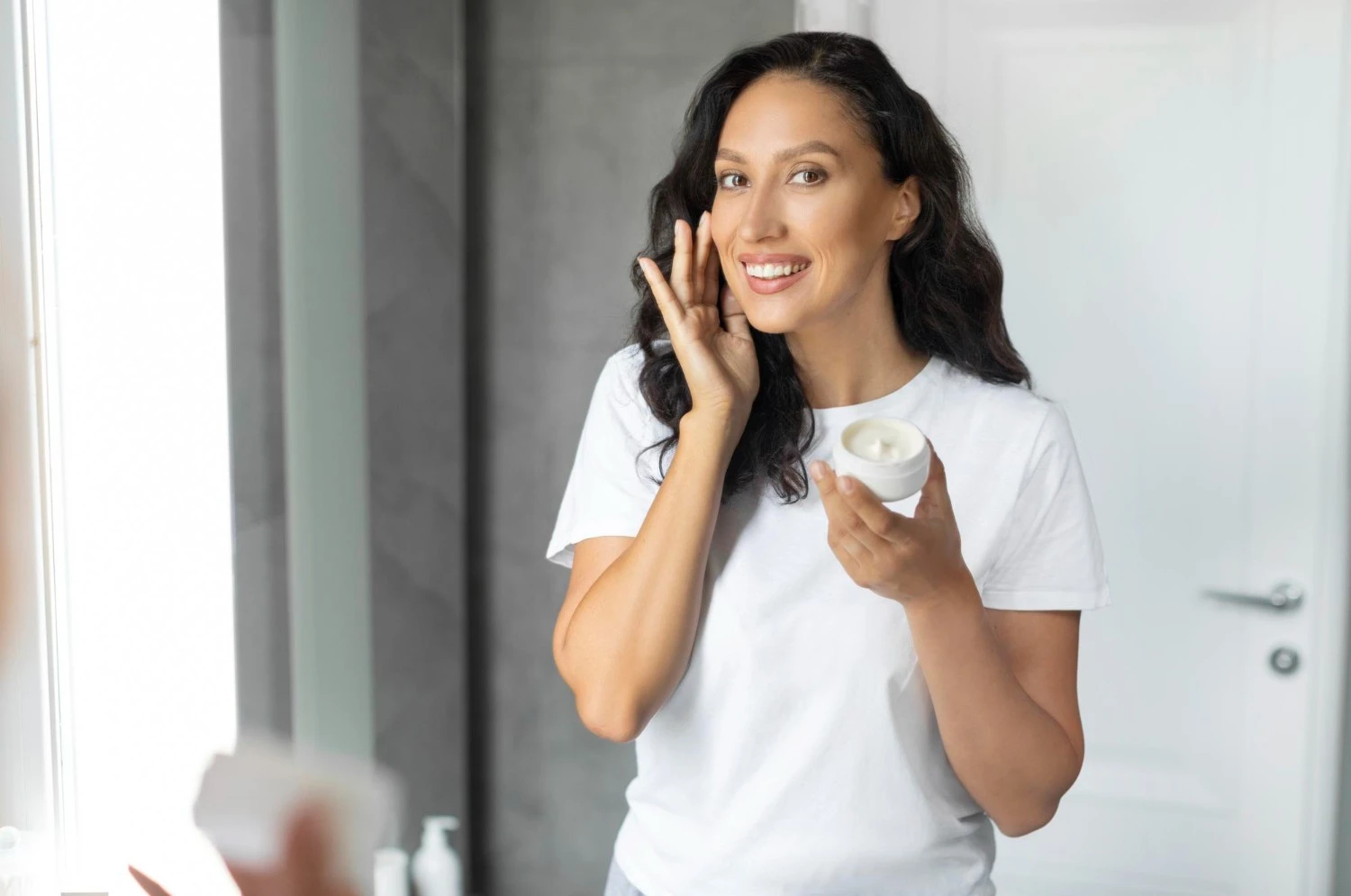
Apply tinted sunscreen as sunscreen first and makeup second. A thin, foundation-like layer can lower protection. Use enough product, spread it evenly, then add makeup only where you need extra coverage.
Apply skincare first. Let moisturizer or serum settle before sunscreen. For order details, read Sunscreen or Moisturizer First? Correct Skincare Order.
Apply enough tinted sunscreen. Do not reduce the amount because the product has color. For face amount, read How Much Sunscreen to Use on Your Face.
Blend evenly, not thinly. Spread the sunscreen across the skin until coverage looks even.
Cover face, ears, neck, and exposed areas. Do not stop at the center of the face.
Let it set before makeup. This helps reduce pilling, streaking, and movement.
Add concealer only where needed. This keeps coverage targeted without disturbing the SPF layer.
Reapply during the day. Tinted sunscreen still wears off with time, sweat, rubbing, and oil.
For timing, read How Often to Reapply Sunscreen for Real Protection or How to Use Sunscreen Correctly for Full Protection.
Common Mistakes With Tinted Sunscreen
Using it like foundation and applying too little: Treat it as sunscreen first. Coverage is secondary.
Assuming all tinted sunscreens protect against visible light: Look for iron oxides or visible light support, especially if pigmentation is your main concern.
Choosing shade before checking broad-spectrum SPF: Protection comes first. Shade match matters after the SPF basics are right.
Ignoring iron oxides when pigmentation is the main concern: A tint alone does not guarantee the same visible light support.
Picking one-shade products without testing: One shade rarely works for every skin tone and undertone.
Skipping reapplication because it has coverage: Tint does not make sunscreen last all day.
Mixing it with foundation and thinning the layer: This can make the sunscreen film less even and harder to control.
Testing shade only on the hand: Test near the jawline and check whether the face and neck still match.
Final Takeaway: What Is Tinted Sunscreen For?
Tinted sunscreen is sunscreen with pigment. It helps reduce white cast, even the look of skin tone, and give light coverage while protecting against UV exposure. When it contains iron oxides, it may also support visible light protection for pigmentation-prone skin. It is most useful for white cast issues, dark spots, post-acne marks, melasma concerns, or light coverage needs. Like any sunscreen, it only works well when you apply enough and reapply.


