


Broad Spectrum vs SPF: What Is the Difference?
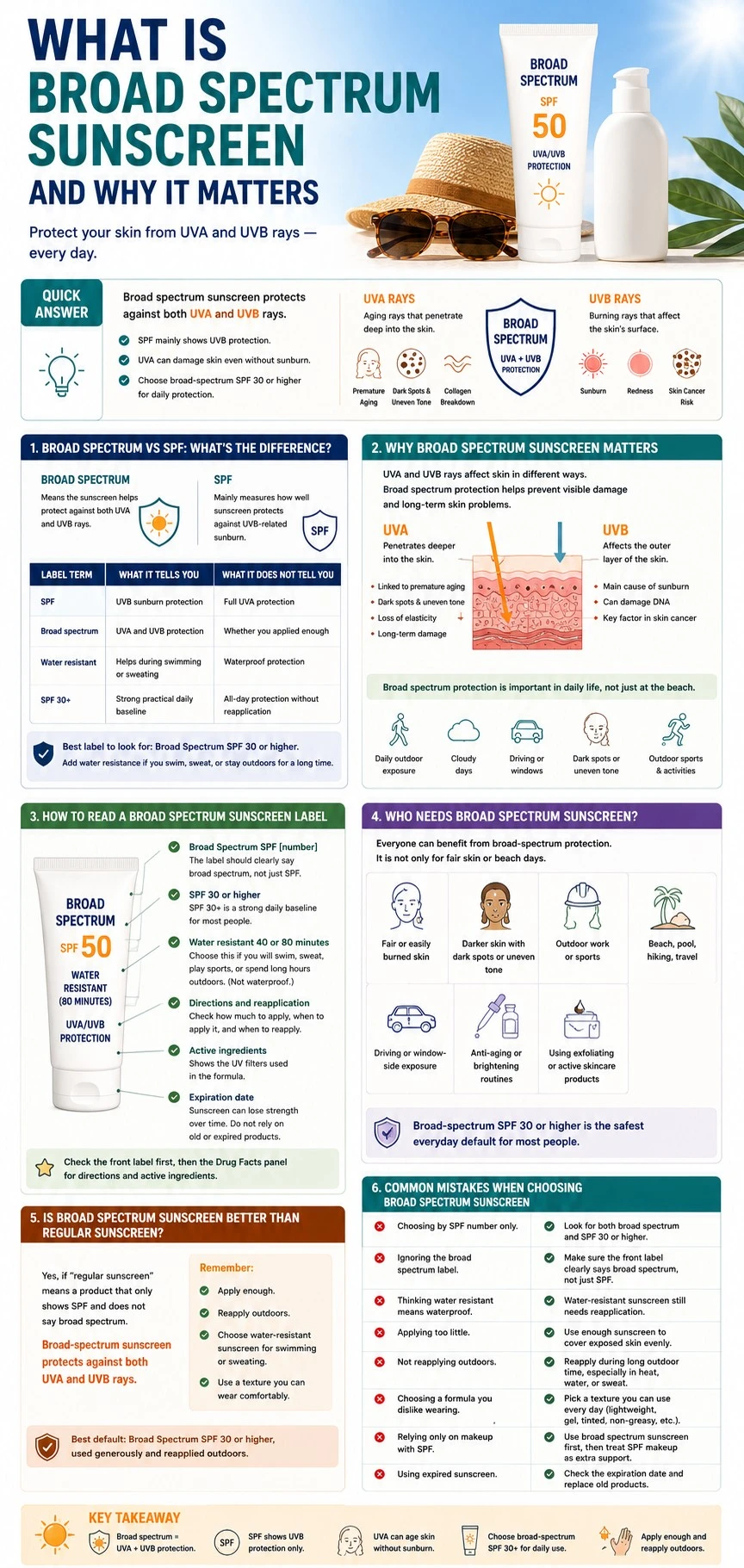
Broad spectrum and SPF are related, but they do not mean the same thing. SPF mainly measures how well sunscreen protects against UVB-related sunburn. Broad spectrum means the sunscreen helps protect against both UVA and UVB rays.
This matters because a sunscreen can have an SPF number without giving the UVA coverage most people expect. A higher SPF also does not automatically mean complete UVA protection. If the label does not say broad spectrum, SPF alone does not tell the full protection story.[1]
Label Term | What It Tells You | What It Does Not Tell You |
|---|---|---|
SPF | UVB sunburn protection | Full UVA protection |
Broad spectrum | UVA and UVB protection | Whether you applied enough |
Water resistant | Helps during swimming or sweating | Waterproof protection |
SPF 30+ | Strong practical daily baseline | All-day protection without reapplication |
The best label to look for is simple: Broad Spectrum SPF 30 or higher. If you will swim, sweat, or stay outdoors for a long time, also look for water resistance.
Why Broad Spectrum Sunscreen Matters
Broad spectrum sunscreen matters because UVA and UVB rays affect skin in different ways. UVB is strongly linked with sunburn. UVA can reach deeper into the skin and is linked with premature aging, dark spots, uneven tone, and long-term sun damage.
This protection matters in daily life, not only at the beach. You can get UV exposure while walking, driving, running errands, sitting near bright windows, or spending time outside on cloudy days. You may not always see a burn, but that does not mean your skin had no UV exposure.
Broad spectrum protection is especially useful for:
- Daily outdoor exposure
- Cloudy days
- Driving or window-side light
- Dark spots or uneven tone
- Anti-aging skincare routines
- Beach, pool, sports, hiking, or outdoor work
If you only check SPF and ignore broad spectrum, you may miss the protection that matters most for daily UVA exposure and long-term skin appearance.
How to Read a Broad Spectrum Sunscreen Label
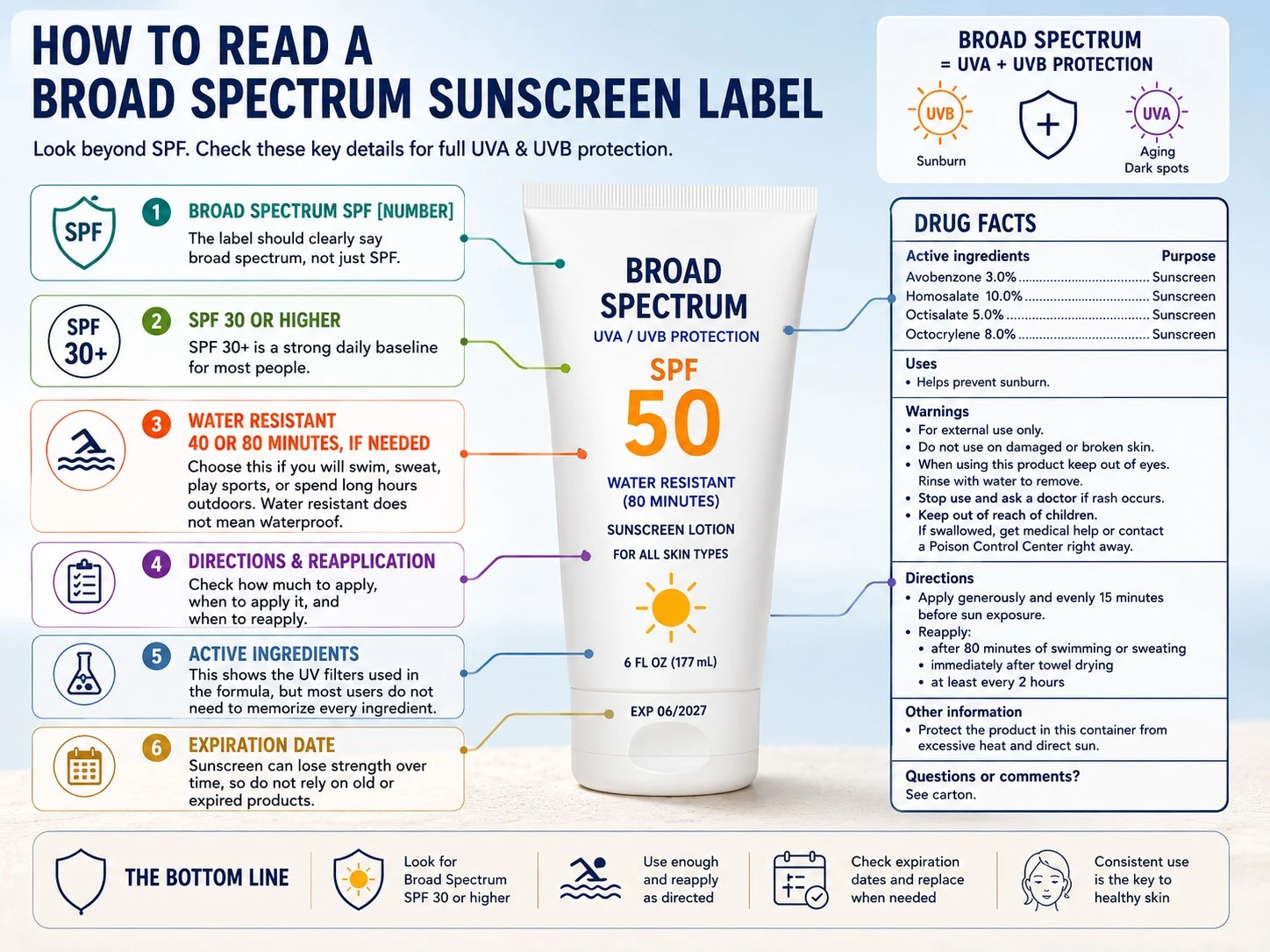
Reading the label is the easiest way to confirm broad UVA and UVB protection. You do not need to analyze every UV filter. Start with the front label, then check the directions and Drug Facts panel.
What to check on the label:
- Broad Spectrum SPF [number]
- The label should clearly say broad spectrum, not just SPF.
- SPF 30 or higher
- SPF 30+ is a strong daily baseline for most people.
- Water resistant 40 or 80 minutes, if needed
- Choose this if you will swim, sweat, play sports, or spend long hours outdoors. Water resistant does not mean waterproof.[3]
- Directions and reapplication
- Check how much to apply, when to apply it, and when to reapply.[3]
- Active ingredients
- This shows the UV filters used in the formula, but most users do not need to memorize every ingredient.
- Expiration date
- Sunscreen can lose strength over time, so do not rely on old or expired products.
Who Needs Broad Spectrum Sunscreen?
Everyone benefits from broad-spectrum sunscreen. UV exposure can affect different skin tones, ages, and climates. Some people burn faster than others, but broad-spectrum protection is not only for fair skin or beach days.
It is especially important for:
- Fair or easily burned skin
- Darker skin with dark spots or uneven tone
- Outdoor work or sports
- Beach, pool, hiking, or travel days
- Driving or frequent window-side exposure
- Anti-aging or brightening routines
- People using exfoliating or active skincare products
Not everyone has the same sun sensitivity, but UVA and UVB exposure can still affect long-term skin health and appearance. For most people, broad-spectrum SPF 30 or higher is the safest everyday default.[2]
Is Broad Spectrum Sunscreen Better Than Regular Sunscreen?
Yes, if “regular sunscreen” means a product that only shows SPF and does not say broad spectrum. Broad-spectrum sunscreen is the better daily choice because it helps protect against both UVA and UVB rays, while SPF alone mainly tells you about UVB-related sunburn protection.
That does not make every broad-spectrum product perfect. You still need to apply enough, reapply outdoors, choose water-resistant sunscreen for swimming or sweating, and use a texture you can wear comfortably.
Best default: broad-spectrum SPF 30 or higher, used generously and reapplied outdoors.
Common Mistakes When Choosing Broad Spectrum Sunscreen
Most mistakes come from checking only one label claim, applying too little, or skipping reapplication outdoors.
- Mistake: Choosing by SPF number only.
Better choice: Look for both broad spectrum and SPF 30 or higher. - Mistake: Ignoring the broad spectrum label.
Better choice: Make sure the front label clearly says broad spectrum, not just SPF. - Mistake: Thinking water resistant means waterproof.
Better choice: Water-resistant sunscreen still needs reapplication, especially after swimming, sweating, or towel drying. - Mistake: Applying too little.
Better choice: Use enough sunscreen to cover exposed skin evenly. - Mistake: Not reapplying outdoors.
Better choice: Reapply during long outdoor time, especially in heat, water, or sweat. - Mistake: Choosing a formula you dislike wearing.
Better choice: Pick a texture you can use every day, such as lightweight, gel, tinted, or non-greasy sunscreen. - Mistake: Relying only on makeup with SPF.
Better choice: Use broad spectrum sunscreen first, then treat SPF makeup as extra support.


