


What Changes in Your Skin From Season to Season?
Your skin reacts to the environment, not just the calendar. Cold, dry weather can make skin feel tight and flaky. Humid weather can make sunscreen, sweat, and oil feel heavier. Spring and fall can be unstable because temperature, humidity, allergens, and indoor climate change quickly. [7]
The main seasonal factors are:
- Temperature and humidity: Heat can increase sweat and oil buildup, while low humidity can worsen dryness.
- Wind and cold air: These can make skin feel rough, tight, or more easily irritated.
- UV exposure: UV exposure matters year-round, not only in summer. [2]
- Sweat, sunscreen, and outdoor activity: Warm months often require better nighttime cleansing.
- Indoor heating and air conditioning: Both can leave skin feeling dehydrated.
Read your skin signs first. Tightness, flaking, stinging, greasy buildup, pilling, breakouts, and dullness are more useful than the month of the year.
What Should Stay the Same Year-Round?
A good seasonal skincare routine starts with a stable base. Most people need small adjustments, not a completely new routine each season.
Keep these basics year-round:
- Gentle cleanser: Your cleanser should clean without leaving skin tight.
- Moisturizer: Even oily skin needs moisture support. The texture can change by season. [4]
- Broad-spectrum sunscreen: UV exposure does not stop in fall or winter. [2]
- Targeted treatment if needed: Keep actives steady if your skin tolerates them.
- Patch testing: New products should be introduced carefully.
- Controlled exfoliation: More exfoliation is not better if your skin is dry, stinging, or irritated.
- Professional help when needed: Persistent acne, rash, eczema, rosacea, cracking, or severe itching needs a dermatologist.
Keep the steps stable and adjust the texture. In summer, that may mean a gel moisturizer. In winter, it may mean a richer cream.
Seasonal Skincare Routine at a Glance
Use this table as a seasonal adjustment map, not a rule that forces a full product change.
| Season | Main Skin Challenge | What to Adjust | What to Keep |
|---|---|---|---|
| Spring | Unstable weather, leftover winter dryness, more outdoor time | Lighten moisturizer, restart gentle exfoliation, refresh sunscreen habits | Gentle cleanser, moisturizer, sunscreen |
| Summer | Sweat, oil, heat, UV exposure, sunscreen buildup | Lightweight moisturizer, stronger sunscreen habits, oil control, double cleanse if needed | Hydration, sunscreen, non-stripping cleansing |
| Fall | Lower humidity, barrier recovery, post-summer dullness | Add more moisture, reduce harsh exfoliation, repair the barrier | Sunscreen, cleanser, targeted treatment |
| Winter | Dry air, wind, indoor heating, tightness | Creamier cleanser, richer moisturizer, balm for dry areas, humidifier | Sunscreen, gentle routine, barrier care |
Use the table as a quick map. The seasonal sections below explain how to adjust each routine.
Spring Skincare Routine
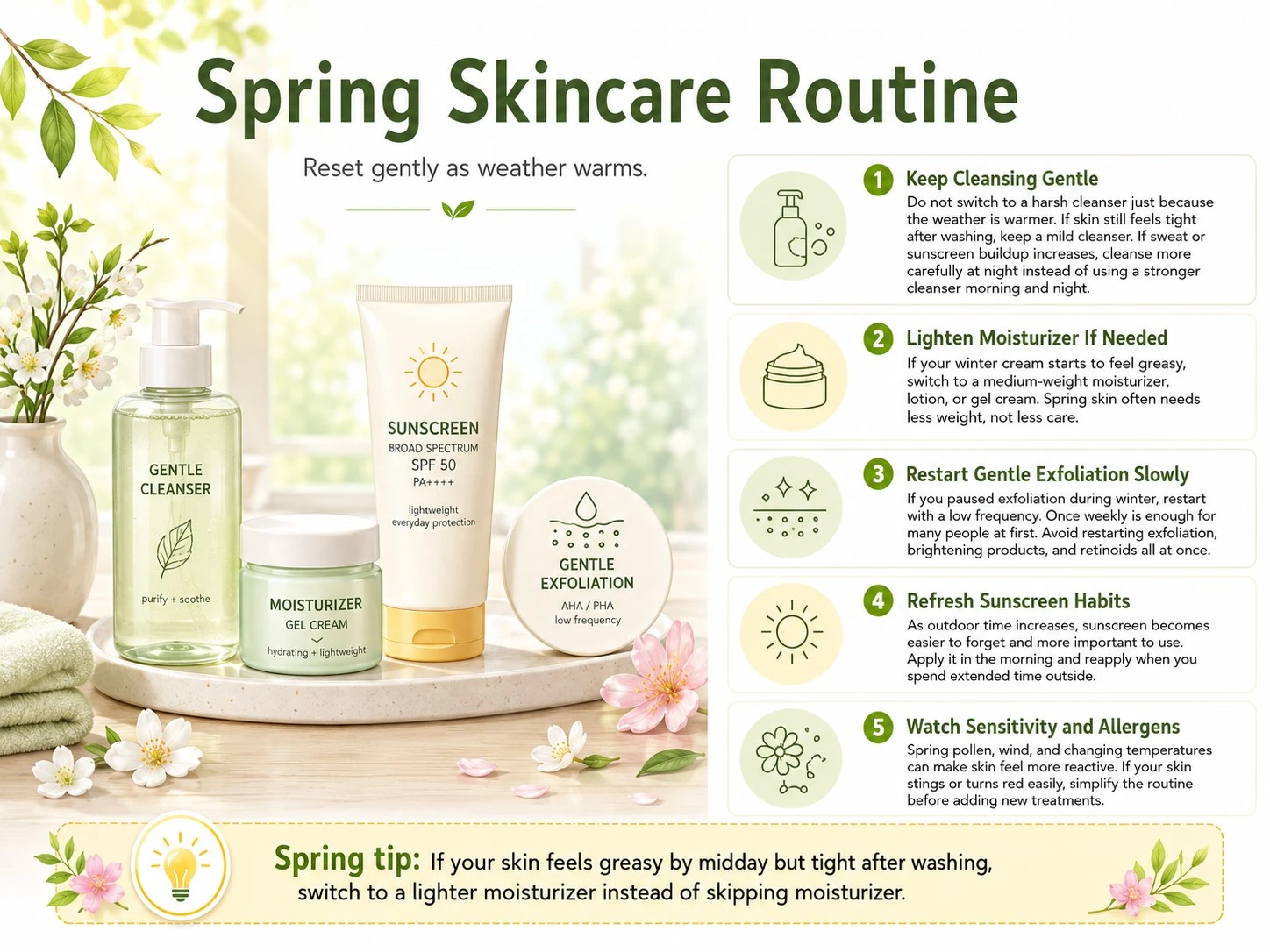
Spring is a transition season. Your skin may still feel dry from winter, but warmer weather and more outdoor time can make heavy creams feel too rich. The goal is to reset gently, not force a “spring detox.”
1. Keep Cleansing Gentle
Do not switch to a harsh cleanser just because the weather is warmer. If your skin still feels tight after washing, keep a mild cleanser.
If you notice more sweat or sunscreen buildup, cleanse more carefully at night instead of using a stronger cleanser morning and night.
2. Lighten Moisturizer If Needed
If your winter cream starts to feel greasy, switch to a medium-weight moisturizer, lotion, or gel cream. Spring skin often needs less weight, not less care.
3. Restart Gentle Exfoliation Slowly
If you paused exfoliation during winter, restart with a low frequency. Once weekly is enough for many people at first.
Avoid restarting exfoliation, brightening products, and retinoids all at once. That makes irritation harder to track.
4. Refresh Sunscreen Habits
As outdoor time increases, sunscreen becomes easier to forget and more important to use. Apply it in the morning and reapply when you spend extended time outside. [2]
5. Watch Sensitivity and Allergens
Spring pollen, wind, and changing temperatures can make skin feel more reactive. If your skin stings or turns red easily, simplify the routine before adding new treatments.
Spring tip: If your skin feels greasy by midday but tight after washing, switch to a lighter moisturizer instead of skipping moisturizer.
Summer Skincare Routine
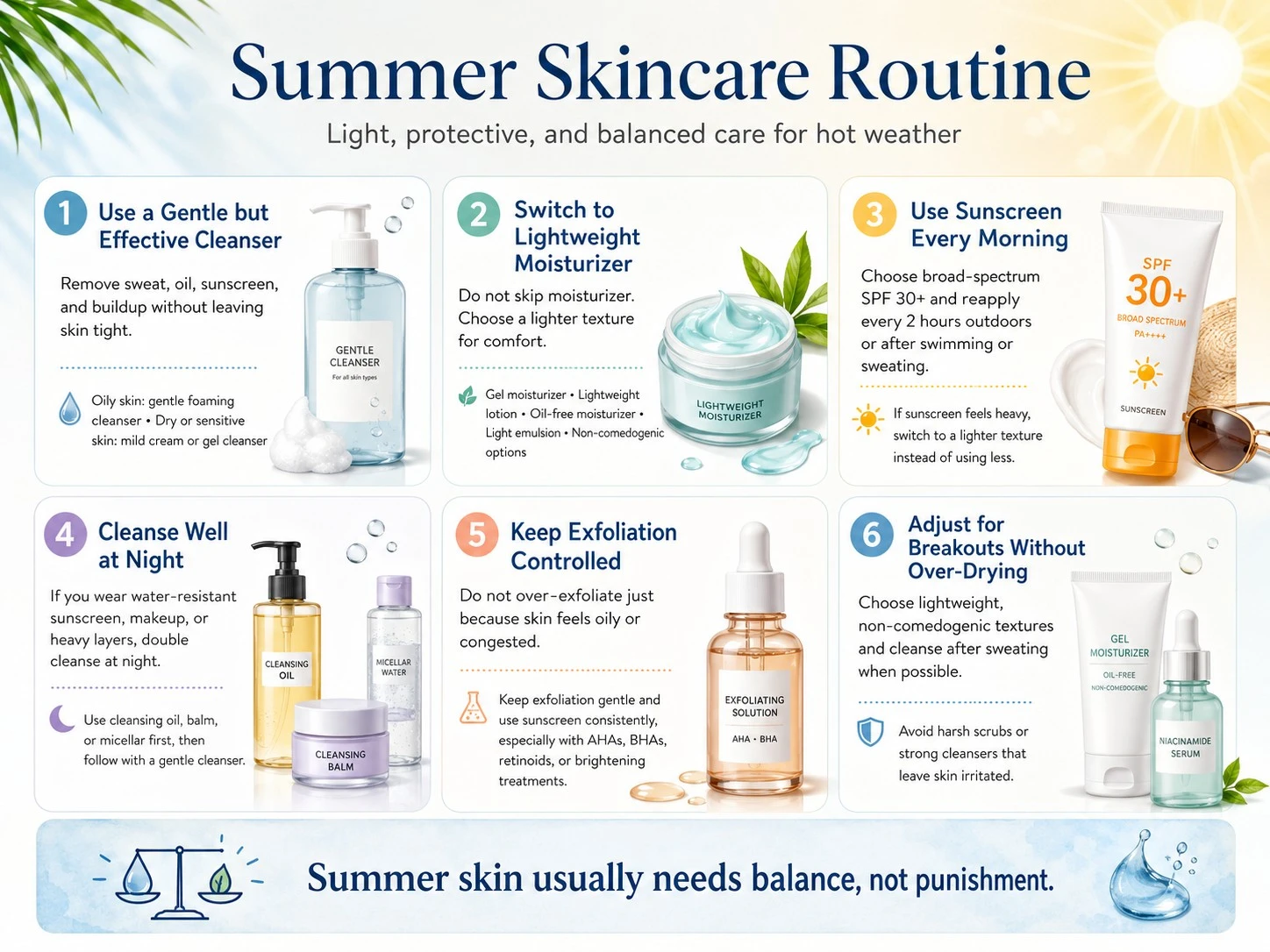
Summer skincare should feel light but still protective. Focus on sunscreen, sweat management, non-stripping cleansing, and lightweight hydration. A full routine overhaul is usually unnecessary. [6]
1. Use a Gentle but Effective Cleanser
Heat, sweat, oil, sunscreen, and outdoor exposure can leave more residue on the skin. Use a cleanser that removes buildup without making your face feel tight.
If your skin is oily, a gentle foaming cleanser can work well. If your skin is dry or sensitive, stay with a mild cream or gel cleanser.
2. Switch to Lightweight Moisturizer
Do not skip moisturizer in summer. Instead, choose a lighter texture.
Good summer options include gel moisturizer, lightweight lotion, oil-free moisturizer, light emulsion, or a non-comedogenic moisturizer for acne-prone skin.
A lighter moisturizer helps maintain comfort without adding heaviness.
3. Use Sunscreen Every Morning
Sunscreen is the most important summer skincare step. Choose a broad-spectrum sunscreen with SPF 30 or higher, and reapply every two hours outdoors or after swimming or sweating. [2] If sunscreen feels heavy, try a lighter texture instead of using less.
4. Cleanse Well at Night
If you wear water-resistant sunscreen, makeup, or heavy sunscreen layers, a double cleanse can help. Use an oil cleanser, balm, or micellar product first, then follow with a gentle cleanser.
The goal is to remove sunscreen and sweat without stripping the skin.
5. Keep Exfoliation Controlled
Summer can make people want to exfoliate more because skin feels oily or congested. This can backfire if you are also getting more sun exposure.
Keep exfoliation gentle and use sunscreen consistently, especially if you use AHAs, BHAs, retinoids, or brightening treatments.
6. Adjust for Breakouts Without Over-Drying
If you are acne-prone, choose lightweight, non-comedogenic textures. Cleanse after sweating when possible, but avoid harsh scrubs or strong cleansers that leave skin irritated.
Summer skin usually needs balance, not punishment.
Fall Skincare Routine

Fall is the season to recover and prepare. Humidity often drops, indoor heating may begin, and skin that tolerated a light summer routine can start to feel tight again.
Use fall to rebuild comfort first:
- Check whether your skin feels tight after cleansing.
- Move from gel cream to lotion or cream if needed.
- Reduce exfoliation if skin feels dry, rough, or sensitive.
- Keep sunscreen because UV exposure does not stop in fall. [2]
- Add barrier-supportive ingredients such as ceramides, glycerin, or niacinamide if your skin feels stressed.
- Start caring for lips, hands, and body skin before winter dryness becomes severe.
If summer left your skin dull or uneven, do not add several strong actives in the same week. Restore hydration first, then adjust treatments one at a time.
Winter Skincare Routine

Winter skincare should protect the skin barrier. Cold air, wind, low humidity, hot showers, and indoor heating can make skin feel dry, tight, itchy, or flaky. The goal is to reduce moisture loss and avoid stripping.
1. Use a Creamier or Less Stripping Cleanser
If your usual cleanser leaves skin tight in winter, switch to a cream, milk, or gentle hydrating cleanser.
You may not need a strong morning cleanse. If your skin is dry, a water rinse may be enough.
2. Moisturize While Skin Is Slightly Damp
Moisturizer helps trap water in the skin. After cleansing, pat the skin gently and apply moisturizer while the skin is still slightly damp. The American Academy of Dermatology recommends moisturizing after washing and using gentle, fragrance-free products for dry skin. [1]
3. Switch to a Richer Cream If Needed
If your skin feels tight, flaky, rough, or itchy, use a richer cream. Dry areas may need a thicker layer at night.
4. Use Balm for Lips, Hands, and Very Dry Areas
Winter dryness often affects more than the face. Use a balm or ointment on lips, hands, elbows, cheeks, or any area that cracks, peels, or feels rough.
5. Avoid Long Hot Showers
Hot water can make dry winter skin worse. Keep showers shorter and use warm, not hot, water. Cleveland Clinic also advises shorter, cooler showers and moisturizing after showering to help manage winter dryness. [5]
6. Use a Humidifier If Indoor Air Is Dry
Indoor heating can reduce moisture in the air. A humidifier can help if your skin feels dry even when your routine is gentle. [1]
7. Keep Sunscreen on Exposed Skin
Winter does not cancel UV exposure. Use sunscreen on exposed areas, especially during outdoor activities, snow exposure, or long daytime walks. [2]
Winter warning: If your skin burns after applying moisturizer, flakes badly, cracks, bleeds, or stays itchy, stop experimenting and see a dermatologist.
Seasonal Skincare Routine by Skin Type
Seasonal skincare should match both the weather and your skin type. Use this table to adjust texture and frequency without rebuilding your whole routine.
| Skin Type | Warmer Months | Colder Months | Watch Out For |
|---|---|---|---|
| Dry skin | Lightweight cream, hydrating serum, sunscreen | Richer cream, balm for dry patches, humidifier | Over-cleansing, hot water |
| Oily skin | Gel moisturizer, non-comedogenic sunscreen, sweat control | Light lotion or cream, avoid harsh cleansing | Skipping moisturizer |
| Combination skin | Gel or lotion on oily areas, cream on dry areas | More cream on cheeks and dry zones | Using one texture everywhere |
| Sensitive skin | Simple routine, fragrance-free sunscreen | Barrier repair, fewer actives | Too many product changes |
| Acne-prone skin | Non-comedogenic textures, cleanse after sweating | Avoid heavy pore-clogging layers | Over-drying acne products |
| Mature skin | Sunscreen, antioxidant support, light moisturizer | Richer moisturizer, barrier support | Relying only on actives |
For oily skin, do not skip moisturizer; use a lighter texture and avoid harsh or alcohol-based cleansers. [4] For sensitive skin, change one product at a time and avoid adding multiple actives during unstable weather.
How to Adjust Active Ingredients by Season
Active ingredients do not need to be replaced every season. If your skin tolerates an active well, adjust only the frequency, layering, or barrier support.
| Ingredient Type | Seasonal Adjustment |
|---|---|
| Retinoids | Keep stable if tolerated; reduce frequency if winter dryness or summer irritation increases |
| AHAs / BHAs | Use gently; avoid increasing frequency during heavy sun exposure or barrier dryness |
| Vitamin C | Useful under sunscreen in the morning if tolerated |
| Hyaluronic acid | Works best when sealed with moisturizer, especially in dry seasons |
| Ceramides | Strong choice for fall and winter barrier support |
| Niacinamide | Useful year-round for oil balance and barrier support |
| Benzoyl peroxide or acne actives | Keep targeted; reduce if dryness or peeling becomes excessive |
If your skin stings, flakes, or burns, reduce exfoliation and strong treatments before adding another product. Seasonal adjustment is mostly about tolerance: the same active may work in spring but need lower frequency in winter.
How to Transition Your Routine Between Seasons
The best seasonal adjustment is usually a texture change, not a full routine reset. Use this transition method:
- Change one product at a time so you can see what works.
- Wait 1–2 weeks before judging the change.
- Adjust cleanser or moisturizer texture before adding stronger treatments.
- Watch for tightness, stinging, greasiness, breakouts, and pilling.
- Keep a cleanser and sunscreen if they still work.
- Do not replace your whole routine after one bad skin week.
A steady transition prevents irritation and makes your routine easier to troubleshoot.
Common Seasonal Skincare Mistakes
Seasonal skincare mistakes usually come from overreacting. Use these fixes before replacing your whole routine.
- Replacing the whole routine every season: Change only what no longer works. Start with cleanser strength and moisturizer texture.
- Skipping moisturizer in summer: Use a lighter moisturizer instead. Oily skin still needs hydration and barrier support.
- Skipping sunscreen in winter: UV exposure can still reach exposed skin in winter and on cloudy days. [2]
- Using hot water in winter: Hot water can worsen dryness. Use warm water and moisturize after washing.
- Over-exfoliating dry or flaky skin: Flaking is often a dryness signal, not a request for more exfoliation.
- Using heavy creams on acne-prone skin without checking texture: Choose non-comedogenic textures and apply heavier products only where needed.
- Adding too many actives during seasonal transition: Change one product or frequency at a time.
- Forgetting lips, hands, neck, and body: Seasonal dryness and sun exposure affect more than the face.
- Ignoring indoor heating and air conditioning: Indoor climate can affect skin as much as outdoor weather.
Simple Seasonal Skincare Routine Checklist
Use this checklist when your skin starts to feel different with the season.
Morning
- Cleanse or rinse.
- Apply serum if needed.
- Moisturize based on season and skin type.
- Apply sunscreen.
Night
- Cleanse well, especially after sunscreen, sweat, or makeup.
- Apply treatment if tolerated.
- Moisturize.
- Use balm on dry spots if needed.
Seasonal Check
- Skin feels tight: Use a richer moisturizer or cleanse less aggressively.
- Skin feels greasy: Use a lighter moisturizer, not no moisturizer.
- Skin stings: Pause exfoliation or strong actives.
- Sunscreen pills: Reduce heavy layering or change texture.
- Breakouts increase: Check sunscreen, moisturizer texture, sweat, and cleansing habits.
- Skin flakes: Add moisture first before increasing exfoliation.
When to See a Dermatologist
A seasonal skincare routine is for daily care, not medical diagnosis or treatment. See a dermatologist if:
- Dryness cracks, bleeds, or does not improve.
- Itching is severe or persistent.
- Acne worsens despite gentle care.
- Rashes, burning, swelling, or allergic reactions appear.
- Eczema, rosacea, psoriasis, or dermatitis flares repeatedly.
- Dark spots or changing moles concern you.
- A product causes repeated irritation even after you stop using it.
Getting help early is better than repeatedly changing products and worsening irritation.
Final Thoughts on Seasonal Skincare Routine
Seasonal skincare works best when you keep the base routine stable and adjust texture, frequency, and protection. Spring and fall are transition seasons, summer needs lighter textures and stronger sun habits, and winter needs more barrier support.
The best routine is the one your skin tolerates well, matches your climate, and can be repeated every day.


