Compare sunscreen stick vs spray for face, body, kids, travel, reapplication, coverage, safety, and SPF use. Learn which format fits your daily routine.
Table of Contents
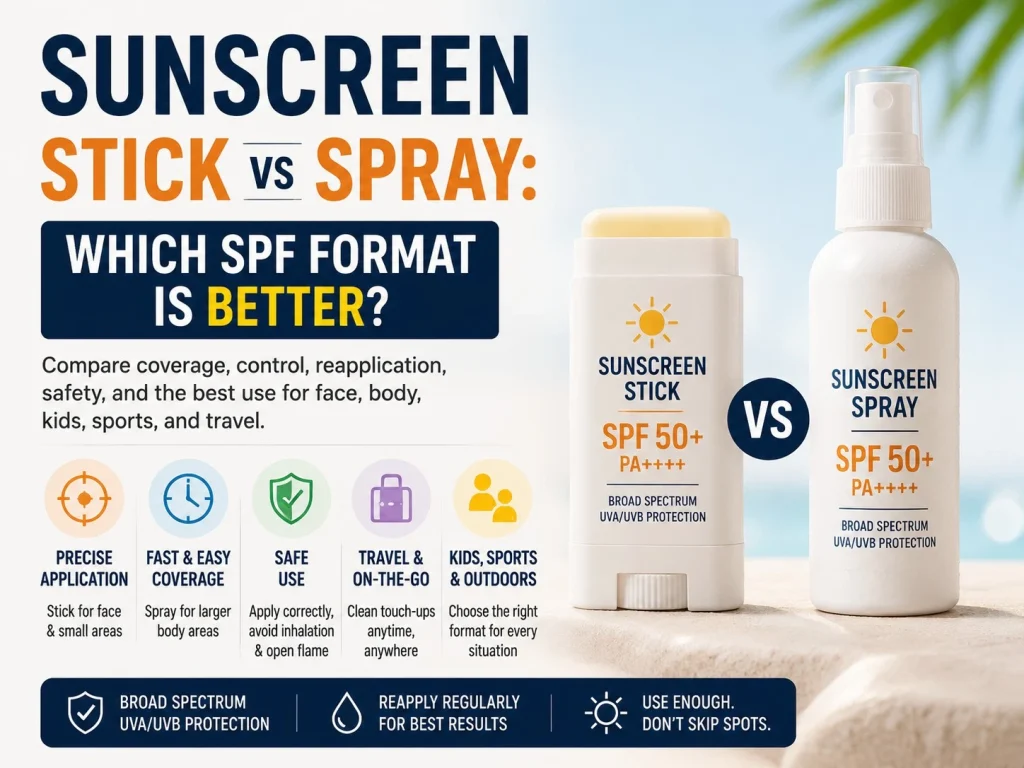
Quick Answer: Sunscreen Stick vs Spray
Sunscreen sticks and sprays can both work when they are broad-spectrum, applied generously, spread evenly, and reapplied on time. Stick sunscreen gives better control for the face, around the eyes, nose, ears, scars, and small exposed areas. Spray sunscreen is faster for the body, back, legs, kids, and outdoor reapplication, but it is easier to underapply, miss spots, or inhale.
Choose stick sunscreen for precise application and clean touch-ups.
Choose spray sunscreen for larger body areas or hard-to-reach spots.
Rub in spray sunscreen after spraying.
Use enough stick passes, not one light swipe.
Avoid spraying near the face, wind, heat, or open flame.
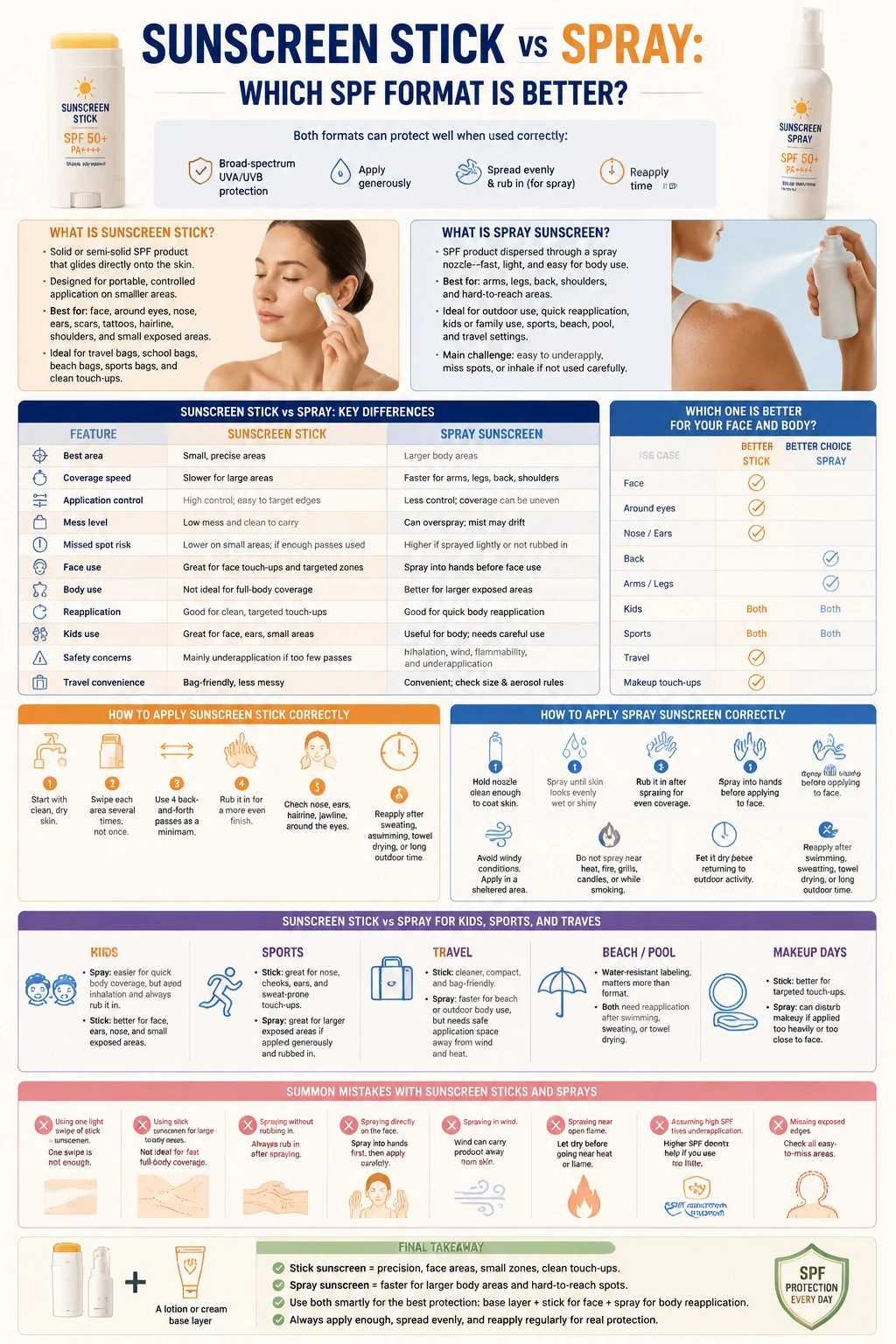
Detailed sunscreen stick vs spray infographic
What Is Sunscreen Stick?
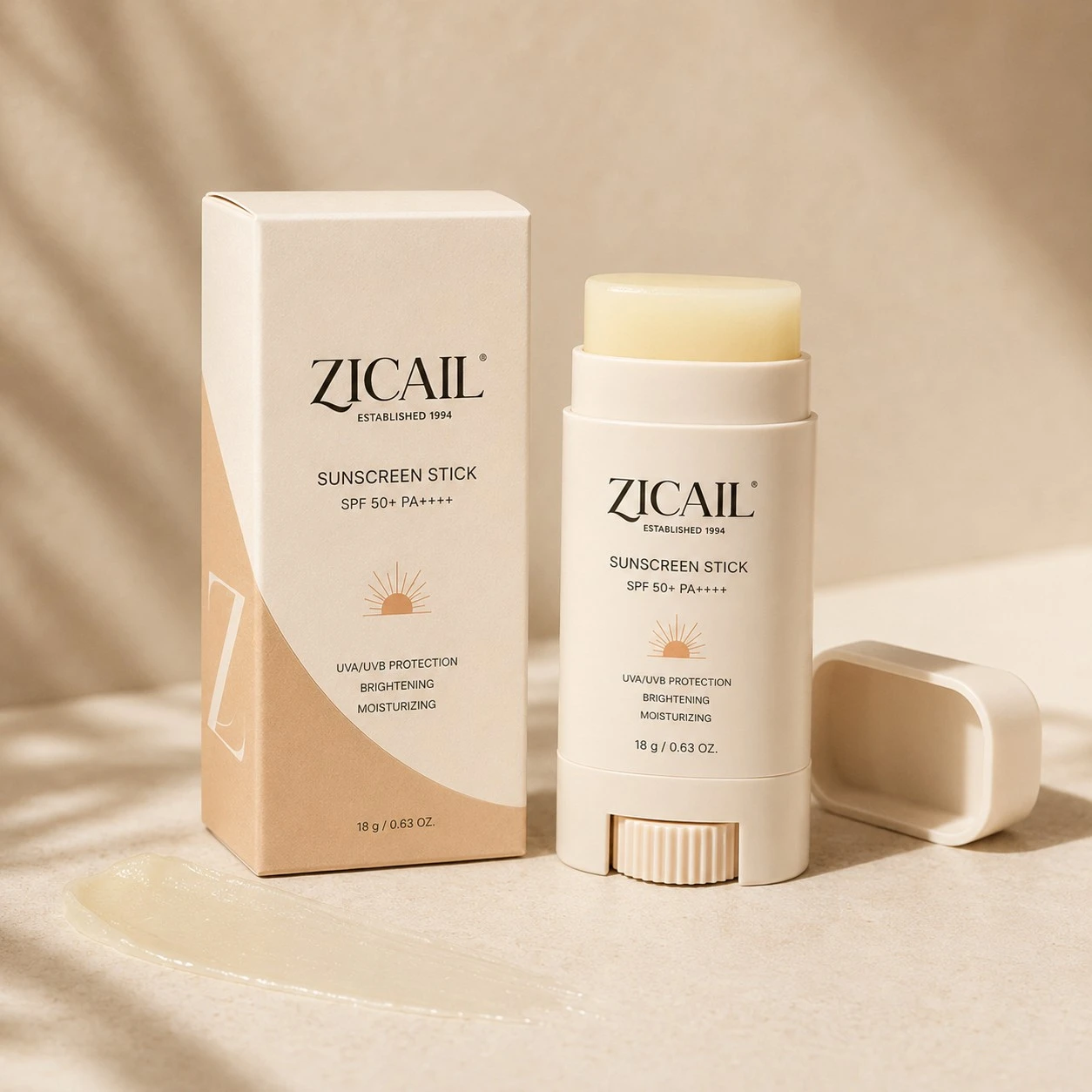
Zicail sunscreen stick
Sunscreen stick is a solid or semi-solid SPF product that glides directly onto the skin. It is designed for portable, controlled application on smaller areas where lotion or spray can feel messy. A stick is useful when you want clean hands, targeted coverage, and quick touch-ups.
Sunscreen sticks work especially well for:
face and around the eyes
nose, ears, lip area, hairline, and shoulders
scars, tattoos, and small exposed areas
travel bags, school bags, beach bags, and sports bags
quick reapplication without messy hands
The main limit is coverage area. A stick is not the fastest option for arms, legs, back, or full-body application. It works best when used carefully on smaller zones or as a touch-up format after a base sunscreen layer.
What Is Sunscreen Spray?
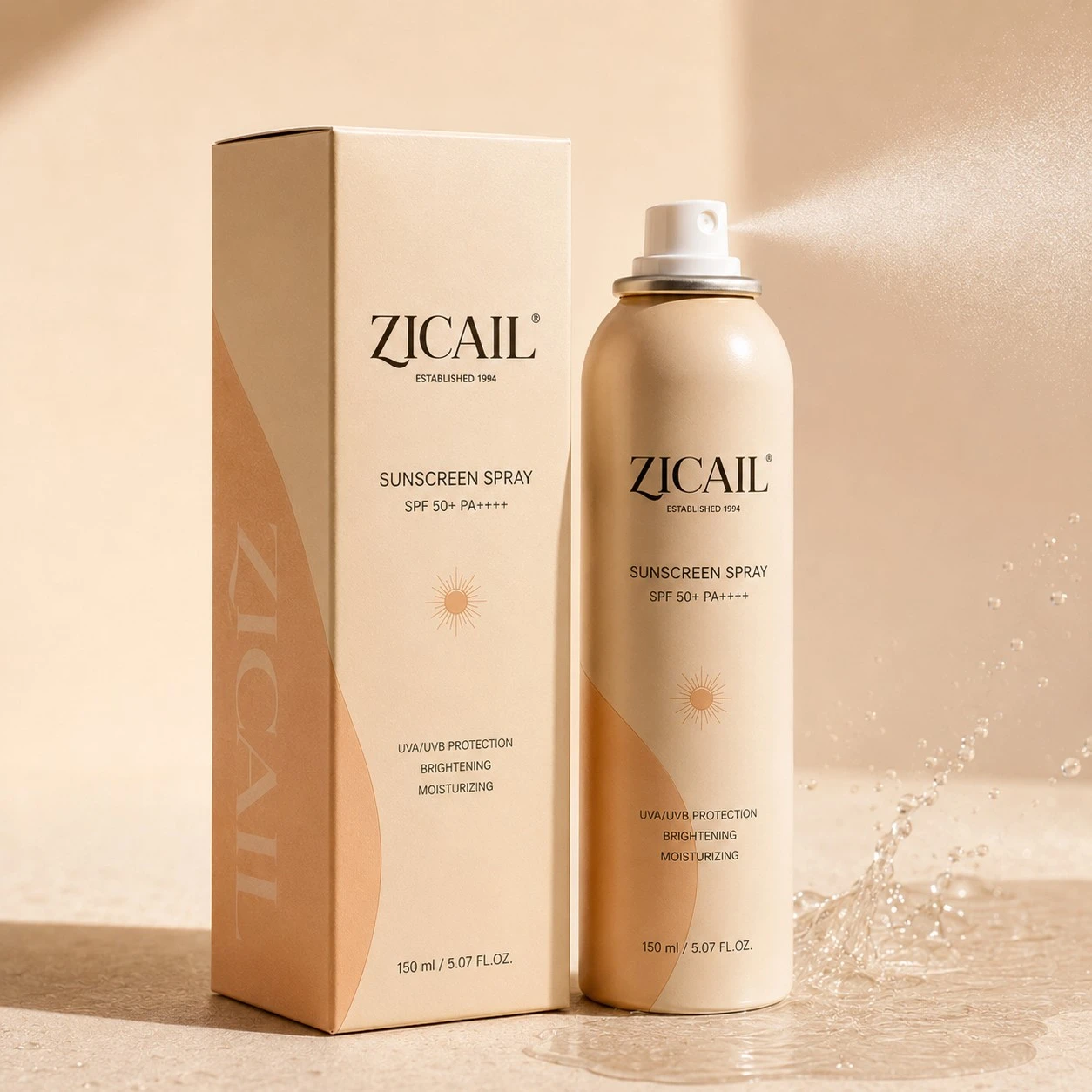
Zicail sunscreen spray
Sunscreen spray is an SPF product dispersed through a spray nozzle. It feels fast, light, and easy for body application, especially on arms, legs, shoulders, and hard-to-reach areas. The main challenge is control: many people spray too little, miss areas, or forget to rub it in. [2]Sunscreen spray is often used for:
arms, legs, back, shoulders, and body
outdoor use and fast reapplication
kids or family use when lotion is resisted
sports, beach, pool, and travel settings
hard-to-reach areas when no one can help apply lotion
Its main weakness is control. Use it carefully around wind, the face, inhalation risk, and open flame.
Sunscreen Stick vs Spray: Key Differences
The main difference between sunscreen sticks and sprays is not the SPF number. A broad-spectrum stick and a broad-spectrum spray can both protect well when applied generously and evenly. The real difference is control: sticks give precise placement, while sprays cover larger areas faster but are easier to underapply or miss.
Feature
Sunscreen Stick
Spray Sunscreen
Best area
Small, precise areas
Larger body areas
Coverage speed
Slower for large areas
Faster for arms, legs, back, and shoulders
Application control
High control; easy to target edges
Less control; coverage can be uneven
Mess level
Low mess and clean to carry
Can feel lighter but may overspray
Missed spot risk
Lower on small areas, higher if not enough passes are used
Higher if sprayed lightly or not rubbed in
Face use
Good for face touch-ups and targeted zones
Should be sprayed into hands before face use
Body use
Not ideal for full-body coverage
Better for larger exposed areas
Reapplication
Good for clean, targeted touch-ups
Good for quick body reapplication
Kids use
Useful for face, ears, and small areas
Useful for body, but needs careful use
Safety concerns
Mainly underapplication
Inhalation, wind, flammability, and underapplication
Travel convenience
Bag-friendly and less messy
Convenient, but check size and aerosol rules
Which One Is Better for Your Face and Body?
One format does not solve every sunscreen need. Stick sunscreen is usually better for controlled face or small-area use, while sunscreen spray is better for faster body coverage. For long outdoor days, a lotion or cream base layer plus a stick or spray for reapplication often works best.
Use Case
Better Format
Why
Face
Stick
Easier to control and less likely to get into the eyes
Around eyes
Stick
Better for careful placement near delicate areas
Nose / ears
Stick
Good for small, high-exposure areas that are often missed
Back
Spray
Easier to reach when no one can help apply lotion
Arms / legs
Spray
Faster for larger body areas
Kids
Both
Spray can help with body coverage; stick is better for face and ears
Sports
Both
Stick works well for targeted touch-ups; spray helps larger exposed areas
Travel
Stick
Cleaner, compact, and easy to carry for touch-ups
Makeup touch-ups
Stick
More controlled and less likely to disturb the whole face
Sunscreen stick is easy to carry, but one light swipe is not enough. Build an even layer by applying it back and forth several times, then rubbing it in afterward. [2]
Start with clean, dry skin when possible. This helps the stick glide and stay in place.
Swipe each area several times, not once. A single pass often leaves too little product.
Use four back-and-forth passes as a practical minimum. This helps build a more reliable layer.
Rub it in for a more even finish. This reduces skipped lines and thick edges.
Check the nose, ears, hairline, jawline, and around the eyes. These small areas are easy to miss.
Reapply after sweating, swimming, towel drying, or long outdoor time. A stick is useful for touch-ups, but it still needs regular reapplication.
How to Apply Sunscreen spray Correctly
Sunscreen spray is not finished when it lands on the skin. Use enough product, rub it in after spraying, and take extra care around the face, children, wind, heat, open flame, and inhalation risk. [2]
Hold the nozzle close enough to coat the skin. Do not spray from too far away, or much of the product can drift into the air.
Spray until the skin looks evenly wet or shiny. A quick mist is usually not enough.
Rub it in after spraying. This helps create a more even layer and reduces missed spots.
Spray into your hands before applying to the face. Do not spray directly near the eyes, nose, or mouth.
Avoid windy conditions. Apply sunscreen spray in a sheltered area when possible.
Do not spray near heat, fire, grills, candles, or while smoking. Let the product dry before going near heat or flame.
Let it dry before returning to outdoor activity. This helps reduce transfer and uneven coverage.
Reapply after swimming, sweating, towel drying, or extended outdoor time.
Safety note: Sunscreen spray is convenient, but it is easier to inhale, miss areas, or underapply. Use it carefully, especially around children and the face.
Sunscreen Stick vs Spray for Kids, Sports, and Travel
Kids, sports, and travel are common reasons people choose stick or spray sunscreen. The best format is the one you can apply generously, use safely, and reapply without skipping exposed areas.
Kids: Spray can be easier for quick body coverage, but avoid inhalation and always rub it in. Stick works better for the face, ears, nose, and small exposed areas.
Sports: Stick sunscreen is useful for the nose, cheeks, ears, and sweat-prone touch-ups. Spray can help larger exposed areas if it is sprayed generously and rubbed in.
Travel: Sticks are cleaner, compact, and bag-friendly. Sprays are faster for beach or outdoor body use, but they need safe application space away from wind and heat.
Beach or pool: Water-resistant labeling matters more than format alone. Stick or sunscreen spray still needs reapplication after swimming, sweating, or towel drying. For more detail, read Water-Resistant vs Waterproof Sunscreen: The Truth.
Makeup days: Stick sunscreen may work better for targeted touch-ups. Spray can disturb makeup if applied too heavily or too close to the face.
Using one light swipe of stick sunscreen: One swipe is not enough. Use multiple passes and rub it in for a more even layer.
Using stick sunscreen for large body areas: Stick sunscreen is better for targeted zones or touch-ups, not fast full-body coverage.
Spraying without rubbing in: Sunscreen spray should be rubbed into the skin after spraying to reduce missed areas.
Spraying directly on the face: Spray into your hands first, then apply to the face carefully.
Spraying in wind: Wind can move the product away from the skin. Apply in a sheltered area when possible.
Spraying near open flame: Avoid heat, fire, candles, grills, and smoking. Let sunscreen spray dry before going near heat or flame.
Assuming high SPF fixes underapplication: Higher SPF does not help if you apply too little or miss spots.
Missing exposed edges: Check ears, hairline, shoulders, back of neck, tops of feet, and other easy-to-miss areas.
Final Takeaway: Should You Use Stick or Spray Sunscreen?
Stick and spray sunscreens can both work when applied correctly. Stick sunscreen is better for precision, face areas, small zones, and clean touch-ups. Sunscreen spray is better for larger body areas and hard-to-reach spots, but it needs rubbing in and more safety care around the face, wind, heat, and open flame. The best routine may use more than one format: a lotion or cream as the main base layer, a stick for face touch-ups, and a spray for faster body reapplication.
FAQs About Sunscreen Stick vs Spray
Is sunscreen stick better than spray?
Sunscreen stick is better for precise areas, face touch-ups, and small exposed zones. Sunscreen spray is better for larger body areas and hard-to-reach spots. Neither is automatically better; the better choice is the one you apply generously, evenly, and safely.
Is sunscreen spray as effective as stick sunscreen?
Yes, sunscreen spray can be effective if it is broad-spectrum, sprayed in enough amount, rubbed in, and reapplied as directed. The main risk is real-world use. People often spray too lightly, miss areas, or let wind carry product away from the skin.
Can I use sunscreen stick on my face?
Yes. Sunscreen stick is often a good option for the face because it gives more control around the nose, ears, hairline, jawline, and eye area. Use enough passes and rub it in so the layer is even, not just visible on the surface.
Can I spray sunscreen directly on my face?
No. Do not sunscreen spray directly on or near your face. Spray it into your hands first, then apply it carefully to the face. This helps reduce inhalation risk and keeps spray away from the eyes, nose, and mouth. [2]
Do I need to rub in spray sunscreen?
Yes. Rub in sunscreen spray after spraying. This helps spread the product into a more even layer and reduces missed spots. A quick mist is not enough for reliable coverage, especially on arms, legs, shoulders, or the back. [2]
How many swipes of sunscreen stick should I use?
Use multiple passes, not one light swipe. The American Academy of Dermatology recommends applying stick sunscreen back and forth four times over each protected area, then rubbing it in for even coverage. This is especially important on the face, ears, and high-exposure spots. [2]
Is sunscreen spray safe for kids?
Sunscreen spray can be used for kids, but it needs careful application. Avoid spraying near the face, avoid windy conditions, and do not let children inhale the spray. For the face, spray into your hands first. Stick sunscreen is often easier for small facial areas.
Should I use stick or spray sunscreen for travel?
For travel, stick sunscreen is cleaner, compact, and easier for quick face or small-area touch-ups. Sunscreen spray is faster for beach, pool, or outdoor body use, but it needs space, rubbing in, and safety care. Many people travel best with both.
Lucy has 8 years of skincare industry experience in global sales, product communication, and market support. Her writing is based on industry knowledge, international market exposure, and practical product experience.


 Sunscreen spray is not finished when it lands on the skin. Use enough product, rub it in after spraying, and take extra care around the face, children, wind, heat, open flame, and inhalation risk. [2]


