


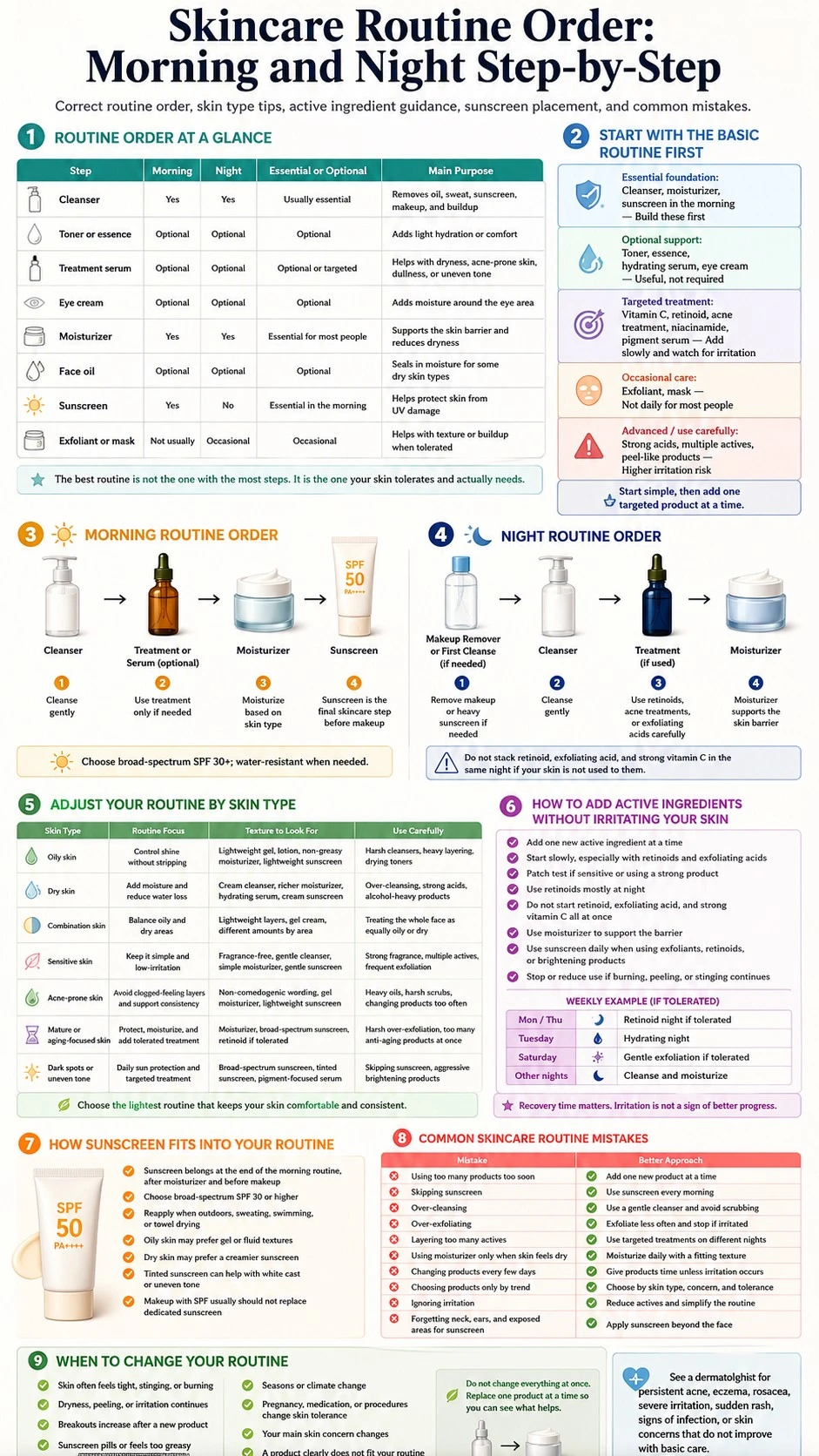
Skincare Routine Order at a Glance
Use this table as a quick guide. The best skincare routine is not the one with the most steps. It is the one your skin tolerates, your schedule allows, and your main skin concern actually needs.
| Step | Morning | Night | Essential or Optional | Main Purpose |
|---|---|---|---|---|
| Cleanser | Yes | Yes | Usually essential | Removes oil, sweat, sunscreen, makeup, and daily buildup |
| Toner / essence | Optional | Optional | Optional | Adds light hydration or comfort |
| Treatment serum | Optional | Optional | Optional or targeted | Helps with dryness, acne-prone skin, dullness, or uneven tone |
| Eye cream | Optional | Optional | Optional | Adds moisture around the eye area |
| Moisturizer | Yes | Yes | Essential for most people | Supports the skin barrier and reduces dryness |
| Face oil | Optional | Optional | Optional | Seals in moisture for some dry skin types |
| Sunscreen | Yes | No | Essential in the morning | Helps protect skin from UV damage |
| Exfoliant / mask | Not usually | Occasional | Occasional | Helps with texture or buildup when tolerated |
Dermatology guidance generally places cleansing first, treatments after cleansing, moisturizer later, and sunscreen in the morning routine. [1][2] If you are new to skincare, start with the essential steps before adding serums, acids, retinoids, or masks.
Start With the Basic Skincare Routine First
Most people should build the basic skincare routine before adding extra products. This helps you see what your skin actually needs before you add targeted treatments.
| Category | Steps | Who Needs It | Notes |
|---|---|---|---|
| Essential foundation | Cleanser, moisturizer, sunscreen in the morning | Most people | Build these first before adding more products |
| Optional support | Toner, essence, hydrating serum, eye cream | People who want extra hydration or comfort | Useful, but not required |
| Targeted treatment | Vitamin C, retinoid, acne treatment, niacinamide, pigment-focused serum | People with a clear skin concern | Add slowly and watch for irritation |
| Occasional care | Exfoliant, mask | People with buildup, dullness, or texture concerns | Not daily for most people |
| Advanced / use carefully | Strong acids, retinoids, multiple active layering, peel-like products | Experienced users or people guided by a professional | Higher irritation risk |
A simple three-step approach can include cleansing, moisturizing, and protecting your skin. Using several different products can also irritate the skin, especially when multiple active or anti-aging products are layered together. [5]
Start with cleansing, moisturizing, and sun protection. Once your skin feels stable, add one targeted product at a time.
Morning Skincare Routine Order
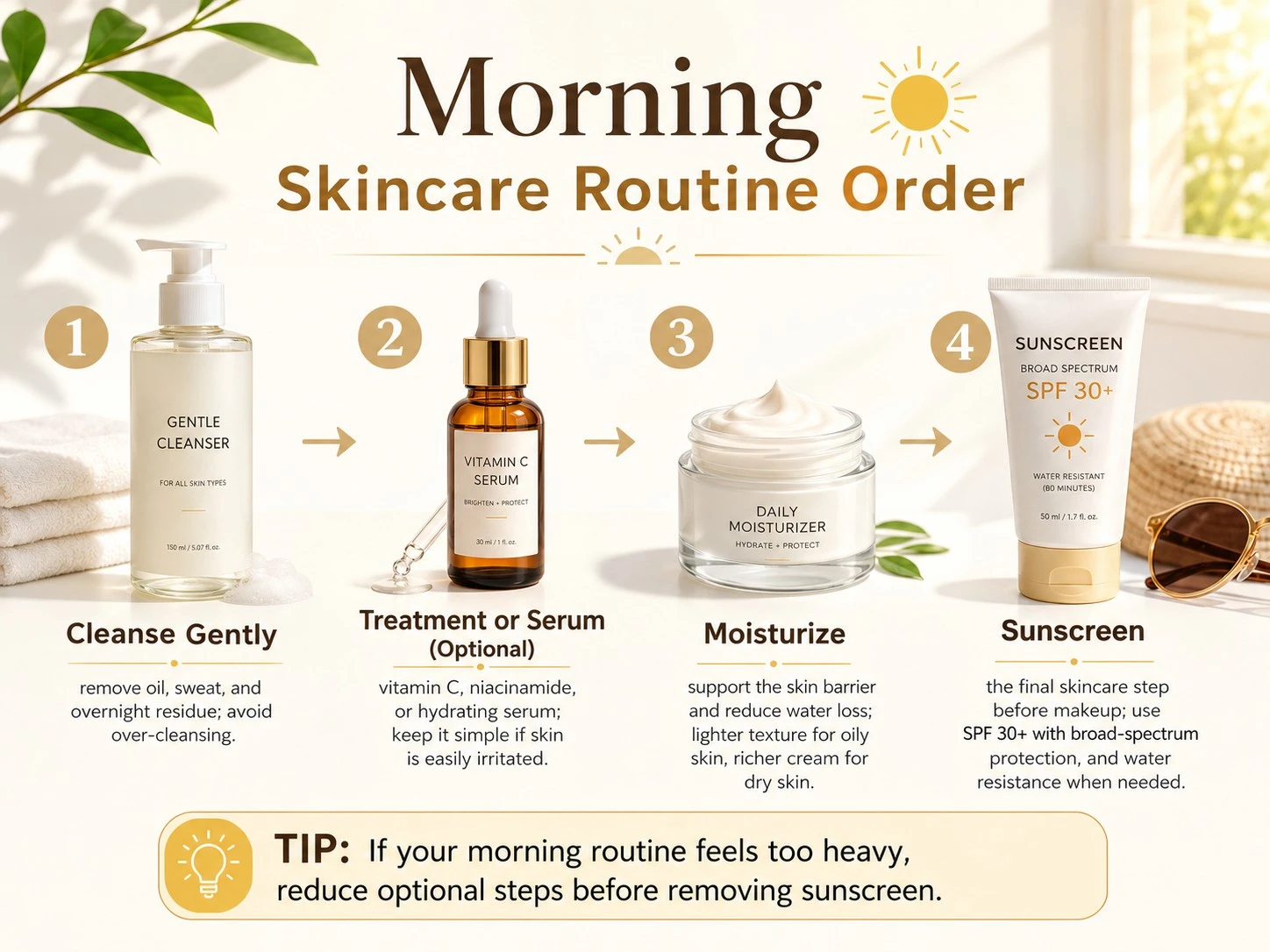
The morning routine should clean, support, and protect your skin. The goal is to prepare your skin for the day and protect it from UV exposure, dryness, sweat, pollution, and makeup friction.
- Cleanse gently
Use a gentle cleanser to remove oil, sweat, and overnight residue. If your skin is very dry or sensitive, your morning cleanse can be mild. Avoid washing until your face feels tight or squeaky clean. That often means the cleanser is too stripping or you are cleansing too aggressively. - Apply treatment or serum, if used
This step is optional. Some people use vitamin C, niacinamide, or a hydrating serum in the morning. These can support specific goals, but they are not required for everyone. If your skin is easily irritated, keep this step simple. - Moisturize
Moisturizer helps support the skin barrier and reduce water loss. Oily skin can still need moisturizer; the texture just needs to be lighter. Dry skin may need a richer cream. Apply moisturizer before sunscreen unless you are using a moisturizer with SPF as your sunscreen product. - Apply sunscreen as the final skincare step
Sunscreen should be the last skincare step in the morning before makeup. Choose sunscreen with SPF 30 or higher, broad-spectrum coverage, and water resistance when needed.
If your morning routine feels too heavy, reduce optional steps before removing sunscreen.
Night Skincare Routine Order
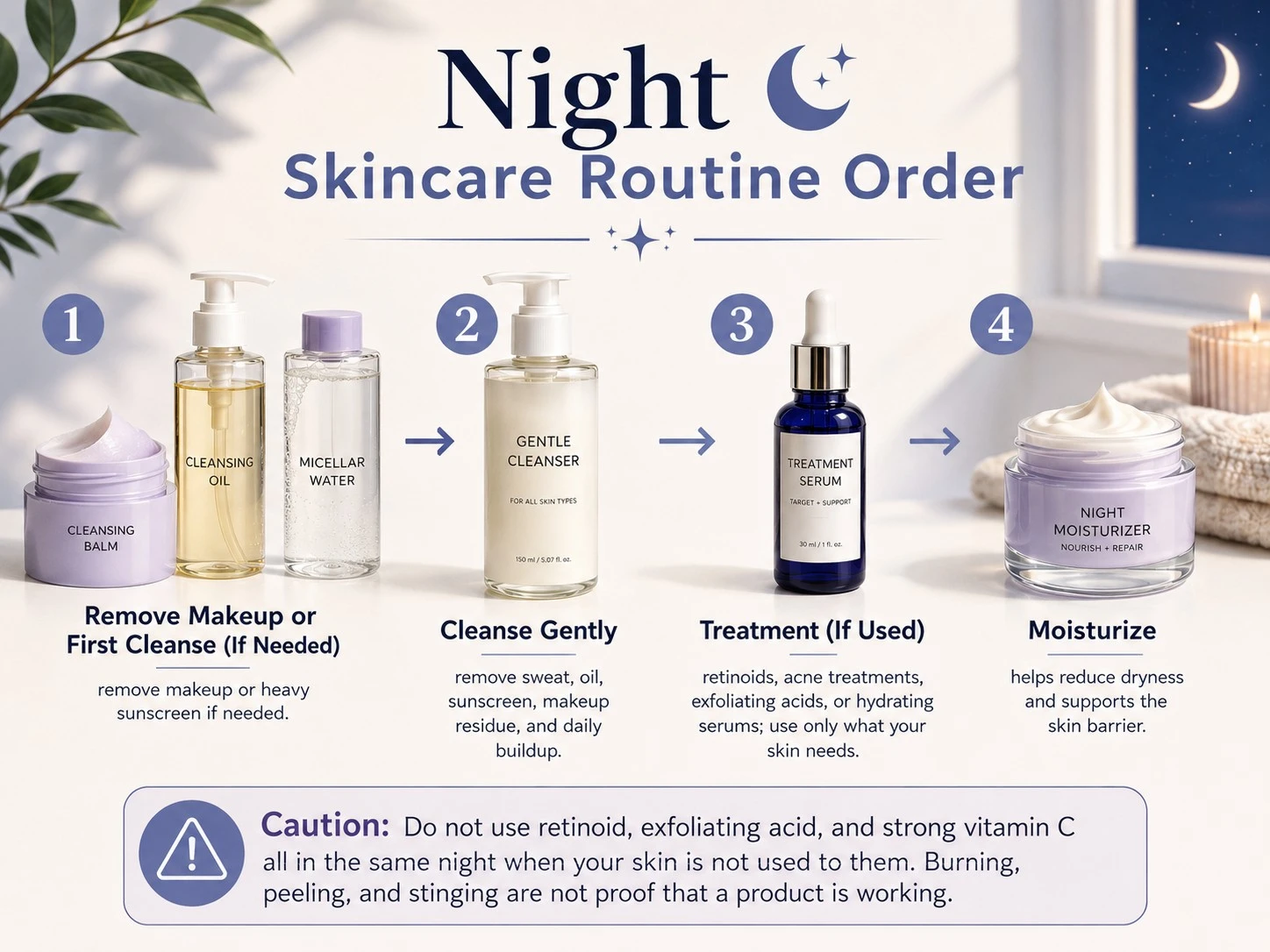
The night routine should remove the day, treat specific concerns if needed, and support the skin barrier. You do not need sunscreen at night, and you do not need to layer multiple strong treatments to get results.
- Remove makeup or heavy sunscreen, if needed
If you wear makeup, water-resistant sunscreen, or heavy sunscreen, use a makeup remover, cleansing balm, cleansing oil, or micellar water first. This is not required for everyone. Use a first cleanse only when one gentle cleanser does not remove makeup or sunscreen well. - Cleanse gently
Use a gentle cleanser to remove sweat, oil, sunscreen, makeup residue, and daily buildup. Your skin should feel clean but not tight. If your face feels dry, hot, or itchy after cleansing, the cleanser may be too harsh. - Apply treatment, if used
Night is a common time for retinoids, acne treatments, exfoliating acids, or hydrating serums. Use only what your skin needs. Do not stack several strong active ingredients in the same night just because they are popular. - Moisturize
Moisturizer helps reduce dryness and supports the skin barrier, especially if you use a treatment product. If your skin is sensitive or dry, moisturizer may be the most important night step.
Caution: Do not use retinoid, exfoliating acid, and strong vitamin C all in the same night when your skin is not used to them. Burning, peeling, and stinging are not proof that a product is working.
How to Adjust Your Routine by Skin Type
The order of skincare products stays mostly the same, but textures and treatment choices should change with your skin type. The right routine should feel comfortable after application and should not leave your skin tight, greasy, or irritated.
| Skin Type | Routine Focus | Texture to Look For | Use Carefully |
|---|---|---|---|
| Oily skin | Control shine without stripping the skin | Lightweight gel, lotion, non-greasy moisturizer, lightweight sunscreen | Harsh cleansers, heavy layering, drying toners |
| Dry skin | Add moisture and reduce water loss | Cream cleanser, richer moisturizer, hydrating serum, cream sunscreen | Over-cleansing, strong acids, alcohol-heavy products |
| Combination skin | Balance oily and dry areas | Lightweight layers, gel cream, different amounts by area | Treating the whole face as equally oily or dry |
| Sensitive skin | Keep the routine simple and low-irritation | Fragrance-free, gentle cleanser, simple moisturizer, gentle sunscreen | Strong fragrance, multiple actives, frequent exfoliation |
| Acne-prone skin | Avoid clogged-feeling layers and support consistency | Non-comedogenic wording, gel moisturizer, lightweight sunscreen | Heavy oils, harsh scrubs, changing products too often |
| Mature or aging-focused skin | Protect, moisturize, and add tolerated treatment | Moisturizer, broad-spectrum sunscreen, retinoid if tolerated | Harsh over-exfoliation, too many anti-aging products at once |
| Dark spots / uneven tone | Daily sun protection and targeted treatment | Broad-spectrum sunscreen, tinted sunscreen, pigment-focused serum | Skipping sunscreen, aggressive brightening products |
Oily skin does not mean you should skip moisturizer. Dry skin does not mean you should use every rich product at once. Sensitive skin does not mean you can never use active ingredients. Choose the lightest routine that keeps your skin comfortable and consistent.
For dark spots or uneven tone, sunscreen matters every day. Tinted sunscreen with iron oxide can help protect skin from visible light, which can worsen dark spots.
How to Add Active Ingredients Without Irritating Your Skin
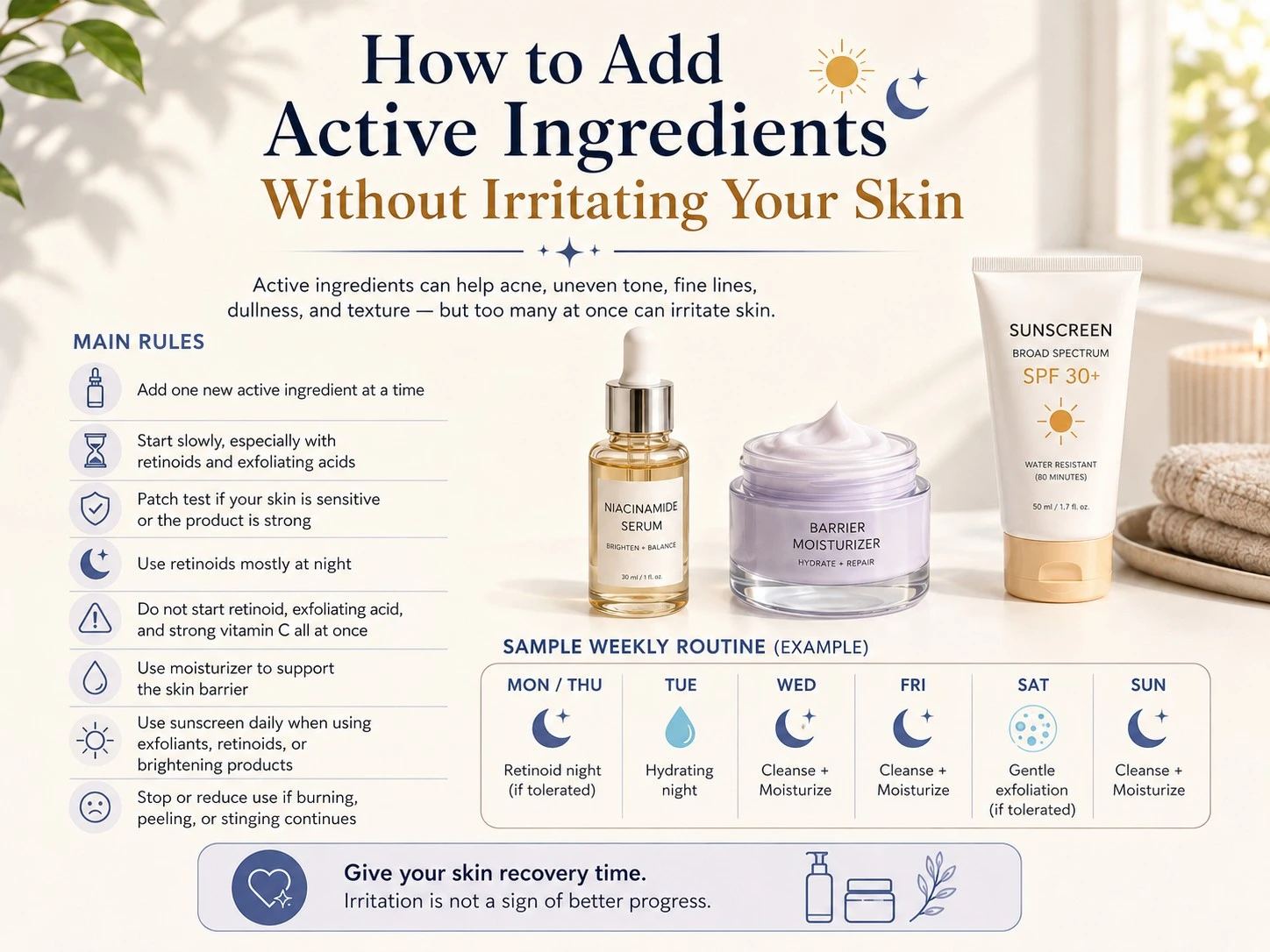
Active ingredients can help with acne-prone skin, uneven tone, fine lines, dullness, and texture. They can also irritate your skin when added too quickly. The issue is not using active ingredients; the issue is using too many at once.
Use these rules:
- Add one new active ingredient at a time.
- Start slowly, especially with retinoids and exfoliating acids.
- Patch test if your skin is sensitive or the product is strong.
- Use retinoids mostly at night.
- Do not start retinoid, exfoliating acid, and strong vitamin C all at once.
- Use moisturizer to reduce dryness and support the skin barrier.
- Use sunscreen daily when using exfoliants, retinoids, or brightening products.
- Stop or reduce use if burning, peeling, or stinging continues.
A simple weekly example:
- Monday / Thursday: retinoid night, if tolerated
- Tuesday: hydrating night
- Saturday: gentle exfoliation, if tolerated
- Other nights: cleanse and moisturize
You do not need this exact schedule. The point is to give your skin recovery time. Irritation is not a sign of better progress.
How Sunscreen Fits Into Your Skincare Routine
Sunscreen belongs at the end of your morning skincare routine, after moisturizer and before makeup. Choose a broad-spectrum sunscreen with SPF 30 or higher. If you spend time outdoors, sweat, swim, or towel your face, use a water-resistant formula and reapply as needed.
Your sunscreen should also fit your skin type and daily routine. Oily skin may prefer a lightweight gel or fluid. Dry skin may prefer a creamier texture. Tinted sunscreen can be useful for visible white cast or uneven tone. If sunscreen pills or feels too greasy, adjust the layers underneath or try a different texture instead of skipping sunscreen.
Makeup with SPF usually should not replace dedicated sunscreen because most people do not apply enough makeup to get the labeled SPF protection. A moisturizer with SPF can work only if you apply enough and use it like a sunscreen.
Common Skincare Routine Mistakes
Most routine problems come from doing too much, changing too quickly, or skipping the basic steps. Use this table to fix common issues without rebuilding your whole routine.
| Mistake | Why It Can Be a Problem | Better Approach |
|---|---|---|
| Using too many products too soon | Makes irritation and breakouts harder to trace | Add one new product at a time |
| Skipping sunscreen | Leaves skin exposed to UV damage | Use sunscreen every morning |
| Over-cleansing | Can make skin feel tight, dry, or reactive | Use a gentle cleanser and avoid scrubbing |
| Over-exfoliating | Can damage the skin barrier and cause stinging | Exfoliate less often and stop if irritated |
| Layering too many actives | Raises the risk of dryness and irritation | Use targeted treatments on different nights |
| Using moisturizer only when skin feels dry | Barrier support should be consistent | Moisturize daily with a texture that fits your skin |
| Changing products every few days | Prevents you from seeing what works | Give products time unless irritation occurs |
| Choosing products only by trend | Trend ingredients may not fit your skin | Choose by skin type, concern, and tolerance |
| Ignoring irritation | Ongoing burning or stinging can worsen skin problems | Reduce actives and simplify the routine |
| Forgetting neck, ears, and exposed areas for sunscreen | These areas also get sun exposure | Apply sunscreen beyond the face |
A routine should make your skin feel more stable, not more confused. When in doubt, go back to cleanser, moisturizer, and sunscreen before adding more steps.
When to Change Your Skincare Routine
Change your skincare routine when your skin is clearly telling you that something no longer fits. Do not change everything at once. Replace one product at a time so you can identify what helped or caused the problem.
Change your routine when:
- Skin often feels tight, stinging, or burning
- Dryness, peeling, or irritation continues
- Breakouts increase after adding a new product
- Sunscreen pills or feels too greasy
- Seasons or climate change
- Pregnancy, medication, or procedures change skin tolerance
- Your main skin concern changes
- A product clearly does not fit your routine
You may also need a different routine if you move to a hot, humid, cold, or dry climate. In humid weather, lighter layers may feel better. In cold or dry weather, your skin may need a richer moisturizer and gentler cleansing.
See a dermatologist if you have persistent acne, eczema, rosacea, severe irritation, sudden rash, signs of infection, or a skin concern that does not improve with basic care.


