
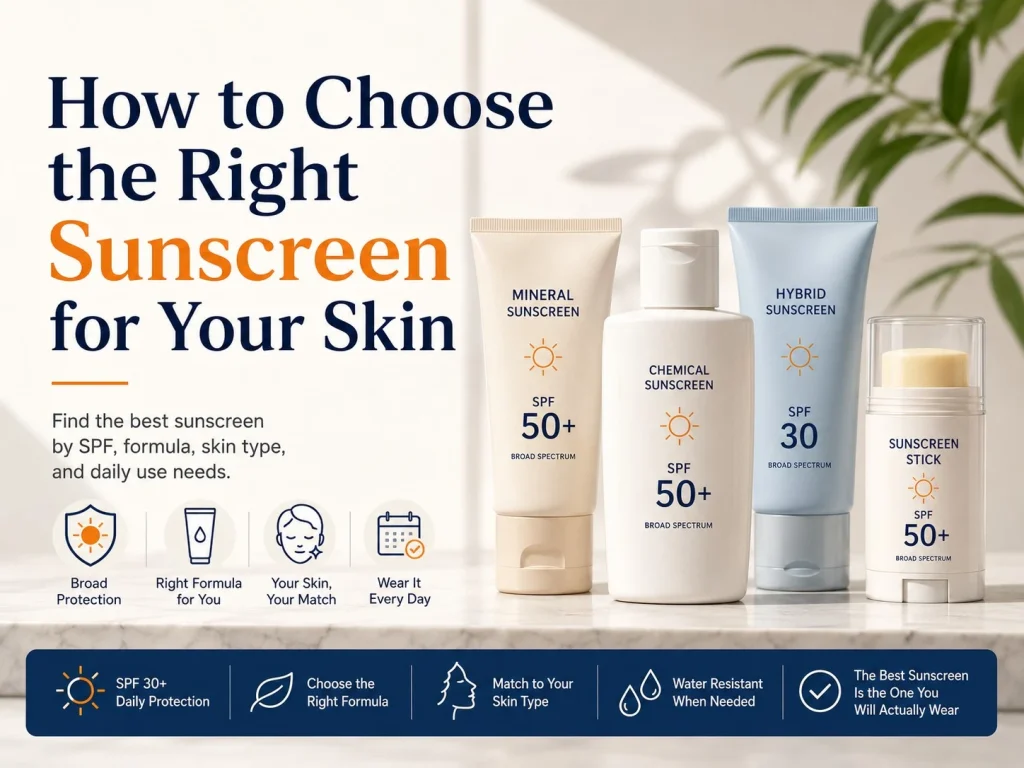


Start With the Label: What to Check First
Start with the label before you think about skin type or finish. First make sure the sunscreen is broad-spectrum. Then choose SPF 30+ for most daily use, or SPF 50+ for longer outdoor exposure. Add water resistance only if you will be sweating, swimming, or playing sports.
| Label item | What it means | When it matters most |
|---|---|---|
| Broad-spectrum | Protects against both UVA and UVB rays | Always |
| SPF 30 or higher | Good everyday protection for most daily use | Commuting, school, office days, errands |
| SPF 50+ | Higher protection for stronger or longer sun exposure | Beach days, hiking, sports, outdoor work, travel |
| Water-resistant | Stays effective while swimming or sweating for 40 or 80 minutes | Sports, hot weather, swimming, heavy sweating |
| Not “waterproof” | “Waterproof” and “sweatproof” are not valid sunscreen standards | Any time a label sounds stronger than the real claim |
If it does not say broad-spectrum, skip it. For most daily use, start at SPF 30+. Add water resistance only when sweat or water exposure makes it necessary.
SPF 30 vs SPF 50: Which One Do You Actually Need?
SPF measures UVB protection, not total sun protection. For most daily use, SPF 30 is enough. SPF 50+ is the better choice for longer, stronger sun exposure. No sunscreen blocks 100% of UVB rays, and a higher SPF is not a free pass to stay out longer.
- Choose SPF 30 for commuting, errands, school, and most office days.
- Choose SPF 50+ for beach days, hiking, sports, outdoor work, or high-UV conditions.
- Choose based on how long and how intense the sun exposure will be, not just the biggest number on the bottle.
See slao: SPF 30 vs SPF 50
Mineral, Chemical, or Hybrid: Which Formula Type Fits You Best?
This choice mostly comes down to skin tolerance, finish, and daily wear. All three can work well if they are broad-spectrum, water resistant when needed, and SPF 30 or higher.
| Type | Best for | Common trade-off |
|---|---|---|
| Mineral | Sensitive or reactive skin | More white cast, thicker feel |
| Chemical | Daily wear, makeup, deeper skin tones | More eye sting or irritation for some people |
| Hybrid | People who want a middle ground | Still depends heavily on the full formula |
If you want a deeper comparison, see our full Mineral vs Chemical Sunscreen guide.
How to Choose Sunscreen for Your Skin Type
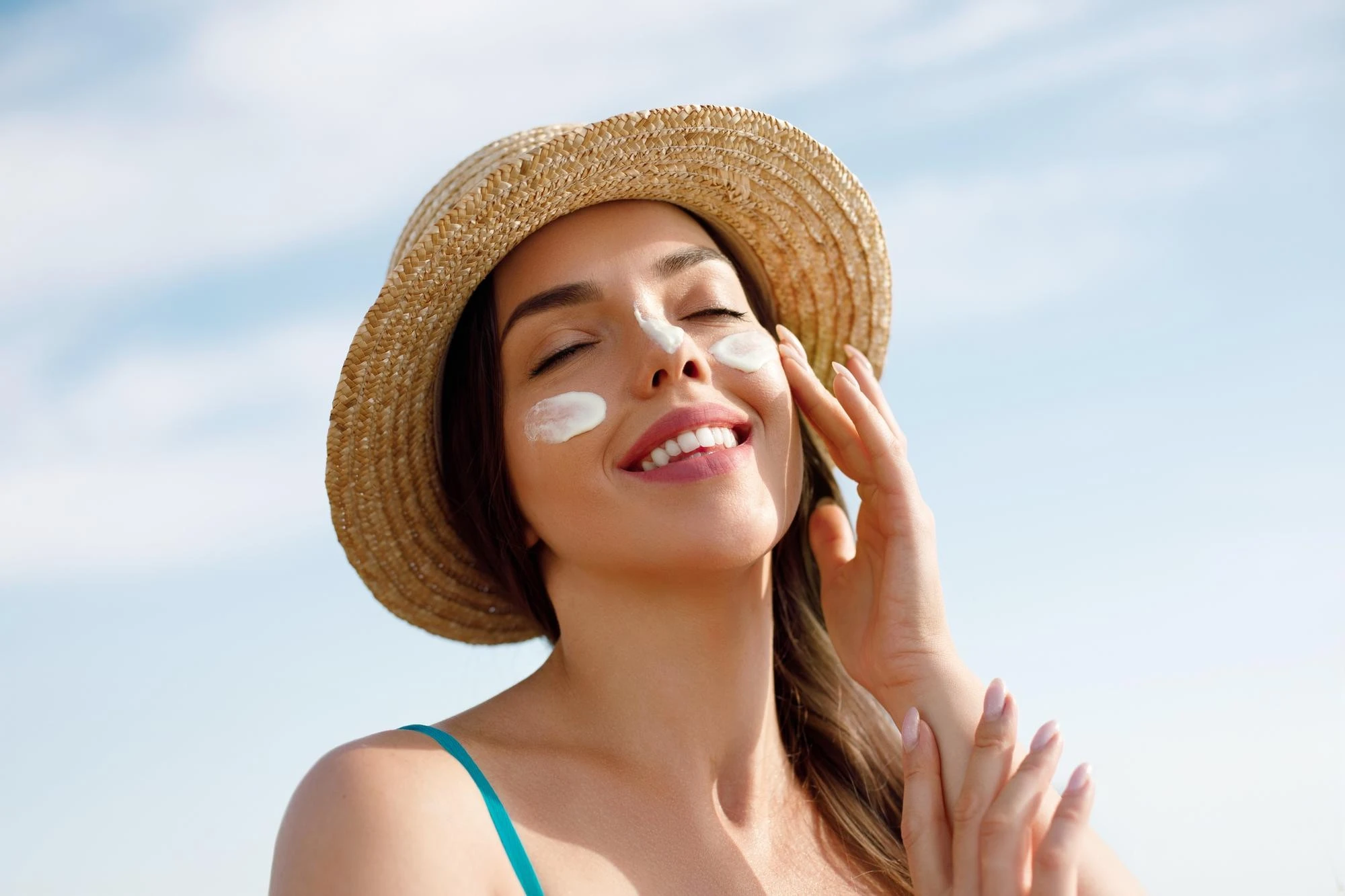
After you check the label, narrow the choice by skin type and texture tolerance.
- Sensitive skin: Start with mineral sunscreen, especially fragrance-free options. Lower eye sting and lower irritation risk matter more than a perfectly invisible finish.
- Acne-prone or oily skin: Look for lightweight, non-greasy, non-comedogenic formulas. Fluids, gels, and lighter lotions are usually easier to tolerate than rich creams.
- Dry skin: Choose moisturizing textures such as lotions or creams. A sunscreen that feels comfortable on dry skin is easier to use every day.
- Combination skin: Go for balanced textures that are light but not drying. A fluid lotion or hybrid sunscreen often works well here.
- Mature skin: Prioritize comfort and a finish that layers well over skincare. Hydrating lotions or lighter cream formulas are often a better fit than dry-feeling formulas.
- Skin prone to hyperpigmentation or melasma: Daily broad-spectrum protection matters most. If visible-light exposure is a concern, tinted mineral sunscreen is often worth considering.
How to Choose Based on Lifestyle and Daily Routine

The right sunscreen also depends on the kind of day you are planning.
- Everyday office or school use: Choose a broad-spectrum SPF 30+ sunscreen with a light, comfortable finish.
- Outdoor exercise: Choose SPF 50+ with water resistance and a formula that still feels comfortable when you sweat. Lighter sport-friendly fluids, gels, or lotions are usually easier to stick with.
- Beach or swimming: Choose SPF 50+ and water resistance. This is not the time for a sunscreen that wears off too easily.
- Makeup wearers: Choose a lightweight sunscreen that layers smoothly and does not pill. Chemical or hybrid formulas are often easier here, though some modern mineral fluids also work well.
- Deeper skin tones concerned about cast: Choose a sunscreen with little to no visible residue. Chemical formulas are often easier, and tinted mineral formulas can also be a strong option.
- People who hate heavy or greasy feel: Choose a fluid, gel, or lightweight lotion. If a sunscreen feels thick, sticky, or suffocating, you are less likely to use it consistently.
- Families choosing sunscreen for kids: Choose a gentle, fragrance-free formula that is easy to spread and easy to trust. Mineral sunscreen is often the best starting point for children.
Common Sunscreen Formats and Who They Suit Best
Format can change the whole experience of using sunscreen. Even when protection is similar on paper, lotion, cream, fluid, stick, and spray do not feel the same in real life. Choosing the right format often makes daily use much easier.
| Format | Best for | Main caution |
|---|---|---|
| Lotion | Most daily face and body use | Can feel too rich or shiny for some oily skin types |
| Cream | Dry skin, cooler weather, comfort-focused wear | May feel heavy, greasy, or harder to layer |
| Gel / fluid | Oily skin, humid weather, makeup wear, lighter feel | Some formulas may sting or feel too drying |
| Stick | Easy carry, targeted areas, quick touch-ups | Can drag on skin or feel waxy depending on the formula |
| Spray | Body use, convenience, outdoor reapplication | Easy to underapply and not ideal if you want the most controlled coverage |
Choose the format that matches how you actually use sunscreen. For quick morning face use, a fluid or light lotion often works best. If comfort matters most, cream may be the better fit. If convenience matters most, stick or spray may be easier to live with.
Common Sunscreen Shopping Mistakes
Most sunscreen buying mistakes come from focusing on the wrong detail first.
- Choosing by SPF number only: A high SPF does not fix a bad formula. If it is not broad-spectrum or you hate wearing it, it is not the right choice.
- Ignoring broad-spectrum protection: SPF alone is not enough. If the label does not say broad-spectrum, skip it.
- Buying a formula you dislike using: If it feels greasy, chalky, sticky, or irritating, you are less likely to wear it consistently.
- Assuming makeup with SPF is enough: It can help, but it is usually not a reliable substitute for a full sunscreen layer.
- Assuming water-resistant means all-day protection: It does not. Water-resistant only means the product was tested for 40 or 80 minutes in wet or sweaty conditions.
- Choosing by trend language instead of skin needs: “Clean,” “reef-safe,” or “invisible” can sound appealing, but they do not tell you whether the formula fits your skin and routine.


