


What Does Water-Resistant Sunscreen Mean?
Water-resistant sunscreen is tested to keep its labeled SPF protection for a set time during water exposure or sweating. In the U.S., the label should state either 40 minutes or 80 minutes. It still needs reapplication after water, sweat, towel drying, or the stated time. [1][2]
Water-resistant sunscreen is most useful when your sunscreen layer may get wet, sweaty, rubbed, or wiped during outdoor use.
Label tip: If the front label says “water resistant,” check the time next to it. “40 minutes” and “80 minutes” are different claims.
Why “Waterproof Sunscreen” Is Misleading
“Waterproof sunscreen” is misleading because it can make people think one application will last through swimming, sweat, and long outdoor time. In real use, sunscreen can still lose coverage from water, sweat, rubbing, towels, and time. The correct label is water resistant, not waterproof. [1]
Sunscreen protection can decrease because of:
swimming
sweating
towel drying
rubbing or wiping the skin
long outdoor exposure
applying too little sunscreen
Treat water resistance as timed support, not all-day protection.
40 Minutes vs 80 Minutes: What the Label Really Means
The number on a water-resistant sunscreen label tells you how long the product has been tested to keep its SPF protection during water exposure or sweating. It is not a promise of all-day protection. Once you reach the stated time, you need to reapply. [1][3]
| Label Claim | What It Means | Best For |
|---|---|---|
| Water resistant, 40 minutes | Stays effective for 40 minutes in water or sweat | Short swimming, light sweating, brief outdoor activity |
| Water resistant / very water resistant, 80 minutes | Stays effective for 80 minutes in water or sweat | Beach days, pool time, sports, heavy sweating |
| No water resistance claim | Not tested for water or sweat resistance | Dry daily use, short indoor-outdoor routines |
For most beach, pool, or sports use, 80 minutes is the stronger choice. For brief outdoor time or light sweating, 40 minutes can be enough. Neither option gives all-day protection.
When Should You Use Water-Resistant Sunscreen?
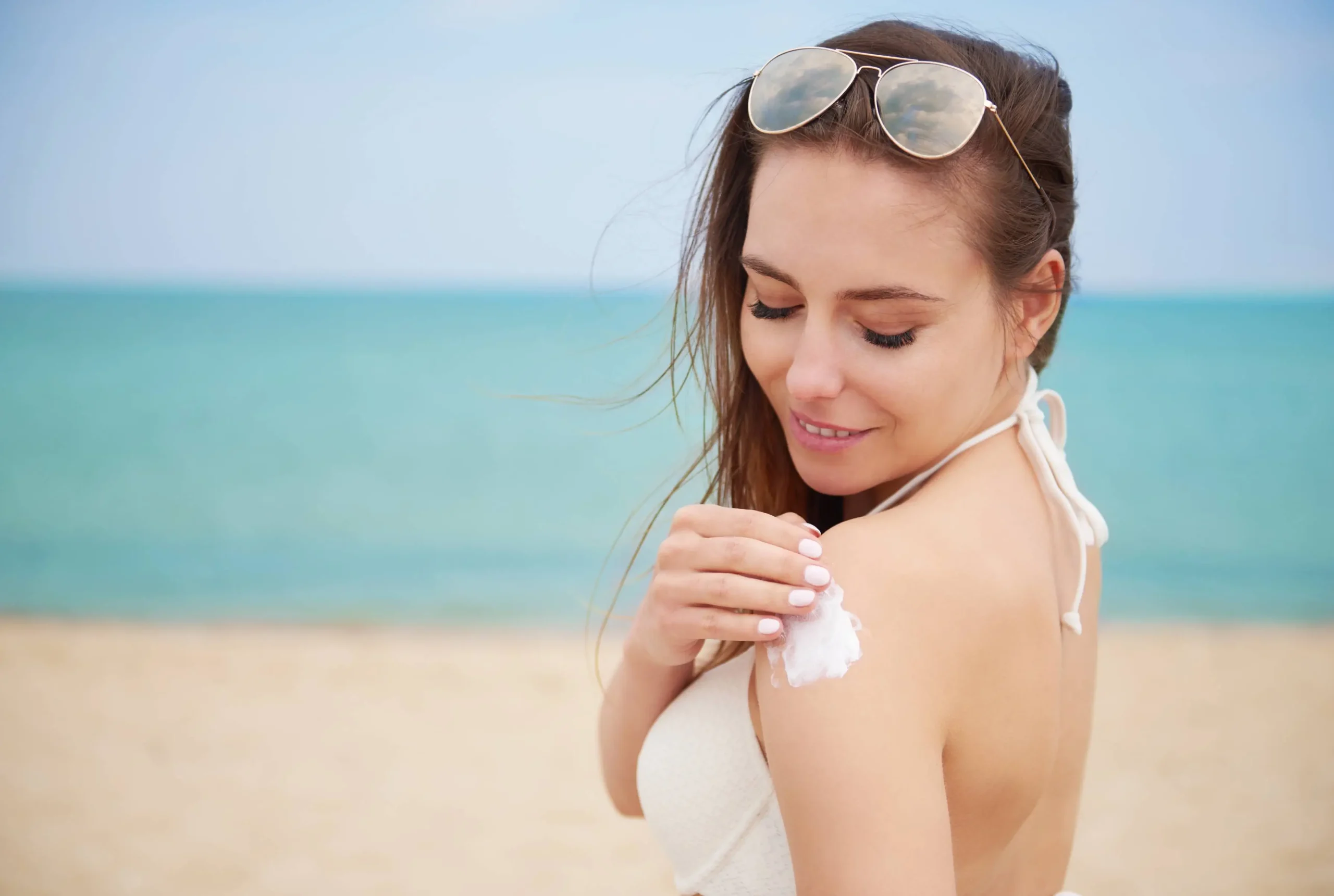
You do not always need water-resistant sunscreen for a short commute or a mostly indoor day. But if water, sweat, or long outdoor exposure is part of the plan, choose a broad-spectrum, water-resistant sunscreen with SPF 30 or higher. [1][3]
Use water-resistant sunscreen for:
swimming
beach days
pool days
running, hiking, cycling, or outdoor sports
hot and humid weather
heavy sweating
kids’ outdoor play
travel or long outdoor plans
For mostly indoor days with little sweat or water exposure, comfort and correct use matter more than water resistance.
How to Choose Water-Resistant Sunscreen
Do not choose by the water-resistant claim alone. A good sunscreen for swimming or sweating should also match your SPF needs, activity level, body area, skin type, and texture preference.
| Your Situation | Better Choice | Why |
|---|---|---|
| Swimming or beach day | SPF 30+ broad-spectrum, water-resistant 80 minutes | Longer water exposure needs stronger water-resistance support |
| Light sweating or short outdoor time | Water-resistant 40 minutes may be enough | Better for brief sweat or water exposure |
| Heavy sweating or sports | Water-resistant 80 minutes | More suitable for longer activity and repeated sweating |
| Face use | Lightweight, non-greasy, low-sting formula | More comfortable near eyes and under makeup |
| Body use | Lotion, cream, stick, or spray with enough coverage | Easier to apply generously over large areas |
| Kids or family use | Water-resistant 80 minutes, easy-to-apply format | Better for outdoor play, beach, and pool use |
| Sensitive skin | Fragrance-free, gentle formula | Helps reduce irritation risk |
| Acne-prone skin | Lightweight or non-comedogenic texture | Reduces greasy feel and pore-clogging concerns |
| Dry skin | Creamier or moisturizing formula | More comfortable during long outdoor wear |
The best choice is the one you can apply generously before water or sweat exposure and reapply without avoiding the texture.
For filter differences, compare options in our Sunscreen Ingredient Guide or Mineral vs Chemical Sunscreen.
How Often Should You Reapply Water-Resistant Sunscreen?
Water-resistant sunscreen is only reliable when you apply enough and reapply on time. Even an 80-minute claim does not replace regular reapplication. When you are outdoors, the safest rule is to reapply at least every 2 hours, and sooner after water, sweat, towel drying, or rubbing. [4]
Apply sunscreen before going outside. Give it time to form an even layer before swimming or sweating.
Reapply at least every 2 hours outdoors. Do this even if the sunscreen is water-resistant.
Reapply after swimming or sweating. Water and sweat reduce the sunscreen layer.
Reapply after towel drying. Towels can remove a large part of the product.
Reapply after the 40-minute or 80-minute limit. Follow the time listed on the label.
Reapply sooner if your skin was rubbed, wiped, or heavily sweated through. Friction breaks up coverage faster.
Amount matters: Water resistance cannot make up for using too little sunscreen. Apply enough to cover exposed skin evenly before swimming or sweating. For exact face amount and application steps, read How Much Sunscreen to Use on Your Face and How to Apply Sunscreen.
Common Mistakes With Water-Resistant Sunscreen
Many sunscreen problems come from using the right product the wrong way. Water resistance helps, but it does not protect against under-application, missed areas, towel drying, or skipped reapplication.
Believing waterproof sunscreen exists: Choose water-resistant sunscreen and check whether the label says 40 or 80 minutes.
Choosing SPF without checking water resistance: SPF and water resistance are different label claims.
Using too little sunscreen: Water resistance does not fix a thin or uneven layer.
Applying it after swimming starts: Apply before water or sweat exposure.
Forgetting to reapply after towel drying: Towels remove sunscreen, even if the product is water-resistant.
Thinking 80 minutes means all-day protection: It only describes tested water or sweat resistance time.
Using old or expired sunscreen: Check the expiration date, smell, texture, and separation.
Missing ears, neck, shoulders, hands, and feet: These exposed areas burn easily and need coverage.
Relying only on sunscreen: Shade, hats, sunglasses, and UPF clothing still improve protection.
Final Takeaway: Water-Resistant, Not Waterproof
No sunscreen is truly waterproof. Water-resistant sunscreen is the correct label, and the time claim matters. Choose 40 or 80 minutes based on your water, sweat, and outdoor exposure. Reapply after swimming, sweating, towel drying, or reaching the stated time. The best protection comes from broad-spectrum SPF, enough product, regular reapplication, and smart sun habits.


