


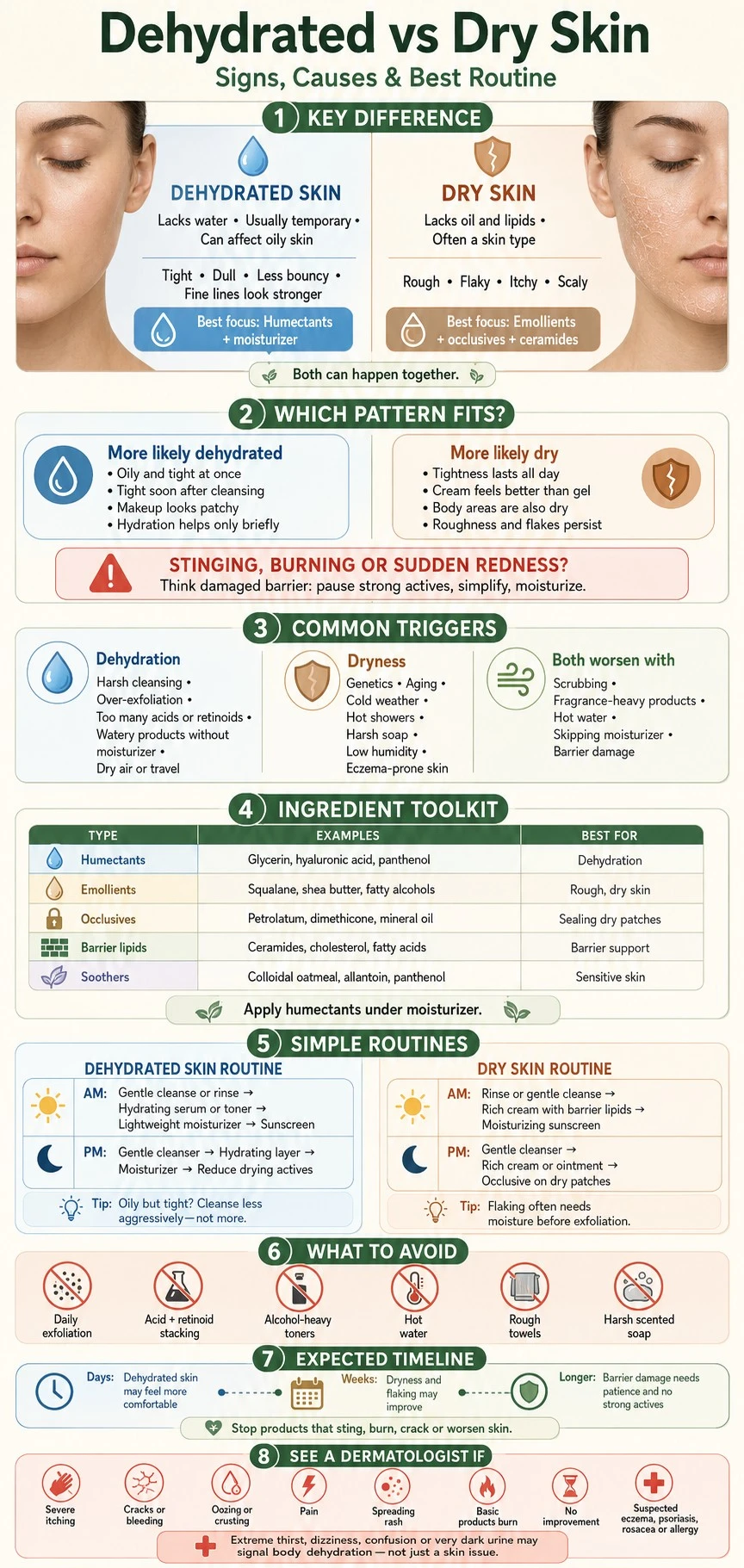
Dehydrated vs Dry Skin: Key Differences
Use the table below to match your symptoms with the right product focus.
| Clue | Dehydrated Skin | Dry Skin |
|---|---|---|
| Main issue | Lacks water | Lacks oil and lipid support |
| Type or condition | Usually a temporary skin condition | Often a skin type or long-term tendency |
| Can affect oily skin? | Yes | Less typical, but combination skin can have dry areas |
| How it feels | Tight, dull, less bouncy, sometimes oily | Rough, flaky, itchy, scaly, tight |
| How it looks | Dull, tired-looking, fine lines more visible | Flaky, scaly, rough patches |
| Common routine clue | Watery products help briefly, but comfort does not last | Gel or lightweight lotion is not enough |
| Best ingredient focus | Humectants plus moisturizer | Emollients, occlusives, ceramides, richer creams |
| Common mistake | Using only hydrating serum without sealing it | Using only water-based products without enough lipid support |
Many people have both, especially in cold weather or after over-cleansing, over-exfoliating, or using retinoids and acids too often.
Signs of Dehydrated Skin vs Dry Skin
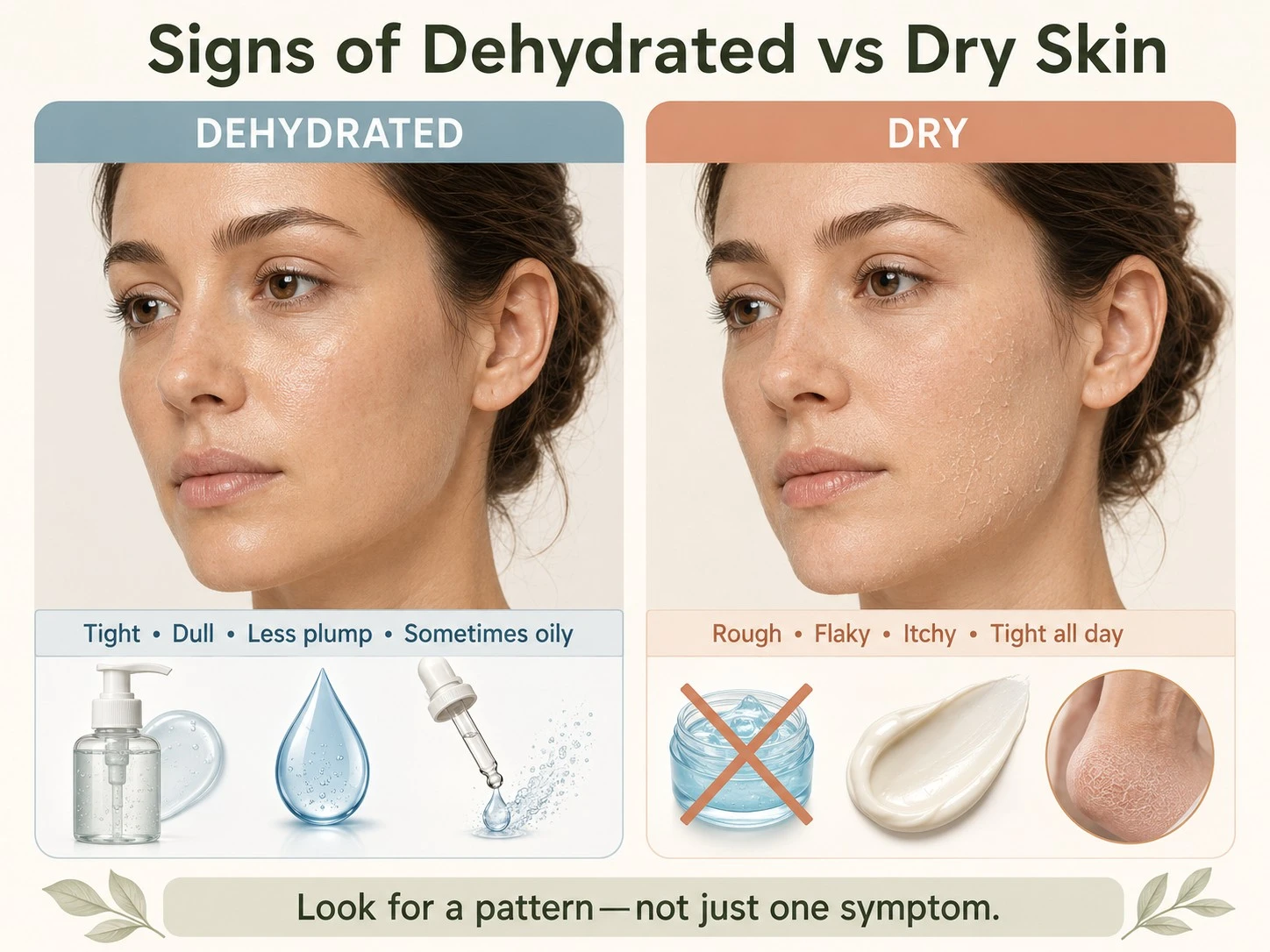
Use this section as a self-check. The goal is not to diagnose your skin from one symptom, but to see which pattern fits best.
Your skin is more likely dehydrated if:
- It feels tight soon after cleansing.
- It looks dull, tired, or less plump than usual.
- Fine lines look more visible than they did before.
- It feels oily and tight at the same time.
- Makeup separates, clings, or looks patchy.
- Hydrating toner or serum helps, but the comfort fades quickly.
- The problem started after harsh cleansing, over-exfoliation, retinoids, acids, or drying acne products.
Your skin is more likely dry if:
- It flakes, scales, or feels rough.
- It itches or feels uncomfortable often.
- Tightness happens throughout the day, not only after cleansing.
- Lightweight gels or watery products do not feel enough.
- Your skin feels better with cream or ointment.
- Your hands, shins, elbows, feet, or other body areas also feel dry.
Dry skin is more likely to look rough, flaky, scaly, or itchy. [1] Dehydrated skin is more likely to feel tight, dull, or less bouncy without always looking flaky.
Do not confuse dehydrated skin with medical dehydration. If you have extreme thirst, dizziness, confusion, very dark urine, or signs of fluid loss, that is a body hydration issue, not just a skincare problem. [5]
Dehydrated Skin, Dry Skin, or Damaged Barrier?
If your skin is tight, flaky, or suddenly reactive, check whether the real issue is dehydration, dryness, barrier damage, or a mix of all three.
| Problem | Main Signs | Routine Clue | First Fix |
|---|---|---|---|
| Dehydrated skin | Tightness, dullness, fine lines, less bounce | Hydrating toner or serum helps briefly | Use humectants, then seal with moisturizer |
| Dry skin | Flaking, roughness, itching, scaling | Gel moisturizer is not enough | Use richer cream, emollients, and occlusives |
| Damaged skin barrier | Stinging, burning, redness, sudden sensitivity | Products that used to feel fine now sting | Stop strong actives, simplify, moisturize. [2] |
If basic products suddenly burn, do not just add hyaluronic acid. Treat the skin as irritated first, simplify the routine, and pause strong actives. [2]
What Causes Dehydrated or Dry Skin?

Dehydrated and dry skin often get worse when the routine strips the skin faster than it can recover.
Common dehydrated skin triggers:
- Harsh or stripping cleanser.
- Over-cleansing.
- Not using enough moisturizer.
- Using only watery products without sealing them.
- Over-exfoliation.
- Retinoids or acids used too often.
- Dry air, air conditioning, or indoor heating.
- Travel, long flights, or weather changes.
- Skipping moisturizer because the skin feels oily.
Common dry skin triggers:
- Genetic dry skin tendency.
- Aging-related dryness.
- Cold or dry weather.
- Long hot showers.
- Harsh soaps.
- Low humidity.
- Medications or health conditions.
- Eczema-prone skin.
- Not using a rich enough moisturizer.
Both can worsen with:
- Daily exfoliation.
- Strong retinoid and acid stacking.
- Alcohol-heavy toners.
- Fragrance-heavy products.
- Hot water.
- Scrubbing or rough towels.
- Skipping moisturizer.
- A damaged skin barrier.
Dry air, long hot showers, and harsh cleansing can increase moisture loss. Shorter lukewarm showers and added humidity in dry seasons can help reduce dryness. [4]
Best Ingredients for Dehydrated vs Dry Skin
Choose ingredients based on what your skin is missing: water support, lipid support, moisture sealing, or barrier comfort.
| Ingredient Type | Examples | Best For | How to Use |
|---|---|---|---|
| Humectants | Glycerin, hyaluronic acid, panthenol, low-strength urea | Dehydrated skin, tight skin, dull skin | Apply under moisturizer |
| Emollients | Squalane, shea butter, fatty alcohols, plant oils in balanced formulas | Dry, rough, flaky skin | Use in creams or richer moisturizers |
| Occlusives | Petrolatum, dimethicone, mineral oil | Very dry patches, water loss, rough areas | Use as a final layer or spot treatment |
| Barrier lipids | Ceramides, cholesterol, fatty acids | Dry skin, barrier support, sensitive routines | Use daily in moisturizer |
| Soothing ingredients | Colloidal oatmeal, allantoin, panthenol | Sensitive dry or tight skin | Choose simple fragrance-free formulas |
Humectants work best when followed with moisturizer. For dry skin, creams and ointments are often more helpful than very light lotions or gels because they provide stronger moisture support. [3][6]
Skincare Routine for Dehydrated Skin
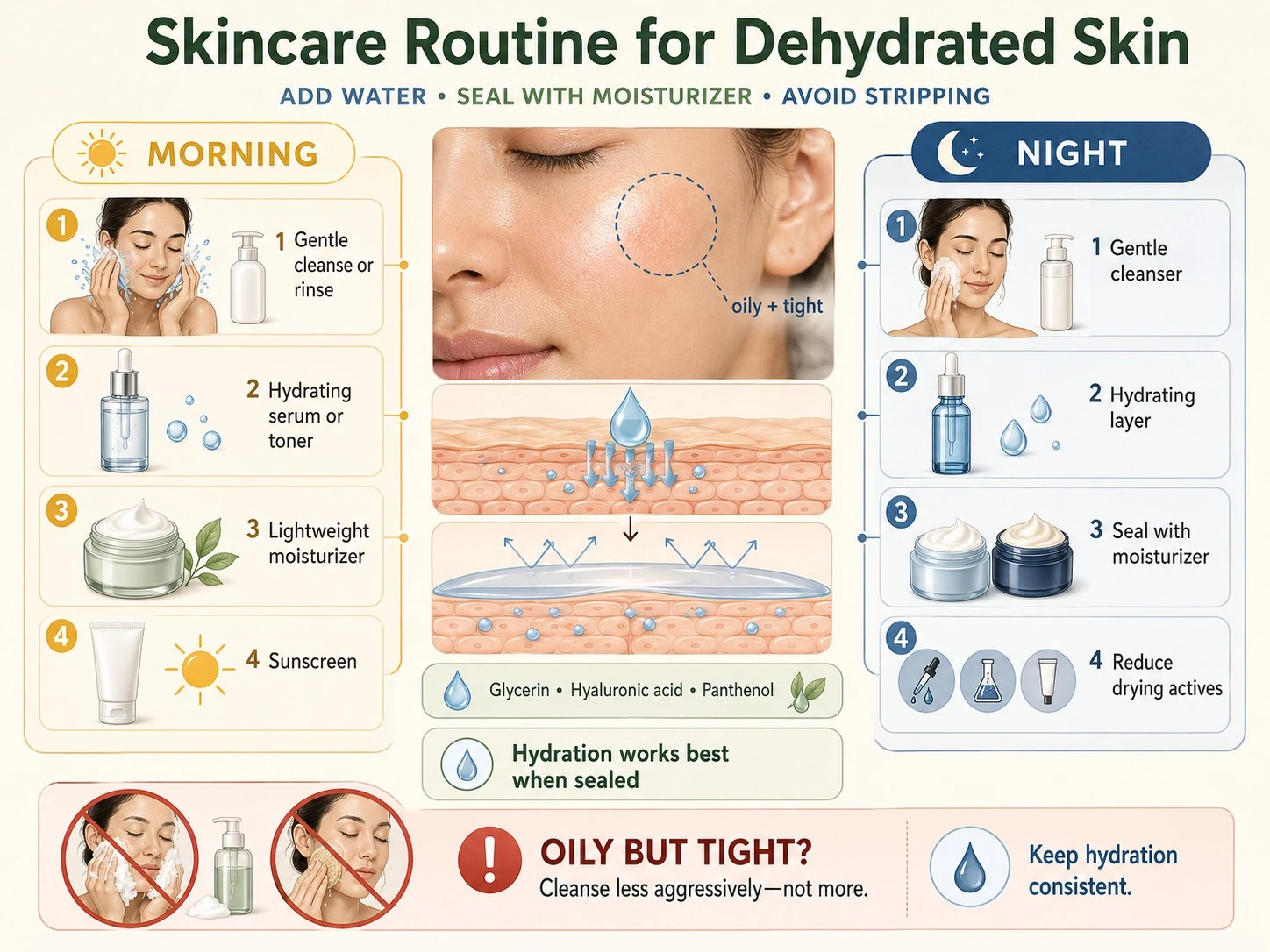
A dehydrated skin routine should add water support, seal it with moisturizer, and avoid stripping the skin. This matters most when skin feels oily but tight.
Morning:
- Cleanse gently or rinse with water.
If your skin is tight after washing, use a milder cleanser or rinse with water in the morning. - Use a hydrating serum or toner if needed.
Look for glycerin, hyaluronic acid, panthenol, or other humectants. - Apply lightweight moisturizer.
Do not leave hydrating serum as your final step. Seal it with moisturizer. - Use sunscreen.
Choose a texture that does not make your skin feel tight, greasy, or irritated.
Night:
- Use a gentle cleanser.
Avoid exfoliating cleansers while your skin feels tight or reactive. - Apply a hydrating layer.
A simple hydrating serum or toner can help if your skin feels dull or tight. - Seal with moisturizer.
Use a lightweight moisturizer for oily or acne-prone skin, or a richer one if you also have dryness. - Reduce drying actives.
Use retinoids, exfoliating acids, and acne treatments less often if your skin feels tight, shiny, or irritated.
For oily but dehydrated skin, do not solve tightness with stronger cleansing. Use a lighter moisturizer, reduce stripping products, and keep hydration consistent.
Skincare Routine for Dry Skin

A dry skin routine should focus on gentle cleansing, richer moisturizer, and barrier support.
Morning:
- Skip cleanser or use a gentle cleanser.
If your skin is very dry in the morning, a water rinse may be enough. - Apply cream, not just serum.
Choose a cream with emollients, ceramides, or other barrier-support ingredients. - Use sunscreen.
Pick a moisturizing sunscreen if lightweight formulas leave your skin tight.
Night:
- Cleanse without stripping.
Avoid harsh soaps and cleansers that make the skin squeaky. - Apply a richer moisturizer.
Creams and ointments are often better for dry skin than lightweight lotions. [3][7] - Use occlusive support on dry patches.
Petrolatum or dimethicone can help seal very dry patches if your skin tolerates them. - Keep exfoliation low.
Dry, flaky skin does not always need more exfoliation. It often needs more moisture and barrier support first.
For body dry skin, apply cream or ointment after bathing, keep showers short, use lukewarm water, and avoid harsh scented soaps. [4][7]
How Long Does It Take to Improve?
Improvement depends on the cause. Dehydrated skin often improves faster than chronic dry skin or barrier damage.
A practical timeline:
- Dehydrated skin: comfort can improve within a few days when the routine adds hydration and seals it properly.
- Dry skin: roughness and flaking may take a few weeks of consistent moisturizer and gentler cleansing.
- Damaged barrier: stinging, redness, and sensitivity can take longer, especially if strong actives continue.
- Severe dryness or rash: needs a different plan if moisturizer does not help.
Do not judge a routine after one night, but stop any product that makes your skin sting, burn, crack, or worsen.
When to See a Dermatologist
Dry or dehydrated skin often improves with routine changes, but these symptoms need professional care.
See a dermatologist if you have:
- Severe itching.
- Cracked or bleeding skin.
- Oozing, crusting, or signs of infection.
- Painful dry patches.
- A rash that spreads or keeps returning.
- Burning or stinging from basic products.
- Dry skin that does not improve with consistent moisturizer.
- Suspected eczema, psoriasis, rosacea, or allergic reaction.
- Dark marks or inflammation that worsen after irritation.
- Diabetes with foot dryness, cracks, or slow-healing skin.
Dry skin that does not go away or keeps returning may need medical evaluation. [1]
Final Thoughts
Dehydrated skin needs water support. Dry skin needs richer moisture and lipid support. Many people need both.
If your skin is tight but oily, do not cleanse more aggressively. If your skin is flaky and rough, do not rely only on a watery serum. If basic skincare suddenly stings, simplify first and treat it like barrier stress.
The best routine is simple: cleanse gently, moisturize based on what your skin lacks, protect the barrier, and adjust by how your skin feels.
FAQs About Dehydrated vs Dry Skin
Is dehydrated skin the same as dry skin?
No. Dehydrated skin lacks water, while dry skin lacks enough oil and lipid support. Dehydrated skin is usually a temporary condition and can affect any skin type. Dry skin is often a skin type or long-term tendency.
Can oily skin be dehydrated?
Yes. Oily skin can be dehydrated. It may feel tight, dull, or less bouncy while still producing oil. This often happens when oily skin is over-cleansed, over-exfoliated, or treated with too many drying acne products.
How do I know if my skin is dehydrated?
Your skin may be dehydrated if it feels tight after cleansing, looks dull, shows more visible fine lines, feels less bouncy, or gets oily while still feeling tight. Hydrating products may help briefly, but the comfort does not last if you do not seal them with moisturizer.
How do I know if my skin is dry?
Dry skin often feels rough, flaky, itchy, tight, or scaly. It may need cream or ointment rather than a lightweight gel. Dryness may also show up on the hands, legs, elbows, feet, or other body areas.
Does drinking water fix dehydrated skin?
Drinking enough water is important for overall health, especially if you are physically dehydrated. But tight or dull skin does not always mean your whole body is dehydrated. Skin also needs humectants, moisturizer, and barrier support.
Is hyaluronic acid good for dehydrated skin?
Yes, hyaluronic acid can help dehydrated skin because it is a humectant. It works best when followed with moisturizer. If you use it alone and your skin still feels tight, your routine may need better moisture sealing.
What moisturizer is best for dry skin?
Dry skin usually does best with a cream or ointment rather than a very light gel. Look for fragrance-free formulas with ingredients such as ceramides, glycerin, petrolatum, dimethicone, squalane, fatty acids, or other barrier-support ingredients.
Can dry or dehydrated skin cause acne?
Dry or dehydrated skin does not directly “cause” acne, but a harsh routine can make acne-prone skin more reactive. Over-cleansing, skipping moisturizer, and using too many drying treatments can lead to tightness, irritation, and a weaker barrier.
Sources
[1] Cleveland Clinic. Dry Skin (Xeroderma): Symptoms, Causes, Treatment
[2] Cleveland Clinic. How To Tell If Your Skin Barrier Is Damaged
[3] American Academy of Dermatology. How to Pick the Right Moisturizer for Your Skin
[4] Harvard Health Publishing. 9 Ways to Banish Dry Skin
[5] Mayo Clinic. Dehydration – Symptoms & Causes
[6] Cleveland Clinic. The Best Moisturizer for Your Dry Skin? Here’s What To Look For and How To Use It
[7] American Academy of Dermatology. Dermatologists’ Top Tips for Relieving Dry Skin


