


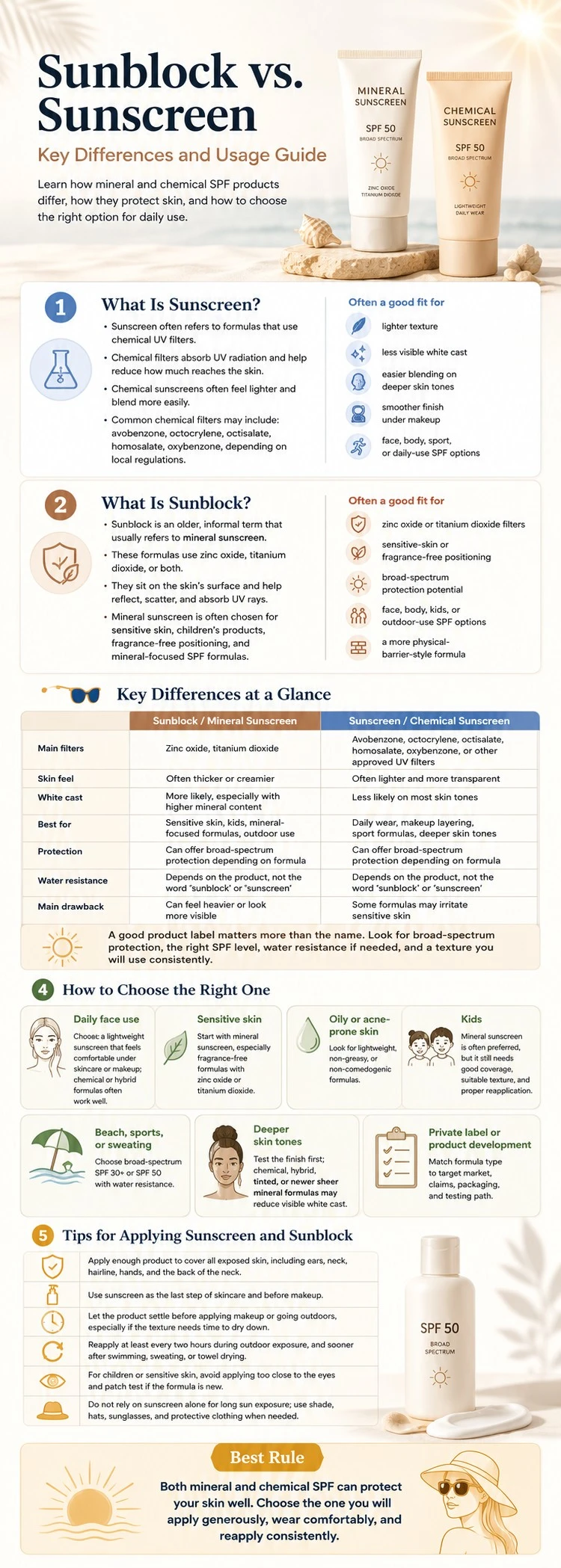
What Is Sunscreen?
Sunscreen often refers to formulas that use chemical UV filters. These filters absorb UV radiation and help reduce how much reaches the skin. Chemical sunscreens usually feel lighter and blend more easily, which makes them popular for face use, outdoor activities, and makeup layering.
Common chemical filters can include avobenzone, octocrylene, octisalate, homosalate, or oxybenzone, depending on local regulations. Ingredient options vary by country, so products with a similar purpose may use different UV filters.
Chemical sunscreen is often a good fit when you want:
- A lighter texture
- Less visible white cast
- Easier blending on deeper skin tones
- A smoother finish under makeup
- Face, body, sport, or daily-use SPF options
Apply it evenly before sun exposure and reapply as directed, especially after sweating, swimming, or towel drying. The formula still needs enough product and full coverage to work well.
What Is Sunblock?
Sunblock is an older, informal term that usually refers to mineral sunscreen. These formulas use zinc oxide, titanium dioxide, or both. They sit on the skin’s surface and help reflect, scatter, and absorb UV rays.
Mineral sunscreen is often chosen for sensitive skin, children’s products, fragrance-free positioning, and mineral-focused SPF formulas. It can work well for daily use and outdoor exposure, but texture matters. Some formulas may feel thicker or leave a visible cast, especially on deeper skin tones.
Mineral sunscreen is often a good fit when you want:
- Zinc oxide or titanium dioxide as key filters
- Sensitive-skin or fragrance-free positioning
- Broad-spectrum protection potential
- Face, body, kids, or outdoor-use SPF options
- A more physical-barrier-style formula
Use enough product and spread it evenly. Mineral sunscreen still needs reapplication after sweating, swimming, rubbing, or long outdoor exposure.
Key Differences Between Sunblock and Sunscreen
The biggest difference is not which one is “stronger,” but how the formula is built and how it feels on skin. Both can be effective when they are broad-spectrum, applied in the right amount, and reapplied correctly.
| Factor | Sunblock / Mineral Sunscreen | Sunscreen / Chemical Sunscreen |
|---|---|---|
| Main filters | Zinc oxide, titanium dioxide | Avobenzone, octocrylene, octisalate, homosalate, oxybenzone, or other approved UV filters |
| Skin feel | Often thicker or creamier | Often lighter and more transparent |
| White cast | More likely, especially with higher mineral content | Less likely on most skin tones |
| Best for | Sensitive skin, kids, mineral-focused formulas, outdoor use | Daily wear, makeup layering, sport formulas, deeper skin tones |
| Protection | Can offer broad-spectrum protection depending on formula | Can offer broad-spectrum protection depending on formula |
| Water resistance | Depends on the product, not the word “sunblock” or “sunscreen” | Depends on the product, not the word “sunblock” or “sunscreen” |
| Main drawback | Can feel heavier or look more visible | Some formulas may irritate sensitive skin |
A good product label matters more than the name. Look for broad-spectrum protection, the right SPF level, water-resistance claims if needed, and a texture you will use consistently.[2]
How to Choose the Right One

Choose based on your skin, routine, and sun exposure. The best SPF product is not the one with the most impressive label; it is the one you apply enough of and reapply when needed.
- For daily face use: Choose a lightweight sunscreen that feels comfortable under skincare or makeup. Chemical or hybrid formulas often work well here.
- For sensitive skin: Start with mineral sunscreen, especially fragrance-free formulas with zinc oxide or titanium dioxide.
- For oily or acne-prone skin: Look for lightweight, non-greasy, or non-comedogenic formulas. Texture matters more than whether the product is called sunblock or sunscreen.
- For kids: Mineral sunscreen is often preferred, but the formula still needs good coverage, suitable texture, and proper reapplication.
- For beach, sports, or sweating: Choose a broad-spectrum SPF 30+ or SPF 50 product with water resistance. Reapply after swimming, sweating, or towel drying.
- For deeper skin tones: Test the finish first. Chemical, hybrid, tinted, or newer sheer mineral formulas may reduce visible white cast.
- For private label or product development: Match the formula type to your target market, claims, packaging, and testing path before choosing a final direction.
Tips for Applying Sunscreen and Sunblock
Even the right product will underperform if it is applied too thinly or not reapplied. Application habits often matter as much as formula type.
- Apply enough product to cover all exposed skin, including ears, neck, hairline, hands, and the back of the neck.
- Use sunscreen as the last step of skincare and before makeup.
- Let the product settle before applying makeup or going outdoors, especially if the texture needs time to dry down.
- Reapply at least every two hours during outdoor exposure, and sooner after swimming, sweating, or towel drying.[3]
- For children or sensitive skin, avoid applying too close to the eyes and patch test if the formula is new.
- Do not rely on sunscreen alone for long sun exposure; use shade, hats, sunglasses, and protective clothing when needed.


